Category: Short Fiction

Short Stories, Fiction Stories

  • The Villainous Neighbor

    The Villainous Neighbor

    It was less than two years after three children lost their daddy to a car crash.  The rawness of such a loss still fresh in their minds, the world seemed like a battlefield with every step.  Strangers turned to friends, while friends they had known left, not able to withstand the sense of grief clouding around the three children and their little mother.  It was a hard time for the small family of four.

    Now, their home was a farm at the end of a stretch of land with a very muddy access road.  On very rainy days, a lake of sorts would form in the middle of the access road.  The mother of these three children would then have to find a way to get them across daily in order to get them to school.  There were two pairs of shoes to be worn.  Gumboots and rain coats to get through the massive swamp and school shoes to wear when the three children got to the bus stop.  The family that owned the property closest to the main road was kind and allowed a small path at the driest part inside their own farm away from the access road.  But even this little path would sometimes get hard to pass through.

    In any case, the little family survived the best they could through the very rainy season and the massive swamp lake that formed in the middle of their access road.

    One day, the neighbors who owned property opposite the little family’s farm opened a small gate on to their access road.  They wanted a second exit they said.  One that would allow them to have two gates.  One gate on their main road on the other side of their property, and the little one on the muddy access road with the swamp in the middle.

    The mother of the children had no problem with this development.  In fact, she thought it would be a blessing.  Perhaps the kids would have an easier time going to school now.  They might use that small access to get to the drier road on the other side, and their path would be easier to school. 

    In the dry season, this little gate never came to play for the little family.  Their access road was fine, and they went about their lives as usual.

    Then the swamp in the middle of the road returned after a particularly rainy day.  It was holiday time, and the three children did not need to go to school.  However, their mother did want to send them to the shop, so she handed the three money and asked them to get a kilo of sugar from the shop.  They had seen others using the small gate made by the neighbors to escape the swamp, so they thought, ‘Oh, we can also try this gate.  It will be easier to escape mud and swampy water.’

    They were nervous about it, after all this was a new route, but they thought they would try it and see if they could get to the other dry road.  After all, the owners also use their access road in the dry season.  All would surely be well.

    They were wrong.

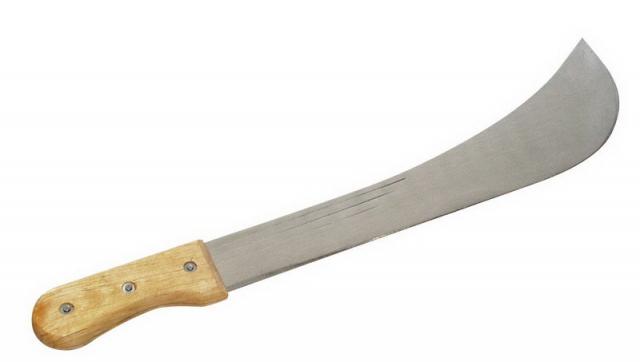
    A panga is a Machette, very popular farming tool in Kenya

    They barely made it to the opposite gate of the quiet property to the other road when a man came out swinging a panga from his house.  The panga was sharp, his words sharper and he chased them as one would chase thieves.  He screamed insults at them, and threatened to cut them to pieces, fear grew and the three children screamed running back home at the speed of light.  They forgot why they had ventured outside their home and went to find their mother.

    When the three children ran home, their little mother was in shock at their crying faces.  She asked if they had been robbed off the money she gave for sugar, and tried to soothe them, wiping away their tears.  In minutes, she discovered their story and a burning anger fueled her to confront this villainous man who would dare threaten to cut her children with a sharp panga.

    When she got to his gate, she asked him why he would do this, and he threatened the little mother, telling her to shut up or he’ll kill her.  This mother was not one to take insults quietly.  She screamed for help and the neighbors came.  As she was calling for help, this villainous man wrapped his hands around her neck and tried his best to rob her off breath.

    It took three men to pull this villainous man off the little mother.  Her voice was hoarse from the assault. Her neck damaged. The three children were in shock.  Not less than two years ago, they had all buried their father after a car accident, now here was a man doing his best to turn them into orphans. Sinister yet, he was not sorry about it. 

    It became clear that a path to the dry road on the other side was not worth this hefty price of death.

    In any case, the courts became involved.  The villainous man was tried with attempted murder and the illegal path into the muddy access road was closed by a judge.

    Life continued, as it often does.

    Three little children grew up and in a blink twenty years passed.

    Their little mother still struggles with neck problems, as a result of the assault on her neck.  Some nights she has to sleep with a neck collar.  The children often make sure it is new and available even when she travels. This was a price they paid for daring to think that all neighbors are made equal.

    They all learned that the kindness of one family cannot be carried to the next family.  Their access road still gets terrible in the rain, but they endure and find ways to pass through it without complaint.  Muddy shoes are a much easier price to pay than death from murder by a villainous neighbor.

    A few years ago, the villainous man’s family opened a path to the muddy access road again.  They use it unstopped by the little mother and the three children.  No pangas raised against them or hands wrapped around their throats in a grotesque picture of murderous intent. None of the villainous man’s family help fix the muddy road, after all they still have the other side to use during the rainy seasons.  This lesson is that the nature of a family’s values remains and does not change.

    Recently, the little mother was helping one of her daughters transplant a tree from their gate into their farm.  She saw a woman pass their gate heading for the now illegal path at the end of their access road and said, “Ah, that’s that villainous man’s daughter. You should know her in case she comes to yell over electricity poles near their fence.”

    Yes, the spectacle of a woman screaming over electricity poles has happened to the little mother, but that is a story for another day.

    The little mother’s daughter spared the woman in question no glance.  After all that woman’s daddy almost cost her a mother.

    “It’s better not to know or interact with them,” the daughter said. “Nothing good can come from it.”

    “True, ” the little mother said, touching her neck.

    In the end, the little family lives on, but the question still remains, what makes people so unreasonable as to want to murder over a small moment?

    Can you forgive someone who tries his best to choke you to death because you asked a question about your children, who tried to pass a path this person’s opened, that others have used unstopped, but your children had to face a machette on the first attempt?  What would you do with this reality?

    Life continues, as it always does.

  • Church Fairies and Catways – The Little Girl

    Church Fairies and Catways – The Little Girl

    “Hubert, where are my red heels!” she shrieks out, as she frantically searches for her shoes among her many pairs.

    She has a particular set of shoes in mind, matching her newly bought handbag from Duscs wear. She needs to stand out, look good, it mattered to her.

    I join in the search, a slight frown on my face, perhaps wondering why these particular shoes meant so much to her.

    “Got it,” she shrieks again, and immediately fumbles into the new pair.

    Slightly irritated, I reach out for the car keys by the dining table and head for the back door leading to the garage. I start the car engine, close my eyes and rest my head on the Volvo seat’s head rest, waiting.

    A few minutes later, Aidleen storms into the car, eye pencil and lipstick in hand.  I hear the front passenger door shut, but I remain still, eyes closed. I am deep in thought.

    My wife had changed over the years, tremendously. Sundays had become red carpet occasions ever since her re-union with her long time group of flashy friends from campus days.  The conversations had changed to who has the latest Gucci bag matching with shoes, wearing the latest fashion trend, and so on.

    Hubert was born into a conservative catholic family, where church Sundays were more of worship days than fashion show offs, where dress codes really didn’t matter, or the kind of car you owned didn’t raise an eyebrow when you drove into the church compound.

    The local community knew each other by their last names. What mattered was the genuineness of your worship, what was in your heart, how you spoke to God one on one, how you saw people for who, and not what, they were. For all we know, God looks into the heart, not into your Ferrari, MLG Mercedes or two thousand dollar custom-made Armani designer suit.

    He really believed that, deep down.

    “Hubert! Hubert! Can we go please?  We’ll be late, honey. Why didn’t you wear the blue suit I had taken out for you? Babe, you need to look good.”

    He leans forward and kisses her forehead, and whispers, “I’m good”.

    He had worn a plain t-shirt embroidered in white and blue stitches, and faded khaki pants to match his oxford brown leather shoes.

    “I look alright,” he whispers to himself, as he as he stepped on the accelerator and listened to the soft humming of the powerful Volvo engine as it came to life.

    He loved the engine’s sound, how the machine picked up with ease, gliding past other cars on the highway with effortless power for such a big car.

    “Hubert, let’s go!”

    This time there was a heightened sense of impatience in her tone.

    He obliged, and finally straightened his back.  He changed gears, pressed the accelerator and eased into the driveway leading to the gate.  The sun was hot, perhaps too hot for that time of day. He put on the air conditioner, it was instant, and the cold air felt refreshing to the skin.

    The church usher stood at the gate entrance in bright blue African attire, clean-shaven and neatly dressed, patches of sweat clearly visible under his armpits, as he brilliantly tried to squeeze in as many cars as he could into the small parking area. Our turn came, and we were ushered into a small space beneath a leafy small tree right next to the entrance. It was a good spot, easily accessible and under a shade.

    Aidleen was busy waving frantically at her friends as I parked. I couldn’t help notice the parking lot looked like an exotic car exhibition, a paradise for car lovers, fit to pass for a diplomatic convention of some sorts.

    Melany was the first to catch up, looking very exquisite in a dark blue Bavaria suit with a matching handbag and shoes. Mike, the husband, was beside her, proudly clutching his newly bought iPhone 8 masterpiece, and we exchanged niceties over hugs and kisses.  The ladies had already began making their way to the church entrance, greeting acquaintances and friends along the way.  Catching up on the past week with church members.  I turned to lock the car, and then she caught my eye.

    Our eyes locked in what might have seemed like eternity.

    She just stared, a beautiful little girl in a pale-white wrinkled dress that seemed too big for her, dark short hair and a pair of worn out slip-ons for shoes. Despite the creases and over-sized attire, she looked very neat, perhaps trying to fit in, as much as she could in a world she knew very little about.

    She stood beside the entrance gate, motionless, hands clutched together in front of her. She smiled, but her eyes told a different story, one of sadness and despair. Eyes never lie. I slowly walked towards her, trying to smile as reassuringly as I could, vaguely acknowledging greetings from incoming congregation members.

    My gaze locked on the little girl.  The fixation growing the closer I got to her.

    “Hello.  How are you?” I asked.  “Are you okay?”

    She nodded, hands still clutched in front of her. She looked frail and weak, perhaps saddened by how life’s cruelty did not discriminate against age. Her cheekbones stood out, almost piercing the thin skin under which they held so tightly. Shoulders back, she had a confident pose, and despite her pale skin, her beauty still stood out.

    She looked frail and weak, perhaps saddened by how life’s cruelty did not discriminate against age

    Gilbert Kariuki

    Unconsciously, I held out my hand to her, as gently as I could. She did not hesitate. She put her hand on mine, clutching it tightly, as if never to let go. I didn’t want her to let go. There was something special about the little girl.  I didn’t know what it was, but it was special.

    We walked hand in hand towards the church entrance, and sat beside Melanie and the husband.

    Church service had begun, and though the sermon was about giving unto others as the Lord had blessed, I wasn’t paying much attention. My mind wandered to the little girl beside me, hand still holding tightly to mine.

    “Who is she? Why was she standing all alone by the gate? Where were her parents?”

    I was lost in thought, as the priest’s voice became fainter and fainter….

    ~~~~

    Fifteen years later, I sit in the front row of a dignitary-packed conference room.  I listen to a well-dressed, young lady telling the extraordinary story of her journey to her current status.  She is the youngest leader in the history of a global humanitarian organization that focuses on Children Rights and Welfare.

    Her story is captivating, inspiring, emotional, exuding faith and persistence all through. Against all odds, she made something of herself. Against all odds, she triumphed over life! Against all odds, that beautiful little girl in a pale-white wrinkled dress that seemed too big for her, short hair and a pair of worn out slip-ons for shoes, was now a global symbol of what it takes to achieve dreams.

    All it took was a ‘hello’, and stretching of a hand.  I took her in and cared for her as my own. Our eyes locked, as they did fifteen years ago.

    She smiled, and this time her eyes told a different story, one of appreciation and love. She ended her life story with a soft ‘thank you’, amid a roaring standing ovation from the crowd. Our eyes still locked, tears streaming down both our faces, she came down the podium.  We hugged and just like fifteen years ago, at the small church compound, she put her hand in mine, and clutched it tight, as if never to let go.

    I never did let go – it’s been fifteen years, and it all began with a stretched hand to a beautiful little girl in a pale white wrinkled dress.

    In life, we come across people on our paths whose destinies are intertwined. A simple stretch of a hand can mean a lifetime difference. As we are blessed and cursed in different capacities, so do we have a spiritual duty to reach out to others and try to correct the imbalance this world serves humanity!

    Story by Gilbert Kariuki
    Email: maheniagk@gmail.com


    I hope you enjoyed this story feature today. Nairobi is cold this month, stay warm. – Elly.

  • The Client Meant for Me

    Nouta Ahito stood at her door, her gaze intent, as she stared at the fat drops falling on the steps outside her house.  Rain, the blessed waters from the skies, the tears wept by the earth, her most feared enemy, taunted her.  The faster it fell, the more it mocked her, and she could do nothing.  She wished for super powers.  How wonderful it would be if she could wave her hand and stop this rain.  She groaned long and hard, and closed the door, escaping the upsetting scene.

    Nouta walked to her chair at the dining table and stared at her cup of tea, now cold.

    “What are we going to do?” her sister asked.

    She looked up to see her sister watching her.  Everyone in the house knew that when it rained, she worried.  At some point, in the past two years, rain had become her nemesis.  She loved the hot months, and never complained even when it got too hot in January.  Everyone complained then, but not her.  No, hot months were her favorite days.

    Why?

    Well, during the warm months, she did not have to worry about a muddy access road.

    Nouta was a business woman.  She ran a baking skills training workshop at her family home.  She was proud of her training workshop: a neat green building, constructed with mabati she had painted green.  She had furnished it with all the baking equipment she could find, and more to come.  She liked calling it a workshop because it was not an institution.

    Photo by Eye for Ebony on Unsplash

    She enjoyed focusing on her work: on the process of imparting knowledge to a new baking student.  It was hands on, practical, and personal.  Her workshop would never be an institution.  She was proud of that.  However, banks consistently and with precise prejudice categorized her as a small business, without the enterprise in the SME acronym.  They did not look at her or favor her business.  Not even when she had all the necessary city and government permits.  Banks would not touch her with a ten-foot pole.

    Sometimes, Nouta imagined, they probably smelled her coming into the bank to seek a loan for her small business and locked the vaults.

    Don’t let her know we have the money, the officers would say to each other, and then chortle when she walked out.

    She was too young, the loan officer would say.  As if, twenty-eight was just right, she thought.  Her faults were that she was single, with no rich husband in sight.  Her business was a passing fancy: because doing business in her family home was a temporary thing, a passing thing, it won’t last, they said.

    Ah, her personal favorite was when once, a loan officer told her not to worry because her parents would get her a job soon.  In this day and age, jobs were about as available as unicorns in the sky.  Nouta rolled her eyes at that memory.  She doubted that loan officer had seen a unicorn in the sky.  How did he know her parents would help her find a job?  Her mother did not have that kind of motivation.

    The rain amped up its rhythm as though demanding Nouta’s attention, she sighed.  Her biggest challenge in life, was not running a business, she was managing that.  No, her challenge was getting a decent access road, one that didn’t flood, or get muddy with each flash of rain.  She needed money to fix the access road to their home.  Her business could not afford it as an expense, yet.  She couldn’t get a loan, so it was not a quick fix.

    Customers hated muddy roads, especially when they came from neat tarmac roads.  No one wanted to trudge through the mud and ruin good shoes.  She could understand that even respect it.  However, her business had to move forward.  She needed her customers to reach her, so that she could keep saving to fix the muddy access road.  And so, the love of sunny months and the hate and stress of rainy days started, and turned into her daily struggle.

    Nouta got up from her seat and went to heat up her tea and sweet potatoes.  She needed a good breakfast.  She needed to be at full energy to convince the two women visiting her workshop today to sign up for a class.

    What was a little rain, she thought.  What was a little mud?

    She was strong enough to face down barbarians if they ever appeared in her corner in Nairobi.  Nouta chuckled at that stupid idea and set the microwave to heat her tea.

    “We will manage,” she said to her sister, when she got back to the dining table.

    “Well, if the two ladies don’t sign up, we’ll look for others,” Lita echoed, nodding her head.  “I’ll offer to get them from the road with gumboots, if they need it.”

    “Or, we could pay someone to carry them on the back to the gate,” Nouta suggested, making her sister laugh so hard she almost spilled her tea.  “God help him if they are chubby.”

    “As if that will happen,” Lita scoffed.  “We could try Mutheu’s mkokoteni.”

    “I’m not pushing it in the mud,” Nouta said, thinking of the wooden cart with car tires Mutheu drove.  “Besides, he’ll just walk away if you suggest it.  He hates stupidity.”

    Lita sighed and sipped her tea.

    “It will work out, Nouta,” she said, her sure tone brought comfort to Nouta.

    Lita always made it seem as though they could manage any kind of situation, and they did.  They always managed.

    The first call of the day came right after breakfast.  Nouta answered her phone with a sense of calm.  Her first client was already on the way to visit the workshop.  She sounded levelheaded, and friendly.  Nouta took the opportunity to warn her of the rain.

    “It’s a bit muddy,” Nouta said.  “Do you have sturdy shoes?”

    “It was raining at my place too.  I’m prepared.”

    “Okay,” Nouta said, hopeful.

    She ended the call, giving her sister a small smile, though the nerves didn’t disappear.  They already had two students in place, and needed two more to fill the current class.  Two more to make a profit, otherwise they might need to cancel the class or do it at a loss.  This was their constant struggle.

    It was nine in the morning.  The rain kept up for another thirty minutes, and then it stopped.  The sun stayed hidden behind clouds.  Their dirt road would take a while before it dried.  There would be mud; there was no escaping that reality.  Nouta finished her third cup of tea.

    At ten, her first client called her.  She was at the end of the access road.  She sounded unsure about her destination.  Nouta came out of the house and went to stand at the gate.

    “You’re on the right track,” Nouta assured her.  “I can come to you with gumboots.  Or meet you at the road—”

    “Ah, I see you.  It’s not that far after all.  I’m on the way,” the lady said, and ended the call.

    Nouta stood at the gate watching the woman who entered the access road.  Her steps were steady as she navigated the muddy road, jumping over puddles, and going around rough patches.  It took her five minutes to reach Nouta.

    When she did, Nouta realized why the lady had been so confident.  She wore gumboots on her feet.  Black gumboots with a silver bow on the side, they were so handsome, Nouta could not help but smile wide.

    Karibu,” she said, holding out her hand to her first client of the day.  “Welcome to Nolita’s Baking Workshop.”

    “Hi, I’m Halima.  I’m so honored to meet you, Nouta,” Halima said, taking her hand in greeting.  “I have heard you’re the best in the city.  I’ve wanted to take classes with you, and always missed intake.  I couldn’t pass up the chance to sign up with you this time, so here I am.”

    Charmed, Nouta launched into a conversation about the workshop and the upcoming classes, forgetting about the mud.

    They entered the compound and went straight to the green workshop.  They talked for thirty minutes, and by the time Halima was ready to leave, she had paid a deposit.  Halima booked her spot for the class.  Nouta walked her to the gate, and once again remembered the state of the road.

    “I’m so sorry about the road,” Nouta felt compelled to say.  “It’s not usually so muddy.”

    “Oh, you don’t have to worry about that,” Halima said, showing off her gumboots.  “Your road is just like ours at home.  I don’t mind it, Nouta.  I’ll see you on Monday next week.  I look forward to learning from you.”

    Nouta smiled wide and waved Halima off.  The first client of the day had set her mind at ease.  She rushed back to the house in a pleased mood to share the news with her sister.

    Flush with a win of the day, Nouta waited for the next call with less anxiety.  It came at around twelve o’clock.  The sun was peeking out, the ground less wet from the morning rain.  Nouta felt confident that their muddy road was easier to pass now, than earlier.  When she answered the call, she was pleasantly surprised to discover that her next client had a car.

    Great, she thought.  This will be even easier.

    Nouta gave her precise directions to their access road, and the lady promised to call when she reached.  It took another thirty minutes.  Nouta was surprised when she answered the call and the lady on the other end sounded less than cheerful.

    “You didn’t tell me the road was so muddy.  Why would you keep that from me?”

    “I’m sorry, I told you it rained,” Nouta said.  “Our access road is a dirt road.  I was very clear about that from the beginning.”

    “No, no, no,” the lady said, as though saying it in threes made it more negative than it already was.

    Nouta felt a flush of annoyance race through her.  She sat at the dining table working on her laptop.  Opening her email, she double-checked the message she had sent to the lady.  In the directions, she clearly stated the access road was a dirt road.  It was necessary, especially in Nairobi.  She had dealt with all kinds of people.  It was always easiest to describe the destination without rose-colored glasses.  Her home area was not upscale Lavington, but it also was not slummy, but a homey kind of area.  Farms and family homes dominated the street.

    “I’m not sure I can make it for this class,” the lady on the other end said to her.  “First, it’s so far and now this muddy road…”

    “Where are you coming from?” Nouta asked, curious.

    “South C,” the lady said, indignation clear in her tone.  “It took me almost an hour to get here.”

    Nouta wanted to point out that it took her just as long to get to Eastlands.  This was Nairobi, no place was close, and no place was far.  Two, last month, she had a student who had come all the way from Muranga every morning.  That was four to five hours away.  She was still awed at that boy’s dedication to his baking dreams.  He never missed a day, and was never late.

    What was South C?  Ndwaru Road was not in Ukambani, but in Dagoretti.  Less than an hour away if you took the newly minted bypass.  She rolled her eyes, but did not voice her opinion.  She kept her tone calm when she spoke.

    “I’m sorry you feel that way,” Nouta said.  “Since you’ve come all this way, wouldn’t you like to see the place?  We can talk—”

    “What about my car?” the lady asked.  “I can’t drive in to this mud.  Who can I ask to watch it?  I don’t even have gumboots to walk in the mud.”

    Nouta fought the urge to talk back and pushed her chair back

    “We have clean gumboots I can bring to you,” Nouta said.  “I’ll be at the road in five minutes.  Please wait for me.”

    She ended the call and let out a frustrated groan.

    Why had she attracted this lady again?  If she was from South C, why didn’t she then get a baking teacher from there?  Why come all the way here?  Why the frustration when the woman had a car?

    Nouta found the clean gumboots.  She slipped her feet into her own used ones and gripped her phone tight as she left the house.  She headed to the road with an annoyed sigh.  Why did she need the money so bad?

    Nouta breathed in and out on the five-minute walk to the main road.  She was right about the access road.  It was much easier to navigate, with only a single rough patch in the middle.  A car could manage it with no trouble.  When she reached the road, she bit back a curse word when she saw the white jeep waiting on the curb.  The driver rolled down the window and she met her second would be-client.

    “Hi, I’m Rose.  You must be Nouta,” Rose said, smiling at her from the safety of her car.  “How come you don’t have a branch in town?”

    Nouta slipped her phone into her jeans pocket.  She worried she might crash it with anger and frustration.  She hated this question most.  Did Rose even understand the logistics of opening a second branch in Nairobi town?  The capital that would involve, the amount of money she would need to sink into marketing to make both places work.  Why ask such a question?

    Nouta smiled.

    “Oh, we’re working hard to get one,” Nouta said in her most cordial voice.

    “Oh well, I don’t think my car can make it through that mud,” Rose said, shaking her head, looking at the access road, disdain clear in her eyes.  “Is it always like this?”

    Nouta bit her bottom lip, and breathed in and out.

    “No.  It rained this morning.  If you give it a few hours, it will be good as new.”

    “Why can’t you get it fixed?” Rose asked.

    Nouta smiled, because the alternative was to shout, maybe shed a few tears of frustration.

    “We’re working on it,” Nouta said.  “You know how it is.”

    Actually, Rose’s expression said, she had no idea how it was to mobilize neighbors in such areas.  To get them to work with you, or otherwise, you work alone and find the money to fix the access road.  Nouta sighed and lifted the gumboots.

    “You can wear these,” Nouta said.

    She then pointed at the small parking lot in front of the small shopping center to her immediate right.  She was friends with all the shop owners in the center.

    “If you park here no one will touch your car.”

    “It doesn’t look safe,” Rose said, giving the shopping center a skeptical glance.

    “It is,” Nouta said, her tone strong, leaving no doubt.

    Rose looked at her for a minute, and then started the car.  When she backed up, Nouta took a moment to study the Jeep.  It looked too clean and the tires were new.  Rose had stopped the car at the entrance into the parking lot, and wasn’t moving.

    Nouta closed her eyes, a tirade forming in her head.

    ‘Let me ask you a question,’ she wanted to say to Rose.  ‘Let me really ask you a question.  Do you want to tell me that you have never traveled upcountry?  Do you not visit your grandmother in your fancy car?  Are you telling me your big car does not and cannot drive on muddy roads?  What is a small stretch to the green gate?  Three minutes, probably less, those tires look new.  Are you telling me you can’t drive to that gate, to my place of business, because the road is muddy and not tarmacked?’

    Nouta let frustration ride her for a full minute, and then she opened her eyes to find Rose still paused at the parking lot.

    In life, there was one lesson she had learned.  She could not force someone into joining her class.  There was nothing like teaching a mind that was skeptical.  It felt like adding milk into an already full gourd bottle.

    Rose looked like a full gourd bottle

    Nouta hugged her clean gumboots and walked up to Rose’s car.

    Rose’s window was open, so she smiled as Rose turned to look at her.

    “I’m sorry, Rose.  I don’t think we’re meant to be.  I’m afraid it will rain all next week, and our road will be very muddy.  Thank you for coming all this way,” Nouta said.  “I will send you a free recipe e-book for the trouble.”

    Rose studied her for a moment, and then smiled, as though relieved.

    “It was nice to meet you, Nouta.”

    “You too, Rose.”

    Nouta smiled at her as courteous as could be.

    In the next minute, Rose pulled out and was on her way back to South C.

    Nouta worried she would need to monitor her social media pages, in case Rose wrote a bad review about her location, or even her experience.  She worried about this encounter until she was at her gate again, only to receive a call from her sister.

    “Where are you?” Lita asked.

    “At the gate,” Nouta said, heaving a sigh as she entered the compound.

    “Oh great, we have a client who just paid for the class.  She wanted to meet you.”

    “What?” Nouta grinned.  “How?”

    “She walked in like three minutes after you went to deal with the one at the road.”

    Nouta hurried to the green workshop her worries disappearing.  They had won the day.  Their class was full.  They had managed this round.  She would worry about the rest as it came, she decided.

    For all the women in Small Medium Enterprises (SME). You are super women.
  • Cera’s Fruit of Life

    Dust sifted in a fine cloud covering her forehead.  Cera closed her eyes fast, tasting fine red soil on her lips.  She blinked away dust and continued her climb up the steep cliff.  Fingers grabbed at roots and jutting rocks that felt sturdy enough to hold her.  She wedged her foot into crevices, always reaching.  She climbed up, her muscles straining with effort, ignoring the pain, gritting her teeth, she pushed harder.

    Her right hand went up, fingers closed over a thick branch, and she gasped when the Tree-of-life-springbranch broke off.  Her heart slammed against her chest when she slipped, her left hand gripping the rock she held tight.  She flattened her body against the cliff to keep her balance.  Her right hand searching for another hold, she sighed in relief when she held thick roots.

    Cera took in a deep breath to calm her beating heart.  Holding on tight, she risked a glance down the cliff.  Her best friend, Jeri, stood in the clearing below.  Beside her, Cera’s little brother lay on a kanga unconscious.  There was no one to fight for him but Cera.  Their parents were long gone.  Cera was Ken’s mother now.

    Cera could barely see them below.  The fall down would kill her.  Cera closed her eyes bringing her attention back to the roots she held.  She couldn’t fall to her death here.  She still had so much to do.

    Shaking off fear, Cera continued her climb.  Legend was a tree of life grew on top of this cliff.  The tree bore a single fruit each year.  One that stayed ripe for months.  The juices of that fruit brought life to the sick and the dying.  Many had attempted the climb, very few ever made it to the top.  Cera was determined to be one of the few.

    Her brother was ill.  The doctors in their village could not help him.  Cera had spent the better part of two years trying to find a cure for Dan with no results.  Now, her brother could barely wake up: he slept too long and she worried that he was slipping away.  She could not bear such a loss.  Being left alone in this world…Cera shook her head refusing such a reality.

    So, she climbed.

    Not stopping even when her fingers got damaged, and her muscles got weak.  When she felt her strength waning, tears tracking down her dusty face because her arms and legs hurt, she worried she might fall off, she reached up and her fingers found nothing.  She looked up to find clumps of grass and she used them to pull herself up.  Her heart skipped with relief when she came up on a flat plain, green with lush grass.  Unable to stand, she rolled to her back, then crawled to her knees, her gaze on the majestic tree in the middle of the clearing.  A purple fruit grew low on the bottom branches.  Hers to take, hers to give to give to her dear small brother.

    This was a short story submitted for a flash fiction thing.  Enjoy it!

  • Atlantic by Phil Dass

    Atlantic

    9dmzyieg4oi-frances-gunnReta eased her running, slowing the treadmill, as she let her muscles relax in relief.

    Two minutes later, she went to her yoga mat for cool down stretching exercises, nimbly extending her legs and arms as far as she could.  Then she lay flat on her back on the yoga mat, her face and palms glistening with sweat.

    When she started her exercises, it had been cold.  So, she dressed appropriately.  She wore a black seamless lurex pullover and high-waist leggings with her feet ensconced in Nike running shoes. She lay for a few minutes savouring the rush of warm blood coursing through her taut veins as her muscles relaxed after a two-hour long onslaught.

    Her reverie broke only when she heard her phone buzz for the umpteenth time.  She never picked up the phone when she was working out and all her contacts knew her routine.  She sighed and stood up, walked over to the window sill and picked up the phone.  She looked at the caller’s name and her shoulders arched up.

    “Hallo,” she said softly, trying to hide her excitement.

    She listened to the caller for a minute and she cut in, “That’s great…”

    Her face fell a few minutes later, her glowing pretty face suddenly losing colour, turning into a frown, and then sinking further into a distressed woebegone look.  Her eyes crinkled up.

    “Oh,” is all she said, and then continued to repeat herself – inserting an “ok” now and then, in-between the conversation.

    “Ok,” she said again, for the final time.

    Then the conversation ended with, “Yeah sure! I am getting into it.”

    Gone was the exuberance she had felt when she finished her workout.  She felt drained and incapacitated.  She looked through the window and saw the ocean churning a frothy tide.  Some distance away, she could see the other houses by the cliff.  Further way down, a few miles away, she could see the white beach trying to get one over with the sea.  It was still daylight. She turned to look at the other end of the window and could see the wind gaining speed as the shrubs and the few barren trees swayed dangerously.

    She looked at the phone again, tempted to make a call, but seemed undecided.  She put the phone down and walked out of the fitness room.  She crossed the living room and into the open kitchen and poured a glass of water from the jar on the table.  She sipped the water slowly, her face still reflecting a numbed feeling.

    “What do I do?  Talk to John and end it once for all?” she frowned at the thought.

    She had waited long enough.  This was getting ridiculous. After everything, this!  When everything seemed to be going fine!

    She was getting agitated and even more upset.

    She placed the glass on the table, and left the kitchen.

    Damn, this was not the end!

    She went into her bedroom, entered her closet and absentmindedly picked the colorful kanga on the edge of a shelf.  She tied it around her waist, then delved through the overflowing wardrobe, pulling out a sleeveless woolen top.  She wore it too, and left the closet.  In her bedroom, she looked out the windows, and shivered involuntarily.  It was going to be cold and windy outside.  Should I? she wondered.  She wanted to go out.  Clear her head.  Do something other than think of the phone call.  She returned to the closet and picked out a cap, wore it and left the bedroom.

    She was about to walk out the front door when she froze, midstep.  She smiled wanly at herself, and detoured.  She went to the bedroom across hers, opened the door and peeped in. She sighed with relief and then gently walked to the cradle to check if the baby was breathing.  Assured the baby was fine, she left the bedroom, and hurried to the gym.  She picked up the baby monitor on the yoga mat and put it in her pocket. 

    On the way out, she peeked at herself in the large mirror by the back door and saw that she had become pale.  She tried to smile and pinched her cheeks.  She tried to smile again, failed and shook her head at her own naivety and left the house.

    She walked slowly, trying to ignore the cold and the wind.  The sun was setting fast, lending to the gloom around her.  The path was rocky, the shrubs and the grass around the area were losing their colour.  She saw nothing of it – her mind still not coming to terms with the new situation.  After a turn here, an upward stride there, she was soon at the edge of the cliff over 300 feet up from the ground.  The rocky cliff itself fell ninety degrees straight into the rocky edges where the Atlantic Ocean met Africa.

    stoat
    Stoat- Cute deadly creature…^_^

    She stood at the edge, the wind whipping her kanga into a frenzy, she looked back at the lights in her house, checking if John was back.  But no, it didn’t look like it.  She took out the baby monitor and held it to her ear, to see if it was working.  It was.  She put it back into her pocket and turned back to stare into the cold Atlantic Ocean that seemed to be frolicking with the wind.  Her kanga fluttered wildly threatening to come loose.  She felt her waist to see if it was tucked in securely.  Her kanga was going wild and it reminded her of the stoat’s so-called ‘dance of death.’ She had watched it on the National Geographic Channel – the stoat– a puny animal that looked like a mix of a rat and a beaver or a weasel.  Her Kanga was behaving like a stoat doing its famed dance:  flapping, swirling around with frenzied leaps, and upward rolls at dizzying speed, creating a psychedelic vision that was at once riveting as well as dizzying.

    She looked up and shook her head, clearing her head of the vision of the stoat and her unruly kanga.  The cold was now penetrating her skin.  Her face was going numb but she did not seem to realise it.  There was a lump in her throat and then the tears flooded down her cheeks and she cried loudly.  The howling wind helped her along.

    No, she had to do it.  She told herself grimly while trying to control her sobbing.  It was just two feet away.

    She took one step forward.  The wind seemed to support her decision.  She paused and then the baby monitor came alive.

    “Hey Love!  Where are you? I’m home!” Her husband’s cheery voice broke through the wind.

    She stepped back from the edge and turned around to look towards the house.  She had to wait a few seconds before her husband came into view on the porch, with the baby in his arms.  He seemed to be scouting for her but it was getting darker and she doubted he could see her.

    She put the monitor away and walked swiftly back to the house.

    “There you are!” John kissed her on the cheek while trying not to suffocate the baby.

    “Yes,” she replied. “Was by the cliff – Phew it is cold and windy!”

    “So, any good news?” John asked as both of them walked back into their warm and cozy living room.

    Reta took the baby from him and cooed into her face making baby talk. There was no sign of her gloomy self by the cliff. The light was back in her eyes and her skin glowed in the light of the fireplace.

    “Sure is,” Reta replied. “I am being called for another screen test tomorrow.”

    “Swell!” John said. “Congrats – and what role is this for?”

    “That screenplay we read together…of the love triangle? They offered me the wife’s role. You know – the one who is supposed to be schizophrenic and suicidal…”

    “Nice,” John said. “You will surely get the role.”

    ”Of course, I will. I just had a practice run by the cliff and I was awesome.”

    Reta had a flair for dramatics at short notice.

    The End

    Story by Phil Dass writing for the Prompt: She stood at the edge of a cliff, the wind whipping her kanga into a frenzy, she looked back….

    This little gem was written by Phil last week for a writing prompt exercise.  I loved the dancing kanga in the air, colorful, and fighting with the wind like a Stoat.  ^_^ Didn’t even know there was an animal like this.  You learn as you read more!  Tidbit from Phil: – The story is titled Atlantic as Reta’s emotions are turbulent and changing like the Atlantic Ocean.   I look forward to reading more stories by Phil Dass.


  • The Enchanting Violinist – 3

    The Enchanting Violinist – 3

    Hiring the Violinist who sells Weaves in Kinoo.

    Phillip clutched his keys, his gaze taking in the quaint town Nyambura had chosen to settle in.  Kinoo was small, out of the city, but still close enough to major hospitals and the hustle and flow.  Having a major highway close was a plus.  Nyambura’s shop was thriving.

    She stepped out of the shop, drawing his attention.  She always looked healthy and beautiful.  He smiled.  Her casual style far removed from the ultra modern women he met daily.  No heels for Nyams, she preferred white rubber shoes.  Comfort ruled her world.  Her well-worn jeans hugged her hips to perfection, the white shirt she wore covered her curves but the mystery intrigued him.

    Meeting her frowning gaze, Phillip smiled.

    “What brings you here?” Nyambura asked, with a flustered smile.

    “How are you?” Phillip asked, closing the distance Nyambura kept between them.  “You don’t call or answer messages.”

    “Phillip,” Nyambura started.

    “I told you, think of me as your friend.”

    “Yes,”  Nyambura sighed.  “I know you did.  I’m sorry.  I’ve been busy with the shop and practice.”

    Phillip chuckled.

    “Excuses, Nyams,” He shook his head.  “I’m not asking for anything else but friendship.”

    “Yeah?” Nyambura leaned on the wall behind her.  Her gaze on his car.  “Why don’t you tell me why you came today?”

    Nyambura was an escapist.  She continued to avoid his attempts to get close.  Shutting him down without effort, Phillip sighed.

    “I have a gig for you,” Phillip said.  “You interested?”

    “What kind of gig?” Nyambura asked, finally meeting his gaze, her interest peaked.

    Phillip hid a smile and folded his arms against his chest.

    “My company has a formal party tomorrow evening.  The main act cancelled.  They’re stuck in Kampala doing another performance.  We have important investors in town, the kind who need classy parties.”

    Nyambura frowned.  “How much?”

    “Twenty thousand,” Phillip said.  “Formal dress, our guests expect a real authentic show.”

    “Twenty-five,” Nyambura countered, forever the business woman.

    “Come on, Nyams,” Phillip said.

    “It’s short notice, Phillip,” Nyambura said.  “If I need to convince the guys to give up stuff they are doing for cash, I need a good payout.”

    Phillip calculated their budget.  The act that cancelled was to be paid thirty thousand for the night, and an early breakfast call.  Their popularity dictated their price.  Nyams and her quartet were classy, but unknown.  Oh well, Phillip decided the payout was well-deserved.  He’d get flack for it from the accountant, but—

    “Fine, Twenty-five,” Phillip said.

    Nyambura gifted him with her first smile and he stared.  She rarely smiled.  Phillip could count the number of times he’d seen her do it.  Six times, to be exact.  This woman with her hard shell and brown eyes that had seen too much.  She intrigued him.

    “Thank you,” Nyambura said.  “What time?”

    “Can you show up at five-thirty in the evening?  Set up, and make sure everything is working.”

    “Sounds good,” she nodded.  “We need a room to keep stuff, and change clothes.”

    “No problem,” Phillip smiled.  “Dinner is on us.”

    Nyambura nodded, and reached for her cell phone.  She texted her fellow musicians in seconds, and got a reply back just as fast.  Her excitement was hard to miss.  It made him feel as though he’d helped her win the lottery.  Nyambura’s music was important to her.

    Phillip stared at his car keys.  He wished Nyambura would ask him if he wanted tea.  He’d scoped out the little shopping center and the tiny hotel across the street was perfect.  Hell, he could eat a mandazi if she asked.  Or even a samosa

    If she wanted, he could drive her to the nearest pizza place.  While they ate, they would talk about everything from the weather, to planting maize…the music people were listening to these days…the possibilities were endless.

    “Well,” Nyambura said, and he looked up, hopeful.  “Thank you so much for thinking about us.  We won’t disappoint you tomorrow.”

    Yes, the let down was swift, fast.  No room for doubt, Phillip sighed.  Nyambura never dared to give him a hope.

    He smiled at her, and she held out her hand for a handshake.

    Phillip took her slender hand, squeezed it gently, then she let go, and he was left with no choice but to head back to his car.  He shook his head and walked down the steps.

    “What happened to all the courage, Phillip?” he murmured under his breath, and opened the driver’s door.  Getting in, he slammed the door closed and sat watching Nyambura enter the shop with a final wave to him.  He’d come to visit her with such fire, ready to make her hear him out.

    Still stuck in friend zone, fail, Phillip scoffed.

    Jeez, this was getting pathetic.  His mistake though, he kept spouting all the nonsense about friendship.  If he was ever going to get out of there, he had to confess tomorrow night at the party, he decided.  Nyambura was always at her best when she was playing music, so he’d talk to her right when she was flying high from the performance.

    Phillip smiled with anticipation and started the car.

    ****

    to be continued…..Thank you for reading ^_^!

    Previous Chapters

    The Enchanting Violinist – 1

    The Enchanting Violinist – 2

  • The Enchanting Violinist – 2

    The Enchanting Violinist – 2

    The Boiling Hot Day and Weaves with Celebrity Names

    Midday, the sun was high, almost suffocating.  The television newscasters were calling it an equator equinox, such a fancy name for boiling-hot, as in, step-out-into-the-sun-if-you-wanna-roast days.  The heat wave was making her stupid.

    Nyambura heard the fans working overtime above her.  Still, it sorta felt like they were circulating the hot air faster.  Moraa from a salon across the street walked in, wiping sweat off her face with a handkerchief.

    “Nyams, give me two Rihannas, one Cici, three Full Stars and a Dora,” Moraa said.

    Nyambura entered the shop’s back store.

    She turned on the light and found the boxes with the weaves.

    “Two Rihannas,” she said under her breath, getting two packages of weaves.  “One Cici,” she continued, getting one packet.  “Three Full Stars,” she stared at the different colors in the box.

    “What color?” she shouted out into the shop.  “We don’t have no. 33.”

    “She wants blond anyway,” Moraa said.

    Nyambura shrugged and got two Full Star weaves, blond and a Dora packet.  Her arms were laden with her loot.  She walked back into the main shop.

    “Don’t you think someone would think we’re playing a joke with these names?” she asked Moraa as she rung up the sale.  “Two Rihannas, as if.”

    Moraa laughed.

    “It sells the weaves though,” Moraa said.  “Who doesn’t want to look like Rihanna?”

    Nyambura packed the weaves and thanked Moraa.  She’d never thought to make money from selling fake hair, but the world she lived in, women wanted beauty.  Beauty was most certainly judged with first appearance and many of her fellow ladies believed it started with the hair.  Weaves were easy installation and they looked good if done right.  They brought her money.  So, yes, she sold the weaves and wore them too because to convince a client, well you gotta believe in the product too.

    She was selling beauty here.

    But damn, she reached for her handkerchief and wiped sweat off her forehead.

    If the weather didn’t let up soon, women were going to put down the weaves and put her out of business.

    “Rachel,” Nyambura called to her best friend and business partner across the room.  Rachel was busy braiding corn rows on a young girl.  “Maybe we should offer cold drinks?  Our customers might run away at this rate.”

    “Forget the customers,” Rachel said, fanning herself.  “How about buying us cold drinks first?  I’m so hot!”

    Nyambura reached into her pocket and found a two hundred shilling note.  If she used it, she’d have to give up buying data bundles to watch Lindsey Stirling YouTube videos.

    Glancing at Rachel, she saw her friend swipe a hand over her forehead.  The heat was taking a toll on everyone.

    Oh well, Lindsey Stirling could wait.

    Nyambura went around the counter.

    “I’ll go get drinks,” she said to Rachel.  “What do you want?”

    “Coke baridi,” Rachel said.  “Juice for the little one.”

    “Sure,” Nyambura went out into the hot day.

    On her way back from the shop across the street, she almost dropped the cold coke when a black Mercedes practically turned into their shop’s parking space in front of her.  She clutched her drinks scowling at the tinted windows.

    Damn drivers, she thought as the driver’s window opened slowly.

    “I’m sorry,” Phillip Keitani said, smiling at her.  “I wasn’t trying to kill you.”

    “Could have fooled me,” Nyambura said, climbing the three stairs to her shop’s veranda.  “I’m too young to die, friend.  Got lots of business loans to pay off.”

    Phillip chuckled and got out of the car, closing the door.

    “Can I talk to you?” he asked, when she didn’t wait for him and started to enter the shop.  “Please, Nyams.”

    She held up the drinks.

    “I need to save two people from the heat.”

    Phillip locked his car, glancing around the busy shopping center.

    “Jeez, the thieves are sleeping in this heat,” Nyambura said with a small grin.  “At least for now.”

    She entered the shop.

    “What took you so long?” Rachel asked, reaching for the orange juice first.  She uncapped it and gave it to her the little girl on the short stool.

    “Phillip is waiting outside,” Nyambura said, handing the cold coke to Rachel.

    She glanced at the counter.

    “I’ll watch the store,” Rachel said, after taking a healthy gulp from the bottle.  “Don’t brush him off, gal.  You keep doing that and he might really give up.”

    Nyambura frowned at the disappointment that flooded her at that statement.  She was surprised to find out that she didn’t want Phillip  to give up his quest.

    ***

    To be continued….Thank you for Reading ^_^ !

    Previous Chapter

    The Enchanting Violinist – 1

  • The Enchanting Violinist – 1

    The Enchanting Violinist – 1

    Multi-tasking : Gotta Make a Livin’

    There was no water in the house.

    Nyambura sat at the dining table fighting the urge to scream.  Frustration was hard to escape.  Her Nairobi home came outfitted with two huge three thousand liter tanks, indoor plumbing and even a washing machine.  Granted that the washing machine and indoor plumbing might have contributed to the now empty tanks, still, here she sat, no different from the people who needed to fetch water from the river.

    Nairobi’s water company had a special way of cutting the citizens down to the same size.  Granted those with more money than she did solved their water problems with one call to a water broker.  One full water truck about now would solve all her problems.

    Sadly, she was broke.

    It was the end of March, that no-man’s land between payday and tight budget.  All the money in her purse was strictly reserved to basic needs: food, fare, credit for her phone.

    Nyambura sighed again.

    Curse the water company, to think she paid her water bill on time.  Why couldn’t they service her with water on time too…such a one-sided commitment.  She scowled.  Sorta like love in Nairobi these days.

    All the men she met had commitment phobia.

    Nyambura laughed then.

    Of course, water problems all led back to the lack of love in her life.  If she had a side-dish, she would call him up for the four thousand shillings needed for the water broker.  The water broker would bring her water, fill her huge tanks…

    “Ah…,” she sighed.

    She couldn’t do it though.

    She couldn’t be the woman who called up a man to sort her problems.  It wasn’t in her DNA.  She’d never tried it anyway, and didn’t even know how one started.

    “Nyams.”

    She looked up from staring at the dining table to find her best friend and housemate staring at her.

    “What?”

    “Talking to yourself is considered a sign of madness,” Rachel said.  “Worrying about the water?”

    Nyambura shook her head.

    “I’ll call up Shiro.  She can get us a water broker, and we’ll pay her later.”

    “What about Phillip?” Rachel asked, her gaze filled with mischief.  “He wouldn’t have a problem sending us the cash.”

    “I’m not calling Phillip,” Nyambura said, shaking her head.  “You shouldn’t either.”

    Rachel gave a dramatic sigh.  “Why do you judge him this way?”

    “I don’t need a man to sort my problems,” Nyambura said, heading into the living room.

    Her phone was on the coffee table.  She found Shiro’s number and called her.  Shiro was their Mama Mboga.  Shiro had a great network of traders, from shoecobblers, plumbers, fundis, painters, computer repair guys…water brokers.

    Nyambura smiled when Shiro greeted her.

    “Eeh, Nyambura!” Shiro knew everyone’s number.  “I’m guessing you need water.”

    “You know me too well.”

    “Can you pay him next week at least by Tuesday?”

    “Yes, you know I’m good for it,” Nyambura said.  “I don’t like to keep my debts.”

    “I know, that’s why I like you, Nyambura witu**,” Shiro said.  “If you leave the compound keys at the kiosk, I’ll make sure your tank is filled.”

    Nyambura felt a weight lift off her shoulders.

    “I’ll make sure to pay you back for this one, Shiro.”

    “The concert tickets you gave my daughter last month were more than enough.  She was so excited, she hasn’t stopped praising you,” Shiru said.  “I’ll talk to you later.”

    Nyambura ended the call with a happy smile.

    “I guess that’s how you deal with it,” Rachel said.  She was perched on an armchair.  “I’d have called Phillip.”

    Rachel had a serious obsession with Phillip Keitani.  A software developer working for a prestigious IT company in the city.  Nyambura had met  him at a function sponsored by his company.  She’d been the entertainment, while Phillip had been the esteemed guest.  Of course, Rachel had thought it a match made in heaven.  After all, Phillip was a man with a stable job, a big fat paycheck and great business connections.  He was single, or so Rachel said.

    However, Nyambura was wary of Phillip.

    In this Nairobi town, men had a tendency to hide their wives well.  Shaking her head at Rachel, Nyambura placed her phone on the coffee table and wondered if she’d ever trust again.

    Her last relationship had left her scarred.

    Literally.

    She touched the long scar on her left arm, a jagged disfigurement, from the inside of her wrist to her elbow.  It was dark against her soft brown skin.  A memorable souvenir from her ex-boyfriend’s wife.

    The woman had meant to kill her.

    Nyambura sometimes saw that woman’s crazy gaze in her dreams.  She frowned.  To be honest, it wasn’t sometimes, but most times.  Most nights when she closed her eyes.

    After surviving that incident, Nyambura had promised herself to never again allow childish dreams of love to color her world.

    No, now, Nyambura focused on making money.

    After all, she was Nyambura Gatano, the enchanting violinist.  The enchanting sprite who did wonders with a violin.  By God, she was going to play for the bloody President one of these days.

    “Nyambura,” Rachel interrupted her dreams.  “Now that water is sorted, can we go figure out the shop downstairs?  Yesterday we were running out of stock.  I’m sure we’re going to need to order more weaves.”

    Rachel listed all the hair products the shop needed, squarely bringing Nyambura back to her day job.

    Yes, the enchanting violinist needed to eat, pay electricity, the damnable water bill and membership fees to the growing quartet she played with on her free time.

    To keep up, she ran a small hair salon that also sold hair products in a shop downstairs with Rachel as her partner.  Her day job wasn’t boring, but it took time away from her precious passion.

    The violin was her dream.  The salon was her livelihood.  One day, she hoped to make the violin her livelihood.

    “Stop daydreaming, Nyams,” Rachel said, pulling her out of her thoughts.  “Dress, and do something about your hair, will you?  It’s not helping your image at all.”

    Rachel hurried away to her bedroom and Nyambura sighed.

    Rachel was the beloved nemesis in her world.

    Rachel was the one who brought her down whenever her thoughts went flying into the ether.  Rachel was the brave one, the one who could sweet talk men into doing anything for her.  Even get a water broker….the only reason she didn’t now was because Nyambura ran their house and wouldn’t allow it.

    Nyambura went to her bedroom, reached for her favorite jeans and a nice white sleeveless top.  She ran a comb through her weave.  Thankfully, it was easy to manage.  Straight and short, it fell into place without a fuss.  The only make-up she owned was a stick of strawberry lip gloss.  She applied it now with liberal abandon, smacking her lips as she slipped the tube into her jeans’ pocket.  She gave herself a critical glance in the mirror.

    The woman looking back at her could pass for a twenty-seven year old.  Hardships had a way of slimming you down.  She was thirty-one: a struggling violinist, a small business owner, and very single to her mother’s chagrin.

    She left her bedroom ready to face a day at the salon downstairs selling the merits of fake hair to women.

    Life was good, Nyambura decided patting her hip.

    ***

    Nyambura witu – Our Nyambura

    To Be Continued….Thank  you for reading!


  • The Unaffected Resolve – A 254Comic

    The Unaffected Resolve – A 254Comic

    The Unaffected Resolve

    by Humphrey Osoro

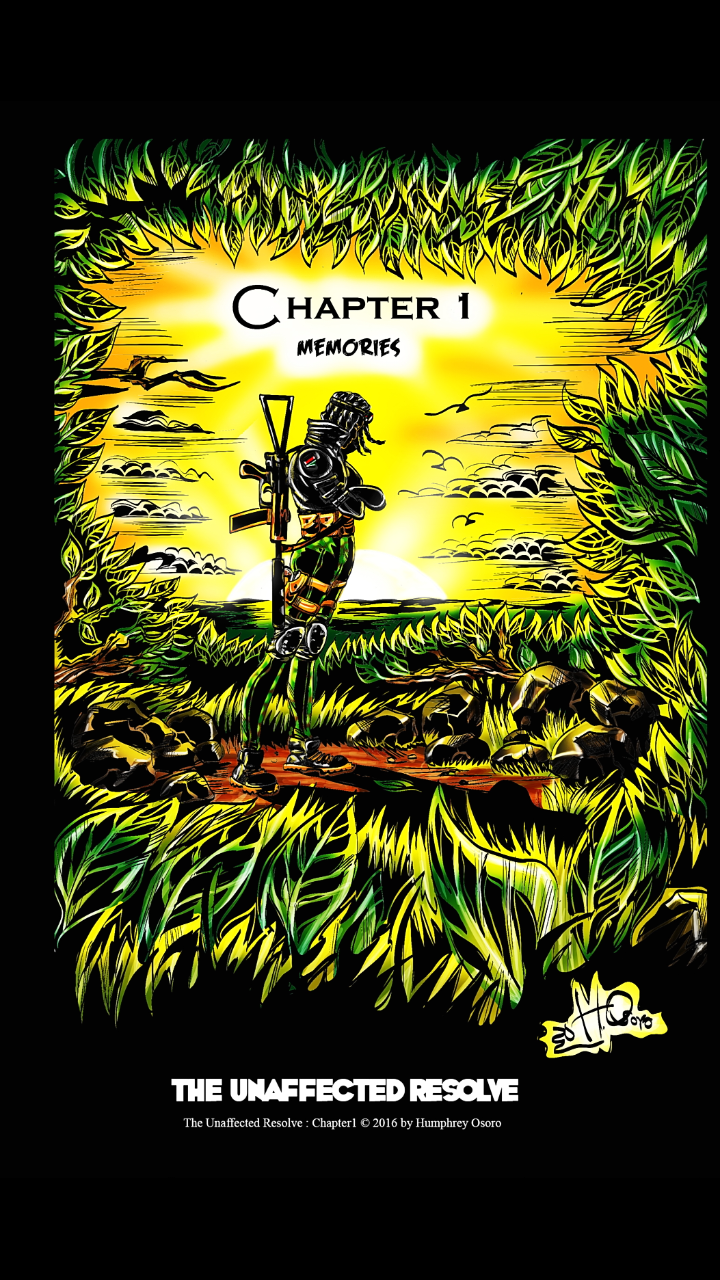
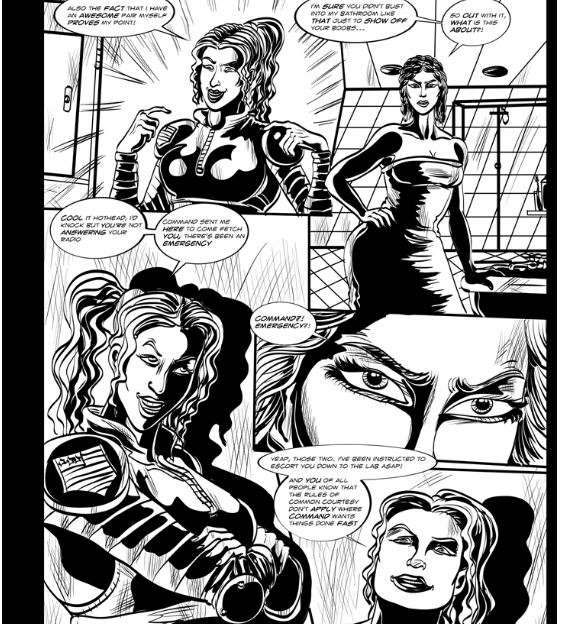
    The Unaffected Resolve is an ongoing fantasy/actionunaffectedresolve_1 graphic novel series that takes you into the mind of Lisa Sagini, a lieutenant in the Kenyan army, her apprentice ,Orville Mukau, and the mysterious cat creature that accompanies them through their adventures as they try to survive the horrors thrown against them, and to do that, they must have a resolve stronger than steel. It must be …Unaffected. Follow the saga to find out what happens.

    Available on : 254comics.com

    Cost: Kshs. 250


    Thoughts:

    unaffected-resolveHumphrey draws a tale about Lisa Sagini, who is in the Kenyan Army.  The story starts with a bang, a cat creature carries Lisa on it’s back, and that had me going what’s next.  Very strong strokes on the art, Osoro clearly defines each of his characters.  The tone is a bit darker than I’d like, but still it does not take out from the story, which leaves me waiting to see what more is in store for Lisa Sagini.

    I have mad love for the otaku culture!  There was a time I thought I might start drawing a manga, but writing is more exciting for me.  Instead, I read comics and manga avidly.  I was excited to get to know this little gem, and from our 254 region.  I hope to see more from Humphrey, soon!

    Follow Humphrey’s Blog to learn more.

  • Longing to Heal the Earth – Day 13

    Longing to Heal the Earth 

    People don’t realize the earth is…alive, her grandmother would say.

    events_crystalitas_gaia_mother_earth_healing_meditation_elementars_180x120Before…when her grandmother was young, the world was lush green.  Thick trees grew tall, so tall, one couldn’t see the highest branch.  Green grass in fields, vast and wide, as far as the eye could see.  Her grandmother would run down the hill, to the valley where the fresh spring flowed.  The water sweet, cool and clear.  So clear, the rocks in the riverbed were visible.

    Those days, her grandmother would say that all she needed to do was scoop water in her hand and take a sip, drink a gulp, dunk her face in the fresh spring water and drink her fill.

    There was no need for machines to clean water.

    Not like now, Mira thought, her gaze on the clear glass of water on the table.

    All her water came in bottles sold at the supermarket.  She was thirty and had yet to see a clear spring or river, one safe for her to dunk her head into the precious water and drink her fill.  Mira gagged at the thought of dunking her head into the Nairobi River for a drink.  The river was sick with muck, garbage, waste….God knew what else…one sip and she’d end up in the hospital with poisoning.

    Her grandmother’s stories sometimes sounded like lies.  Yet she knew, her grandmother would never lie to her.  Mira believed her when she spoke of lush green fields and tall trees.

    On days like this, she wanted a taste of the water in a clear fresh spring.  Mira took the glass and drank deep.  It was hot outside, and she still needed to go to the market.

    Letting a sigh escape, she got up, wore her hat and took her purse and a light bag she used for shopping.  She stopped at her door to wear the nose mask that had turned essential in the past year, then left her apartment.

    The sun was hot.  Scorching hot.  Mira walked along Ngong rd heading to the junction mall.  Pedestrians she passed wore similar nose masks, their heads covered with hats and dark eyeglasses.

    The masks were for the dust.  In a frenzy of progress, the country had lost eighty percent of its tree cover.  Forests, fields of green and lush valleys replaced with forests of sky scrapers, apartment buildings and factory buildings.  The rivers had turned to muck-filled waters thanks to the factories dumping at will without regulation.  The streets became filled with trash, as the population increased and no garbage regulations were imposed.  Garbage, muck, chemicals in the air…no trees, the air changed, the soil changed…the earth started dying and so did the people.

    She was lucky.

    Mira worked in one of the factories that manufactured portable home-water cleansers for those who could afford them.  Water was an essential commodity.  One that the entire nation needed to live.  The water cleansers brought in enough revenue to keep the factory going.  It was a good job, a secure one.

    Her job allowed her to afford an apartment that provided clean water, air conditioning to escape the relentless heat and sealed doors to keep out those who couldn’t afford it.

    Her people were killing the planet with progress.  The reduction of trees had led to a drastic rise in temperatures.  Summer weather turned deadly, those living in the semi-arid areas suffered first.  The heat spread through the nation like wildfire, it dried the rivers and lakes.  By the time the government started responding to the crisis, essentials like water had turned into a precious commodity peddled by opportunists.  Water was the new Oil.  Oxygen, the second highest money-making commodity.

    Air conditioned houses were an essential now.  No living soul could withstand the heat at midday.  Unfortunate souls caught in the daily heat wave met their deaths within the hour if they couldn’t find air conditioned shelters.  It wasn’t easy as the government commissioned shelters got overcrowded.  This daily scramble to get into these shelters was even more deadly.

    Mira shivered.  She made a conscious effort never to be outside at midday.  Once, the newspapers were filled with stories on politics, now they were filled with the death toll numbers from the daily heat wave, the severity of water shortages, and what to do to escape the heat.

    Mira reached the supermarket.  She stowed away her nose mask, just as she saw customers running to the vegetable stands.  Vegetables were a rare commodity.  She caught a glimpse of leafy greens and found her self running too.  Slipping in to the throng of struggling bodies, she slipped under a thin man’s arm and reached out her hand to the shelf.  Her fingers searching, searching, then they closed over a bunch.  She gripped it tight and fought hard to pull out of the human scramble. 

    When her hand was free, she hugged her bundle tight against her chest in case an opportunist tried to take it away from her.  She kept walking and didn’t stop until she was in the canned food section.

    A smile escaped when she saw the bunch of fresh green spinach in her hand.  She hadn’t seen one of this in three months.  The price on it was high.  One thousand shillings.  More expensive than chocolate.  Lord knew how long it would take until she could get her hands on another one like this.

    Fresh fruits and vegetables were hard to come by.  Mira headed to the water aisle and got a ten bottles which she put in her cart for the week.  She took one bottle and stared at the label.  The ice-caped mountain, with flowing streams and green trees on it’s hills seemed surreal.  She doubted anyone in her generation had ever seen anything so beautiful.

    No wonder her grandmother insisted that the earth was alive.

    If we had only stopped killing the trees, stopped abusing the earth by dumping garbage, pumping gases into the sky at will…my dear Mira, you might have seen how clear a spring can be,’ her grandmother would say.  ‘I miss that sweet water I tasted, my girl.  Nothing like this garbage you drink.’

    Mira sighed and placed the bottle into her cart.

    She too wished for that sweet spring in her grandmother’s past.  If only she could heal the earth…

    ***

    Thanks for reading!

    100 days Writing AdventureDays go on, this week a prompt on writing for the earth.  Collect the garbage, don’t cut your trees, and ride a bicycle or walk to the bus stop.  Love the Earth as she’s alive.


    Other Stories:

    1. Oran – Child of Destiny