
Question: Hi Elly, any information on book publishing costs and ROI? Drafting my first book. Wondering what's the cost of editing, book cover for a single title, for the Kenyan authors that publish. And do they really make their money back?
This message landed in my inbox in November 2024, and I’ve been staring at it for months. I didn’t answer it then because I was in the middle of printing and figuring out where to sell books. We are now in April 2025. I finally feel like I can answer this question. I have not offered numbers on the marketing side. It is an ongoing process at the moment.
So, it’s easy to put out the blanket ‘yes‘ to ‘Do they really make their money back?’ and call it at that, but there are variations. Yes is not an easy answer.
Fact 1: I might have talked about self-publishing books for a decade, but I’m also a newly published apprentice this year. I’ve focused on publishing ebooks on Kindle and Smashwords/Draft2Digital. The cost here includes: editing, book formatting, book cover origination, and marketing.
This year is the first time I have a printed book in a Kenyan bookshop. I am now learning on the job ^_^. The costs here include: editing, book formatting, book cover, ISBN, Printing, delivery, platform charges, and marketing. (Right now, I feel that Physical Books need so much more marketing than an eBook.)
I’m always willing to share experiences. So, let’s jump into answering this question in 2025.
What is the ‘cost of editing, book cover for a single title?’
Editing Costs in Kenya – A new author can seek an independent editor or a publishing company/business with an editing service. Editing is charged per word. Depending on an editor’s price list, the cost ranges from 0.35 cents to Kshs. 1.45 up to Kshs. 2.40 per word.
To Note: Your manuscript word count determines the cost of the edit as each word is charged. The cost will vary on whether my words are 10,000 words, or 100,000. That is, a 10,000-word manuscript being charged 1.45 will cost, Kshs. 14,500. While the 100,000-word manuscript will cost, Kshs. 145,000.
It is also important to note that the quality of the edit matters. What kind of edit are you looking for? A Comprehensive edit? A copy edit? A line edit? Someone to help you write your book from start to finish?
In short 2 things affect the cost of the editing process, First is, how done or ready your manuscript is will decide how much it will cost you when it comes to editing. Check out Mystery Publishers’ breakdown of the quality of editing you want and how much it might cost you. Second, the number of words in your manuscript also contributes to this cost. A 10,000-word manuscript costs less than a 100,000-word manuscript.
I will be honest. The editing process is the most time-consuming part of the self-publishing journey. It also does not end. You can print a book and find a very obvious problem on the second page that did not register the ten times you and everyone you know read through. The mortification is always super nuts. I'm still learning how to let that feeling go, and hope to do better in the next run. I find that it helps to find an editor who can help you through this process easily, and without breaking the bank account, and is amazing at proofreading.
Book Cover for a Single Title – Your book cover is essential. The cost of a good book cover in Kenya ranges from Kshs 2,500 to Kshs. 4,500 to Kshs. 15,000. It depends on your preferred artist and your book requirements. We can’t talk about a book cover without discussing book formatting. That is, you need to decide if you’re making an eBook, or a printed book and what size the printed book is, (A4, A5) each book size has varying paperback sizes. The size of the book will decide your book cover image and book cover size requirements. It is good to learn the different types of book sizes available in the industry.
I hope I have covered the editing and book cover costs in Kenya.
Now, to the ‘Do they really make their money back?’ part of the question.
Yes, authors in Kenya do make their money back. But, how fast the author gets their return on investment depends on the next factors.
- Industry | Genre – Your book topic is essential to your sales. Books targeting particular industries like bakers in the baking industry, clothes designers, bead making, faith-based narratives, academics or investing in real estate, accounting, among others are specific to the industry. So, the authors of these books make sure their target audience is interested in these topics and that is who they market to. Industry books tend to reach their target audience faster. If your book genre is fiction, specify which fiction genre your book is in, that is, mystery, romance, thriller, horror, fantasy, literature. We don’t all read the same type of fiction. Authors in the fiction genre target specific genre readers for sales. Figure out where your fiction stands in the genre section.
- An Author’s Social Currency – A biography written by a well-known individual, for example, a politician or celebrity will sell faster than one written by a modest member of society. The politician or celebrity leans on their social currency to get buys, while the modest member of society has to work harder and market more aggressively to gain the same attention.
- Marketing – Industry | Genre and Social Currency contribute to your marketing strategy. Once you know who your readers are, and your ability to reach them, work at seeking them out in their spaces, their industries, and interests. For a new writer, it is essential to use marketing to grow your social currency. Reach for and find readers on social media like Tiktok /Instagram/Pinterest/Facebook/the Fediverse / among many others. Visit and connect with groups and communities that will or may have interest in your books. Marketing is a continuous process. Don’t give up in the middle, and if you feel you are having a hard time doing the marketing yourself, seek help from someone you trust who does know how to market.
Book printing is a business. When you get into it, understand the concept of costs, expenses and profit margins. Your costs include:
- Editing your manuscript – (Editor’s Costs)
- Book Cover origination
- Book Formatting
- Legal costs :ISBN and Copyright
- Printing and Delivery costs
Expenses:
- Marketing – FB Ads/ Amazon Ads/ Tiktok Ads/ Any other marketing costs you choose.
- Delivering your product to your customers.
- Platform expenses. For example, if you sell your book through Jumia, Jumia takes a percentage from the sale, they are called selling fees. You also need to get the book to their vending stations, which is also a cost to you.
There maybe other hidden costs that are relevant to you as an author. You should track all these amounts so that you can price your book correctly to make back your investment. At the same time, be sensitive to the current market’s trends(inflation and current economy stress) and make the retail price of your printed book affordable for your targeted audience.
If you hit the sweet spot with all these costs and expenses, you will make your money.
Finding a balance
As an author getting started in this industry, the first thing to manage is your doubt. Let me kill that doubt for you right now. Yes, it is possible to print your book. There is no doubt. The work you need to do is finish the manuscript. Get through it to the last page.
- Then, edit it. Get your bestie to read it. Get more than your bestie to read it. Once you have feedback, fix what needs help, then find an editor. Edit the content.
- Then, format your book into the size you prefer. Discover more about book sizes. Once this is finished make a pdf document.
- Create a book cover that fits your manuscript’s content.
- Once you have a book cover and a completed pdf document, you can get your copyright at the Kenya Copyright Board website. Buy an ISBN which goes on the back of your cover.
- Find a printer. At this stage, make sure the printer can keep your printing costs relatively similar as you print on demand, this way, you can keep your retail price intact. If you are able or can afford it, approach an offset printer for a large consignment of your book. The offset printer guarantees availability.
- Once your book is printed, market it. Don’t get tired.
- Get started on writing your next book.
As a self-publishing author I often need to find a balance between marketing one book while writing the next one, figuring out the printer’s costs and where to sell books, and the logistics of deliveries. In between all this, I may get a review that throws me out of focus. So, the only way to get through it is to focus on my goals. Ask yourself, what do you want out of this very personal exercise?
I spend my time selling eBooks. But this year I’m learning how to sell printed books. The doubts are in full swing, and I have to hit them with a bat daily. I’ll share more on the process at the end of the year. Hopefully ^_^.
The long and short of it is, Finish your book, get it out there. Experience the publishing process, it is the only way to know if you’ll make back your investment. The more you do it, the better you get with the process. Go for it! The world needs your story. Always!
***
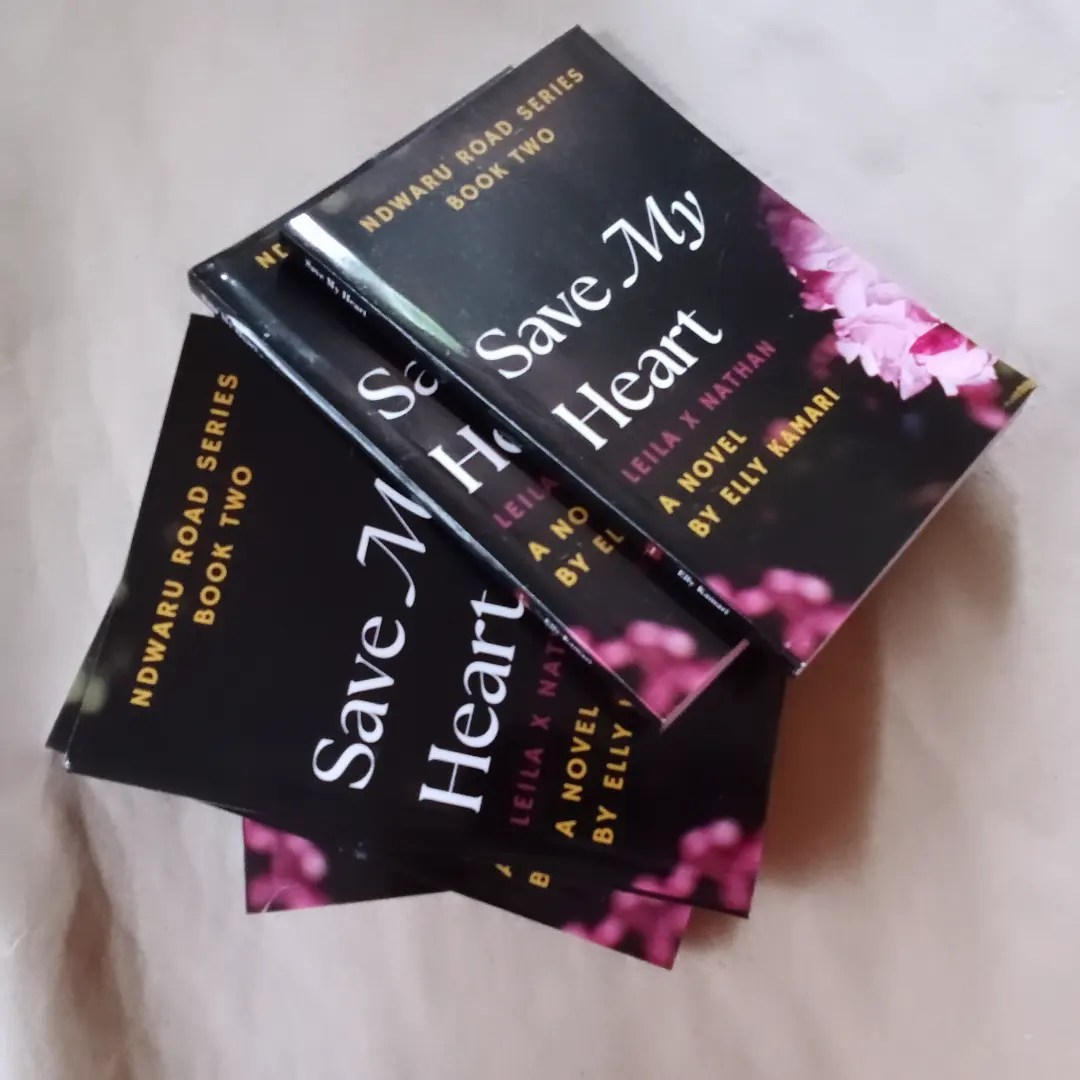
Save My Heart
Leila Karani fell in love, thinking it was forever. When she got pregnant, she went to see her boyfriend, Nathan Njeru, thinking he would support her and their baby, but she was wrong.
Visit Nuria Bookstore and get a copy of Save My Heart.


























 Stories and Book Talk