Tag: Fiction in Nairobi

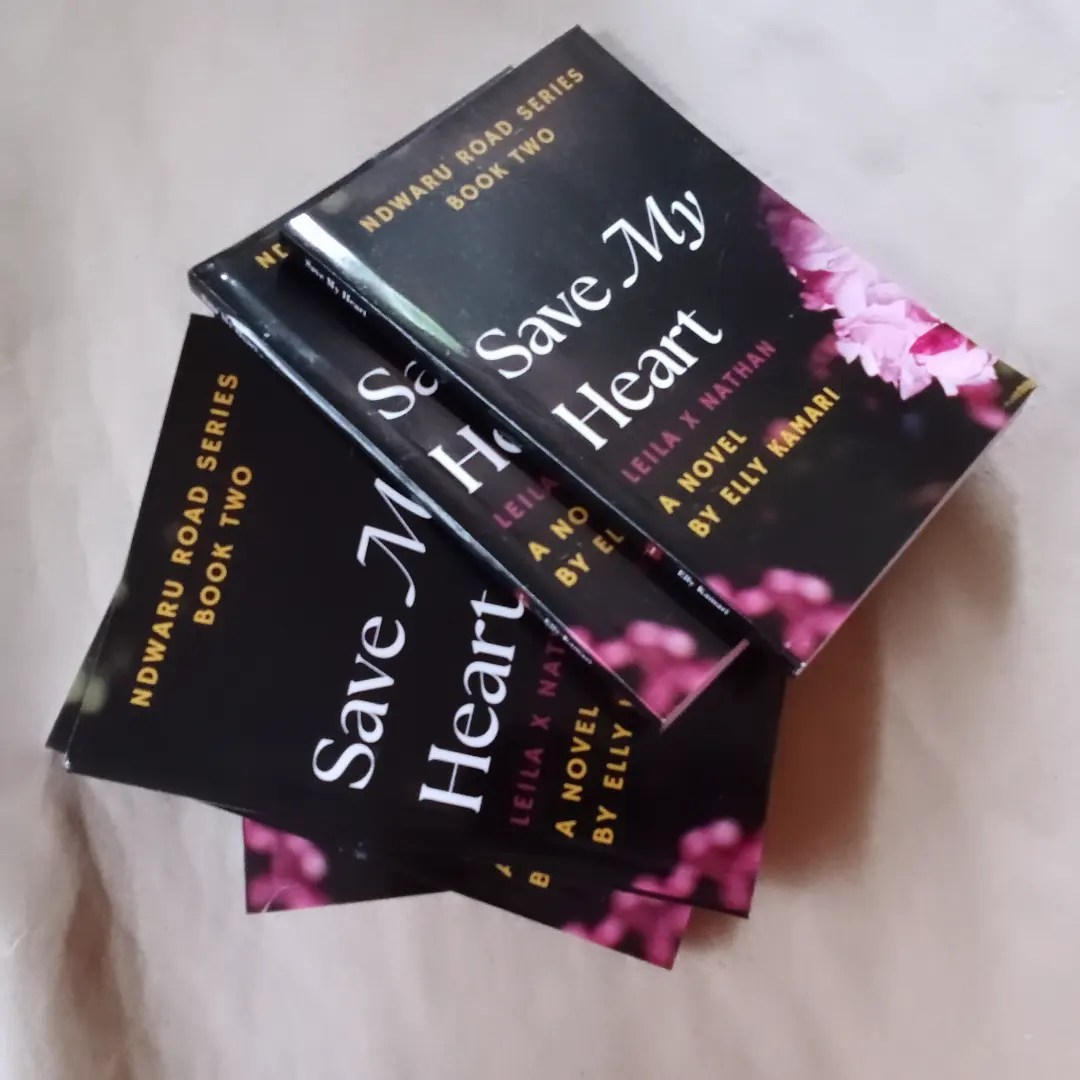
  • Save My Heart is now Available at Nuria

    Save My Heart is now Available at Nuria

    Save My Heart

    by Elly Kamari

    Leila Karani fell in love, thinking it was forever. She got pregnant and went to see her boyfriend, Nathan Njeru, thinking he would support her and their baby, but she was wrong. Nathan declared he did not love her anymore and instead urged her to abort their baby.

    Eight years later, Leila is a single mother running a fabric and tailoring shop in Nairobi, and her daughter’s happiness is her only concern. When a Fashion Design opportunity comes her way, she unexpectedly encounters Nathan. Now, Leila must make a decision that will profoundly impact her daughter’s future, especially when she learns the truth about Nathan’s past actions.

    Can Leila navigate the tumultuous waters of forgiveness and allow her heart to love a man she’s despised for so long yet still feels connected to?

    This is a standalone and the first book will be printed in January 2025.

    This Printed Book is now available at Nuria Bookstore. Buy it online and get it delivered, or visit the Nuria Bookstore here: The Bazaar Building, 1st Floor.


    On a side note, I am low-key excited to finally be posting about a printed book available for purchase in my city, Nairobi! It was quite an amazing moment, and I’ve been smiling and feeling super excited when I think about it. Here’s to more and more books printed and available in Nairobi!

  • A Snippet of Fiction – The Price of Amber

    A Snippet of Fiction – The Price of Amber

    Happy May! I’m so excited to share snippets of the story Ram and Amber, which now has a tentative name ‘The Price of Amber’. Still not in love with the title, in any case, I’m excited to have a 10K word count on this project.  There is nothing like getting started and having something to work on, instead of only planning.  Here is a look at the first chapter.

    Chapter One

    Kata right, kuja, kuja, sawa. Hapo! Hapo!”

    Ram Jelani hit the brakes, stopping the tipper truck.  He leaned out his window to see his friend and business partner talking to their client.

    “Amos,” Ram called out.

    Amos hurried to the back of the truck and spent a few minutes unlocking the tailgate.

    Mwaga,” Amos called to him and hurried to the side, giving Ram a thumbs up.

    Ram nodded and engaged the controls to lift the tipper’s dump body.  The dump body of the truck lifted on hydraulics, letting out thirty tones of sand brought from the river.  Ram waited until it was all poured before he drove the truck forward to allow any excesses to pour out.

    Ram’s phone rang and answered it, hands-free. His attention stayed on Amos and the two young men working with them.

    “Ram, it’s Mom,” Candace Jelani’s voice filled the cabin.  “Where are you?”

    “At a construction site in Othaya delivering sand,” Ram said.  “What’s wrong?”

    “I don’t always call you because something is wrong,” Candace said.

    “I told you I would be far today.  You must have an issue to call me,” Ram said, giving Amos a thumbs up when Amos called out that they had emptied the truck.

    Ram lowered the dump body, drove forward, and brought the tipper to a full stop.  He parked and removed his phone from the hands-free mode.  He took it from its holder and brought it to his ear.

    “What’s wrong?” Ram asked.

    “Naria needs you,” Candace said with a sigh.  “She is stranded in Nyeri Town.  Her friends left her alone to pay for the table.”

    “Mpesa her,” Ram said, annoyed by his little sister’s consistent letdowns.

    “She doesn’t have her phone,” Candace said.  “She says she lost it last night.”

    Ram bit his bottom lip not wanting to curse for his mother to hear.

    Sawa, I’ll deal with it,” Ram said.  “Where is she?”

    “White Rhino,” Candace said.

    “Her tastes are getting expensive, Mom.  One of these days, you’re going to need to use your mwiko on her.  Why is it I’m the only one who knows what that mwiko is used for?”

    “Keep complaining and I’ll give it to you when you get Naria home,” Candace said.  “You might be taller than me, but I can still smack you with a mwiko, Ram.  He, who are you joking with?”

    Ram chuckled.

    “Relax, Mom.  I’ll make sure Naria gets home after lunch,” Ram said. “Let me call when I have news.”

    “Thank you, Ram,” Candace said and ended the call.

    Ram started the truck and drove it out of the tight path leading to the construction site.  He drove it out to the exit of the access road and parked on the side of the main road.  Taking the keys, he jumped out of the cabin and stretched his arms over his head.

    Amos hurried to meet him.

    “Have they paid?” Ram asked.

    “Yes, thirty thousand,” Amos said, waving their business phone. “Thank you for maneuvering the tipper.  The driver would not have made it.”

    “I have to head out,” Ram said.  “Let’s meet in Karatina this evening.”

    “Where to?” Amos asked, reaching into his pocket for car keys.  He handed them to Ram in exchange for the truck keys.

    “To rescue Naria,” Ram said.  “I don’t know what to do with her.  Her friends are not friends.  She won’t believe it.”

    “What happened now?” Amos asked.

    Ram scratched his chin and shook his head.

    “The story she gave mom sounds incomplete,” Ram said.  “I’ll need to hear it from her to know the truth.”

    We,” Amos sighed.  “I’ll do the next delivery and call you later. Let’s meet at the usual place.”

    Ram thanked Amos and hurried to the black SUV parked on the side of the main road.  He jumped into the driver’s seat and drove off with a wave at Amos.  Ram thought about Naria and his mother on his drive to Nyeri Town.

    Naria was his half-sister.  She was younger than he was by ten years.  His mother had gotten her with her boyfriend, Zion Kavinde.  His mother, Candace, was soft with Naria.  She spoiled Naria and gave her everything she could.  Candace said she did so because Naria was a child born into an unsteady home.

    Ram scoffed at the description.

    Unsteady was a mild way to describe their tumultuous home life.  Broken home was more accurate.  The truth was that Candace Jelani still loved her husband, and Ram’s father.  She refused to divorce him and the affair she had with Zion was an attempt to heal her heartbreak.  Naria was born into a messy situation and there was nothing to do but cope.

    Ram parked his car at the White Rhino Hotel and went in. He found Naria sitting at a table for two on the terrace.  She smiled when she saw him.

    “Ram to the rescue,” Naria said with a quick smile, though it did not reach her eyes.

    Ram pulled out the chair opposite her and sat.  He placed his phone and car keys on the table.  Crossing his arms against his chest, he sat back.

    “I’ll settle the bill in exchange for the truth.”

    Naria started to talk but Ram shook his head.

    “If you don’t give me the truth, I’ll walk away,” Ram said, not caring that his mother would find her cooking stick and hit him with it.  He could take a little pain.

    “Ram,” Naria said, her voice shaky.

    Her eyes filled with tears and in a different setting, he would fall for this, but not here.

    Ram pushed his chair back and started to stand up.

    “Wait!” Naria said, reaching for him in a panic.  “Just wait a sec. I’m just…”

    “The truth, Naria.”

    “Fine,” Naria said, sitting back.  “Relax, please don’t leave me here.  I don’t want to call Mom again.”

    “If you tell me, I’ll even buy you lunch,” Ram said, glancing at his watch.  It was just past twelve o’clock and he was hungry.

    Naria sighed.

    Aki, Ram,” Naria shook her head.

    “Why are you here?” Ram asked, looking around the high-end hotel with a frown.  “Your budget does not allow you to be here.”

    “I came with friends,” Naria started, clasping her hands on the table.  Her nails were a brilliant shade of green.  She was in a short black dress, her leather jacket shiny and there was smudged eye shadow around her eyes.

    Ram sat back and crossed his arms against his chest, waiting.

    To Be Continued!

    Look for it on Wattpad, or Here. Hope your Friday is full of great vibes!

  • What is Self-Publishing?

    What is Self-Publishing?

    What is Self-Publishing?

    Self-Publishing is the act of an author taking on the process of writing, editing, formatting, printing, and marketing your fiction or non-fiction book. Following are five important aspects of self-publishing.

    • The author publishes their work independent of any publishing houses.
    • The author takes on all the costs and expenses of the process.
    • The author does receive all the sale profits: He or She retains control and ownership of his or her content.
    • The author registers ISBNs and Copyright Licenses in person. He or she is responsible for fulfilling any legal requirements needed in the process of publication.
    • Marketing and promotion falls to the author.  The author needs to work at discovering and cultivating readership in order to make sales.  It helps if you have a large network of supporters online and offline.  If you don’t, then it is a great idea to get started on cultivating readership of your work.
    What is Self-publishing? Five points on Self-Publishing in Kenya.

    Self-Publishing is different from Traditional Publishing.

    In Traditional Publishing, a publishing house accepts an author’s work, edits and formats according to house standards, prepares the work for printing and takes on the marketing of the work. In this day and age, the author is no longer exempt from the marketing efforts and may have to complete tasks as assigned by the publishers to promote the work.

    In Kenya, publishing houses do not need you to have a literary agent.  However, they do need you to send work that has content centered on the publishing houses’ preferred publishing genres.  Check out these four traditional publishing houses submission guidelines: East African Publishers / Moran Publishers / Storymoja Publishers / Mystery Publishers

    Of course, there are more than these four publishing houses in East Africa, but I have highlighted companies who have clear submission guidelines on what they are looking for on their websites and the process of submission.

    Now you know what Self-publishing is, and what to expect from the process.  Here is a tip on what you need to do to see profits from your hard work.  Approach self-publishing as you would a startup business.  Your books are a product.  A product that requires smart marketing and constant refining to attract your readers and keep them.

    It is no longer about just uploading your book on Amazon’s KDP or Smashwords and keeping quiet, waiting for a reader to stumble upon your work.  The industry has grown and changed.  There are a lot more authors who are publishing on the same platforms, in the same way.  You now need to market your work and be outgoing about it, online and offline.

    Self- Publishing will give you results depending on the amount of effort (time + money) you choose to pour into it. Don’t be afraid to take the first step.

  • On the Writing Desk – Work in Progress

    On the Writing Desk – Work in Progress

    A fresh new start for the year 2022.  I’m excited for new projects, and a new creative cycle.  Here is what is on the writing desk this year:

    Zev’s Afrotheria – This is a story I’ve worked on off and on for the last few months. I’ll post it more often on this blog , look out for the chapters.

    Zev Mablevi’s younger sister goes missing after a vicious attack on their home by ghost wraiths.  To find her, he needs the power of the Guardian Guild.  Zev gives up on his dreams to join the prestigious Tech Class and enters the Guardian Guild.  He works hard to join the most elite force in the guild on a quest to gain enough power to investigate his sister’s disappearance.  He soon meets Dahlia, a progressive scientist who believes she has found a way to win against the wraiths for good.  She needs a guardian who can take her to the top of the mountain where the ghost wraiths come from.  She promises Zev to help him find his sister if he gets her to the mountain and back.

    Kipepeo – I started this during the 2019 nanowrimo cycle. I always feel it needs more work, so I’ll polish it up and share it soon.

    Henson lives in a two-room house in with his mother and four siblings.  He wins a swimming competition in the local community center and wins a scholarship to Bayside College.  An elite school in the Lavington Hillsides.  There he meets Livia, the daughter of an affluent businessman.  They fall in love, but when her parents discover their relationship, they threaten to withdraw his scholarship. Livia breaks Henson’s heart to protect him.

    Ten years later, Henson works in a reputable accounting firm in Nairobi.  He meets Livia, who is now managing her father’s business.  She needs help to save her family’s business from creditors.  Will Henson help her?

    Jelani’s Empire – This is a tentative name for this story. In the books it is simply Ram & Amber. Hoping by the end of the year, it will be more than a shell.

    Ram fights to recover his mother’s place in his family’s empire. This is a work in progress with no real blurb.  I’m lost in development world with it.

    So much to do and write, and January is already underway.  ^_^ This is my list of work in progress.  I hope yours is going well too.

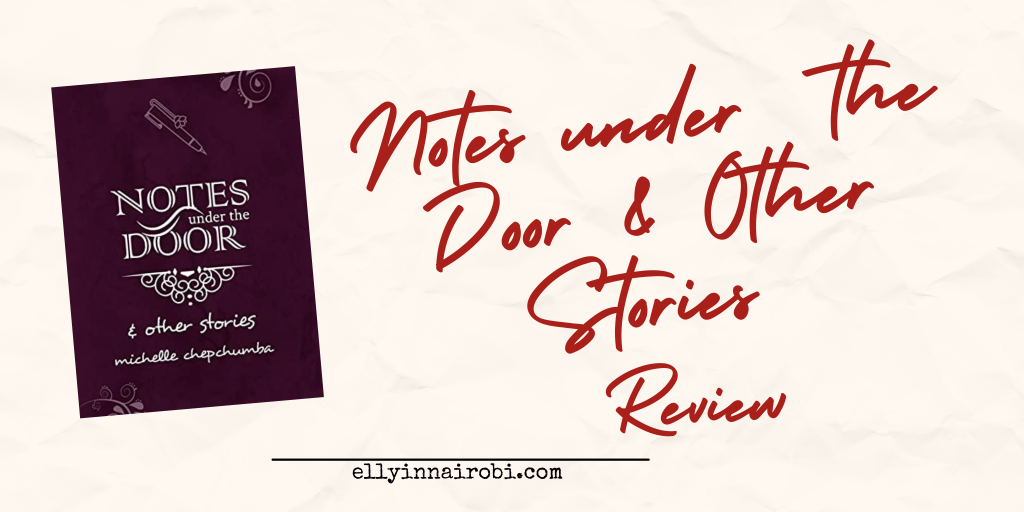
  • Notes Under the Door & Other Stories – Book Review

    Notes Under the Door & Other Stories – Book Review

    Notes Under the Door & Other Stories

    By Michelle Chepchumba

    Dead fathers. Critical mothers. Abusive marriages. Body insecurities. Young love. And always, expectations. Notes Under the Door is an anthology of seven African literary short stories that explores what it can mean to be a girl, a young woman, in a world that demands too much of women, and gives back too little. Set in urban Kenya, each story follows a girl or a woman grappling with the experience of being who they are – young, female, African, layered, complex, whole.

    Book Review

    Notes Under the Door & Other Stories is a collection of seven short stories.  Each story is a glimpse into a deeply profound moment.  A moment delving into the secret, complicated mind of Kenyan women at different stages of life.  The experiences described in these moments are tangible and feel very real.

    Chepchumba’s characters speak on diverse, sensitive issues such as, unexpected pregnancy, and how hard it can be to acclimate to the dramatic change of life a baby brings.  She delves on relationships, and how hard they can be to maintain. A short story on domestic violence from the perspective of a young girl shows the impact it has on children. How domestic violence changes a child’s view of a parent.

    Notes Under the Door gives this book its name.  It is a story tackling grief, obligations, and abortion. Each one of these adding on to the damaging effects on a mother at the time of abortion, and years later, when life continues on.

    In Spilling into the World, a character asks, ‘…why can’t you decide you’re beautiful?’.  What a powerful question.  Spilling into the World looks at body image in a world where mainstream stereotypes impact women’s views of their own beauty, and their self-confidence.

    A heartbreaking story told from the perspective of a young girl whose father does not look at her, nor treat her as ‘his princess’, concludes the collection.

    Overall, Notes Under the Door & Other Stories reads like tales told from a best friend’s perspective.  Stories to make you feel, ‘Ah, I’m not alone in this. There are others like me.’ These stories depict women living experiences in our rapidly changing modern world.  They are a conversation to continue, and normalize.  I most enjoyed the realness of these short stories.

    Rating: 4.5 out of 5.

    (4.5 Stars)

    Connect with Michelle on her blog

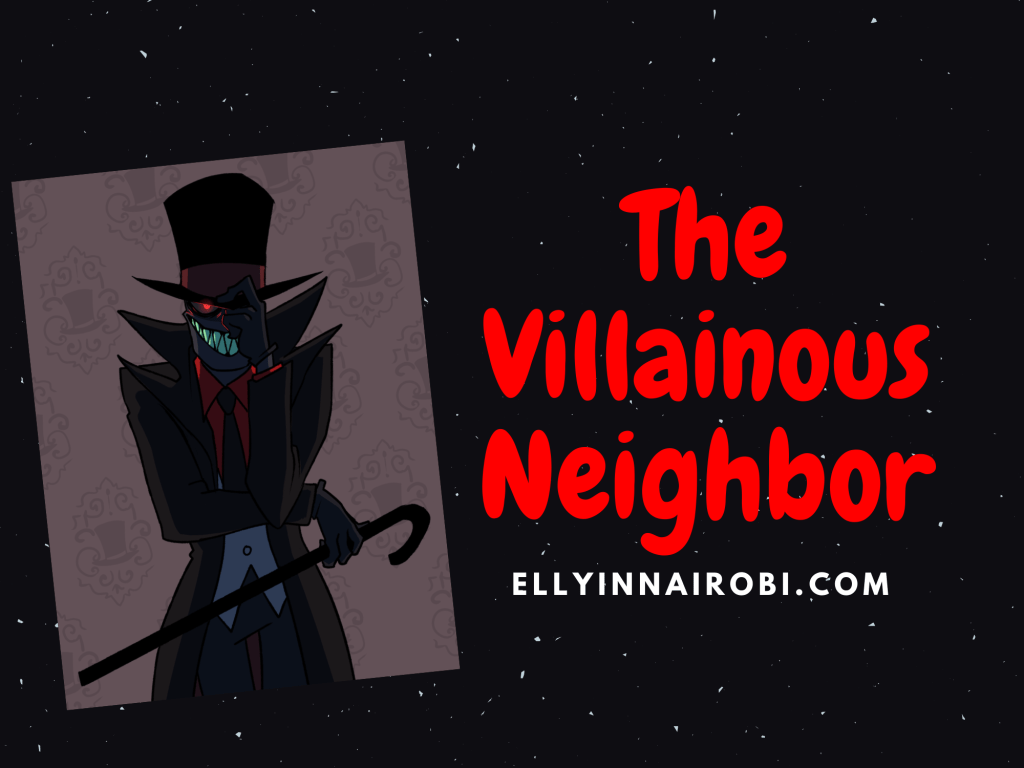
  • The Villainous Neighbor

    The Villainous Neighbor

    It was less than two years after three children lost their daddy to a car crash.  The rawness of such a loss still fresh in their minds, the world seemed like a battlefield with every step.  Strangers turned to friends, while friends they had known left, not able to withstand the sense of grief clouding around the three children and their little mother.  It was a hard time for the small family of four.

    Now, their home was a farm at the end of a stretch of land with a very muddy access road.  On very rainy days, a lake of sorts would form in the middle of the access road.  The mother of these three children would then have to find a way to get them across daily in order to get them to school.  There were two pairs of shoes to be worn.  Gumboots and rain coats to get through the massive swamp and school shoes to wear when the three children got to the bus stop.  The family that owned the property closest to the main road was kind and allowed a small path at the driest part inside their own farm away from the access road.  But even this little path would sometimes get hard to pass through.

    In any case, the little family survived the best they could through the very rainy season and the massive swamp lake that formed in the middle of their access road.

    One day, the neighbors who owned property opposite the little family’s farm opened a small gate on to their access road.  They wanted a second exit they said.  One that would allow them to have two gates.  One gate on their main road on the other side of their property, and the little one on the muddy access road with the swamp in the middle.

    The mother of the children had no problem with this development.  In fact, she thought it would be a blessing.  Perhaps the kids would have an easier time going to school now.  They might use that small access to get to the drier road on the other side, and their path would be easier to school. 

    In the dry season, this little gate never came to play for the little family.  Their access road was fine, and they went about their lives as usual.

    Then the swamp in the middle of the road returned after a particularly rainy day.  It was holiday time, and the three children did not need to go to school.  However, their mother did want to send them to the shop, so she handed the three money and asked them to get a kilo of sugar from the shop.  They had seen others using the small gate made by the neighbors to escape the swamp, so they thought, ‘Oh, we can also try this gate.  It will be easier to escape mud and swampy water.’

    They were nervous about it, after all this was a new route, but they thought they would try it and see if they could get to the other dry road.  After all, the owners also use their access road in the dry season.  All would surely be well.

    They were wrong.

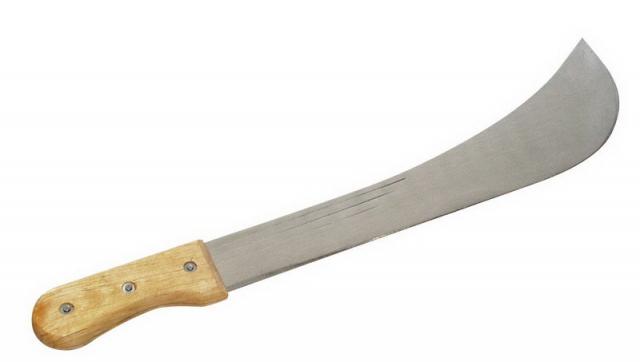
    A panga is a Machette, very popular farming tool in Kenya

    They barely made it to the opposite gate of the quiet property to the other road when a man came out swinging a panga from his house.  The panga was sharp, his words sharper and he chased them as one would chase thieves.  He screamed insults at them, and threatened to cut them to pieces, fear grew and the three children screamed running back home at the speed of light.  They forgot why they had ventured outside their home and went to find their mother.

    When the three children ran home, their little mother was in shock at their crying faces.  She asked if they had been robbed off the money she gave for sugar, and tried to soothe them, wiping away their tears.  In minutes, she discovered their story and a burning anger fueled her to confront this villainous man who would dare threaten to cut her children with a sharp panga.

    When she got to his gate, she asked him why he would do this, and he threatened the little mother, telling her to shut up or he’ll kill her.  This mother was not one to take insults quietly.  She screamed for help and the neighbors came.  As she was calling for help, this villainous man wrapped his hands around her neck and tried his best to rob her off breath.

    It took three men to pull this villainous man off the little mother.  Her voice was hoarse from the assault. Her neck damaged. The three children were in shock.  Not less than two years ago, they had all buried their father after a car accident, now here was a man doing his best to turn them into orphans. Sinister yet, he was not sorry about it. 

    It became clear that a path to the dry road on the other side was not worth this hefty price of death.

    In any case, the courts became involved.  The villainous man was tried with attempted murder and the illegal path into the muddy access road was closed by a judge.

    Life continued, as it often does.

    Three little children grew up and in a blink twenty years passed.

    Their little mother still struggles with neck problems, as a result of the assault on her neck.  Some nights she has to sleep with a neck collar.  The children often make sure it is new and available even when she travels. This was a price they paid for daring to think that all neighbors are made equal.

    They all learned that the kindness of one family cannot be carried to the next family.  Their access road still gets terrible in the rain, but they endure and find ways to pass through it without complaint.  Muddy shoes are a much easier price to pay than death from murder by a villainous neighbor.

    A few years ago, the villainous man’s family opened a path to the muddy access road again.  They use it unstopped by the little mother and the three children.  No pangas raised against them or hands wrapped around their throats in a grotesque picture of murderous intent. None of the villainous man’s family help fix the muddy road, after all they still have the other side to use during the rainy seasons.  This lesson is that the nature of a family’s values remains and does not change.

    Recently, the little mother was helping one of her daughters transplant a tree from their gate into their farm.  She saw a woman pass their gate heading for the now illegal path at the end of their access road and said, “Ah, that’s that villainous man’s daughter. You should know her in case she comes to yell over electricity poles near their fence.”

    Yes, the spectacle of a woman screaming over electricity poles has happened to the little mother, but that is a story for another day.

    The little mother’s daughter spared the woman in question no glance.  After all that woman’s daddy almost cost her a mother.

    “It’s better not to know or interact with them,” the daughter said. “Nothing good can come from it.”

    “True, ” the little mother said, touching her neck.

    In the end, the little family lives on, but the question still remains, what makes people so unreasonable as to want to murder over a small moment?

    Can you forgive someone who tries his best to choke you to death because you asked a question about your children, who tried to pass a path this person’s opened, that others have used unstopped, but your children had to face a machette on the first attempt?  What would you do with this reality?

    Life continues, as it always does.

  • How to get an ISBN in Kenya.

    How to get an ISBN in Kenya.

    Assigning an ISBN number to your book in Kenya

    1. Get an account with the Kenya National Library Service(KNLS)  ISBN service here: ISBN website
    2. Create a Profile, adding important personal details. You may also do this as a publishing company, you just need your business registration number.
    3. Once you are set up, click on the ISBN Products.  They offer options of buying 1 ISBN, 10 ISBNs,  100 ISBNs to 1,000 ISBNs.  Choose the number that fits your needs, and make the purchase.  This process is easy and flexible, you may do it in cash, mobile payment, through the bank, or whatever works for you.isbn
    4. Once payment is approved, wait to hear back from KNLS.  They are very fast about this, and you will get a message from them giving you your ISBN numbers, as well as the barcode that goes along with it.
    5. Here is a short guideline of how and when to use your ISBN when you get it and what to do with it once you get it. The ISBN site sends these guidelines to you once your ISBN is approved.

    You may allocate ISBN to the following publications:
    – Printed books material
    – Microfilms
    – Educational video or movies
    – Atlases and maps
    – Publications in braille
    – Electronic publications

    ISBN should NOT be allocated to the following publications:
    – Off print from periodicals
    – Advertising materials (sales catalogs, price lists, prospectus, instructions publishing flyers, etc.)
    – Wall posters, newspapers, leaflets
    – Programs of theatrical, music and other performances
    – List of exhibits without additional text
    – Curricula of schools and colleges of all kinds
    – Lecture and teaching materials of manuscripts character
    – Calendars and diaries
    – Form and coloring books

    PLEASE ALSO NOTE that ISBN should always appear on the verso of the title page, or if this is not possible at the foot of the title page. It must also appear at the foot of the outside back cover at a prominent outside position.

    FINALLY, remember that the BOOKS AND NEWSPAPERS ACT CAP. 111, Laws of Kenya, stipulate that every publisher MUST deposit 2 clean copies of their (new, future and back issues) with the Director, Kenya National Library Service, (National Reference and Bibliographic Dept.). This process begins by filling in details under the “My Publications” section when you log into the ISBN service, and later depositing the copies physically at the National Library for approval. You shall not be allowed to purchase further ISBNs until you complete this process for all issued ISBNs.

    Now that you have your ISBN, consider Copyrighting your book with the Kenya Copyright Board

    This procedure is for a first-time buy, for a second-time buy, make sure you have met all their requirements on submitting books to the National Library.

  • The Hyena’s Marriage – Day 12

    Prompt: Three children are sitting on a log near a stream. One of them looks up at the sky and says…

    The Hyena’s Marriage

    spotted-hyena

    Three children sat on a log near a stream eating sweet ripe mangoes from their grandmother’s garden.  Mango juice ran down their chins, but none of them stopped to wipe it away, too eager to savor the taste.  The sweet delicious feast was oddly exciting, as they had to climb the tree to get the mangoes. After their grandmother explicitly told them not to climb the tree.

    The fact that they had not listened to her, and had then gone to climb that mango tree, with the threat of her finding out, made the mangoes all the more sweeter.

    Now, one of them looked up at the sky and saw an old hawk fly by in a hurry.

    “Where do you think Kito is going?” the boy asked.

    “To cause trouble no doubt.  Why?” the girl in the middle asked.

    The boy wiped his chin on his sleeve and stared at the mangled mango seed in his hand.

    “Kito was carrying a sweet potato vine in his beak.  Where do you suppose he is taking it?”

    “You’re seeing things, Munya.  Why would a hawk carry a vine?”

    “I don’t know.”  Munya shrugged, licking on the mango juice escaping between his fingers.  “Aren’t you curious, Lena?”

    “No.

    Munya sighed.  He was the curious one.  Everyone in his home knew it.  He asked too many questions and got into trouble because of his curiosity.  Once, he asked his mother if being curious was a bad thing, but she smiled and said it was the best way to learn.

    Oh well, Munya threw away the mango seed and stood.  He went to the edge of the stream to wash his hands, otherwise he would be sticky all day.  Besides, their grandmother would take one look at their sticky fingers and know they stole her precious mangoes.

    “Lena, Karua, don’t forget to wash your hands,” Munya said.  “Grandmother might really beat us with that cooking stick she waves this time.”

    “Yesterday, she wanted to hit me with it when I forgot to close the chicken coop,” Lena said with a giggle as she rushed to his side.

    Karua moved slower, he was the youngest in the family and often followed Munya and Lena on their adventures.  Munya worried about Karua more than Lena, because Karua was slower.  He didn’t like running as much as Lena did.  Lena was a tomboy, or so their mother said.  Whatever that meant.

    “I want to know where Kito was going,” Munya said, looking above the trees near the stream.

    The small forest near the stream bordered their family’s farm.  Their mother and grandmother often sent them to collect firewood.  That was how they met Kito, the old hawk that lived deep inside the forest.

    “Let’s take Karua home first,” Lena said, watching their youngest brother splash water in the stream.

    “That will take too long,” Munya complained.  “Kito moves too fast.  Please, I’ll look out for him.”

    “You said that last time, and I ended up falling behind taking care of Karua.”

    “Lena, I promise I won’t leave you alone,” Munya said.  To convince her, Munya went to Karua, took his left hand, and led him toward the forest.  “See, he’ll walk with me.  Let’s go, Kito is surely going to cause trouble.  I want to know.”

    “You’re going to get us in trouble,” Lena complained even as she followed them.

    Munya ignored her and with determined footsteps, led them into the forest.  Sunrays from the sun shone in intervals, breaking through the tall, tall trees with leaves that sang when the wind blew.  Soon, Munya noticed they weren’t the only ones in the forest heading in the direction Kito had gone.  Rabbits raced by, each carrying a gift in its mouth.  Monkeys laughed overhead, swinging from tree to tree.  More birds flew by, and the great big elephant who sometimes came by the stream for water stomped by.

    Each animal carried a small gift, and Munya wondered if he’d been wrong about Kito going to make trouble.  They soon came to a clearing and Munya clutched Karua’s hand tight when he started tripping over a stone.  Lena took Karua’s left hand and together they steadied him.  They looked up to find the animals waiting in a circle in the clearing.

    The silence was unusual, even the chattering monkeys sat in silence on the edge of the circle.  Munya glanced above and saw Kito resting on a low tree branch next to them.

    “Old Kito,” Munya said, his voice in a loud whisper.

    “Shh…” Kito answered, not looking at him.

    “But…” Munya started only for Kito to fly off his branch to land on Kito’s right shoulder.

    “Stop making noise,” Kito said, dropping his sweet potato vine.

    Munya caught it before it touched the ground.

    “What is going on?  Why have the animals in the forest gathered?” Munya asked, trying to keep his voice low.

    “You’ll see,” Kito answered.  “Here it comes.  Look to the sky, my noisy friend.”

    Munya and his siblings all looked up in time to see the sun’s rays dance into the middle of the clearing.  Bright and pretty, they were golden yellow and almost blinding.  Munya gaped when he saw two hyenas walk into the clearing from opposite sides.  They moved slowly, and only stopped when they met in the middle of the clearing.

    Before Munya could ask what the hyenas were doing staring at each other in the middle of the clearing, a light rain started and all the animals cheered.

    “Munya,” Lena said, her tone amazed.  “Look, it is raining and sunny at the same time.”

    “Yes,” Kito answered, his voice too pleased.  “The Hyenas are getting married.”

    Munya smiled in wonder as each animal walked to the two hyenas in the middle and left an offering close to them.  Munya lifted the sweet potato vine he held, looking at the old hawk.

    “Why did you bring a sweet potato vine for the hyenas?”

    “So they may have a prosperous and long life together,” Kito answered.

    Munya gave the sweet potato vine to the hawk and watched him take it to the new family.  The animals then included them in celebration and Munya and his siblings had a fun and exciting afternoon celebrating the hyena’s marriage.

    ***

    100 days Writing Adventure

    This post is part of the East Africa Friday Feature entry.  Still going with the writing challenge.  I went out last week and it started raining while the sun was out and I remembered this story my grandmother used to tell us.


    Read Other Stories from Participating Bloggers

    The Other Woman – Olufunke Kolapo

    Alien Abduction


  • Dora Okeyo – EAFF Profile

    Dora Okeyo – EAFF Profile

    The EA Friday Feature is a circle of five writers who write 1,000 word flash fiction stories every Friday and post them on their blogs.  This week, we feature these authors, as we get to know them better, and learn what inspires them to write their stories.

    Dora from Nilichoandika

    I’ve read loads of Dora’s stories.  I’ve also reviewed them on this same blog, so when she agreed to be part of the EA Friday Feature, I was excited.  It’s great to have a seasoned author write with you, she makes me want to keep going as she writes on like nothing will ever stop her.  Dora writes great romance stories, however, she’s branched off to delicious African Tales in her series of books called “The Currents Series.”  The first of which was Fire, and then there was Water, now here’s a glimpse of Wind.

    When the wind blows, even the strongest of trees sways.
    He felt it while he was at the training grounds.
    The people who witnessed it said they had never known the wind to have such anger that it brought down branches of the strongest trees to fall on their roofs.
    When he felt the wind on his face, he put down his shield and ran right into it.
    The people who saw him wondered why he would do such a thing, but he knew where he was going.
    He was Wema.
    He was going back home, back to Leo.

    Author Profile:

    Dora is a wanderer whose writing attempts have earned her some reviews. She is neither famous nor rich, but loves reading and drinking coffee. She is currently forcing her family and close friends to read her book, Fire. It is available on Amazon.
    To follow her day in day out life, forget reality TV, and follow her on Twitter, @herhar.

    Elly in Nairobi: You are working on the Currents Series:  I’ve read your second book Water, and the following book three is out too.  Please tell us a bit about this series, what inspired it, and the passion in the story.

    Dora: The Currents Series was inspired by a friend’s frustration with his Father on his responsibilities and studies. He kept saying how much his Dad wanted so much from him and he was tired.  So I thought that could be a theme, where you have such high expectations of your son and they do the exact opposite (as most if not all kids do). I didn’t start writing the series immediately, because it was more like “that could be a good plot right there” kinda feeling, but as time went by I gave it a shot and now I am writing the final book in the series.

    Elly in Nairobi: Have you always written fiction?  How did you get started?  What made you feel, yes, I can sit down and put down fiction on paper?

     Dora: I cannot stipulate an exact time when I started writing fiction, but its always been snippets of stories and scenes in my mind and some have made their way online while most have found themselves in my journal.
    There is however a story I wrote in high school called ‘Butterfly Gossips’ that made rounds in class, and had ardent followers even during lessons, especially the Agriculture and History lessons. This made me write more.

    Elly in Nairobi: How do you see fiction in Kenya?  What would you like to see happen in terms of publishing, reading, movies e.t.c..Kenyan fiction

    Dora: There are lots of writers in Kenya and social media has made it easy for aspiring writers to get feedback and have their works noticed. Isn’t it odd and grand that most people have blogs in Kenya? (Yep, lots of blogs)
    On other hand, there is the need to nurture these writers because there is no regulation on the quality of content, and this could go a long way in improving the quality of blog posts and the writing.  I wish Kenya had a paper mill, yes, according to my history, Webuye paper mill was closed, but we need to produce paper because now that we import, paperbacks published in the country are expensive due to the tax on imported paper. You’ll see a book by a Kenyan Writer on the shelf but it’s going for eight hundred or a thousand shillings plus, yet right outside the supermarket there’s a vendor selling international books at a hundred shillings, wouldn’t that hinder you from buying the book by the Kenyan Writer? (It sure does)

    Elly in Nairobi: Does your day job affect your writing habits in any way? What is the strangest question you’ve been asked when you say you write fiction?

    Dora: Yes, it does. First, my job entails a lot of traveling and I can always encounter something amusing or frustrating to write about, but sometimes I am too exhausted to write.

    The strangest question I’ve been asked when I say I am a Writer, has to definitely be ‘what do you write about?’
    I always wonder isn’t that old? I prefer someone asking me to tell them about a story or a character that I wrote about. It’s still on what I write about but it focuses on a specific aspect.

    Elly in Nairobi: Your favorite book?
    Dora: I have a long list of books, but let’s say that I loved literature and narration through a lot of books, but when it comes to dialogue, it’s Chinua Achebe I resonate with the most.

    Elly in Nairobi: Do you have another hobby?
       Dora: Yes, I love photography and cooking. If it can be fried, then I will fry it, nothing gets me like preparing fried food.

    Elly in Nairobi: Anything else you’d like to tell your readers, or potential fans…
       Dora: Read as widely as you can, you can bury your nose in books, magazines, not just newspapers only, yes, and it never hurts to share a review of a good book. If you read a book, you have traveled on a journey with an author, and it wouldn’t hurt to share what you’ve learned from it with other people.

    Get her Currents Books Here:

    Also, she has a lot  of free stories to read, download them here.

    Thank you so much for answering my questions Dora.

    That wraps up the round of interviews from the EA Friday Feature writers.  Look forward to the September and October Issues.  Keep writing folks! And if you read it and love it, review it too.