Category: Self-publishing in Kenya

Topics on Self Publishing in Kenya

  • Where to start – Self-Publishing or Traditional Publishing in Kenya?


    Self-Publishing is a great word in Nairobi!

    ellyinnairobi.com

    A reader sent me a message and told me, ‘ I have a THING for words. I have been low-key writing for a while now, and I think it’s time the world gets a piece of my taste and style.’

    Inspired words if I ever heard any! They have me making a post on this blog when I’ve been low-key M.I.A and zoning in the land of uninspired-let’s- Netflix ‘n’ Chill-mode. So, thank you! Elias, for getting me thinking.

    That message followed up with a question. Where do I start? What do I do next? My answer is, ‘Arm yourself with information.‘ There are two roads in this: Traditional Publishing Road and Self- Publishing Road.

    Each one has its own set of intimidating challenges, but you’re in this now, don’t back out now. Let’s arm you with information instead, and you’ll know your options.

    What is the Traditional Publishing Road?

    Traditional publishing includes getting your book published by an existing Publishing House, either Local or International. Please note that each publishing house has a set of guidelines on the type of content it publishes. It is important to know what type of books a particular publishing house is producing before you think of sending your manuscript over. Knowing saves you a rejection before you even start.

    Here are examples of Publishers that are based in Kenya:
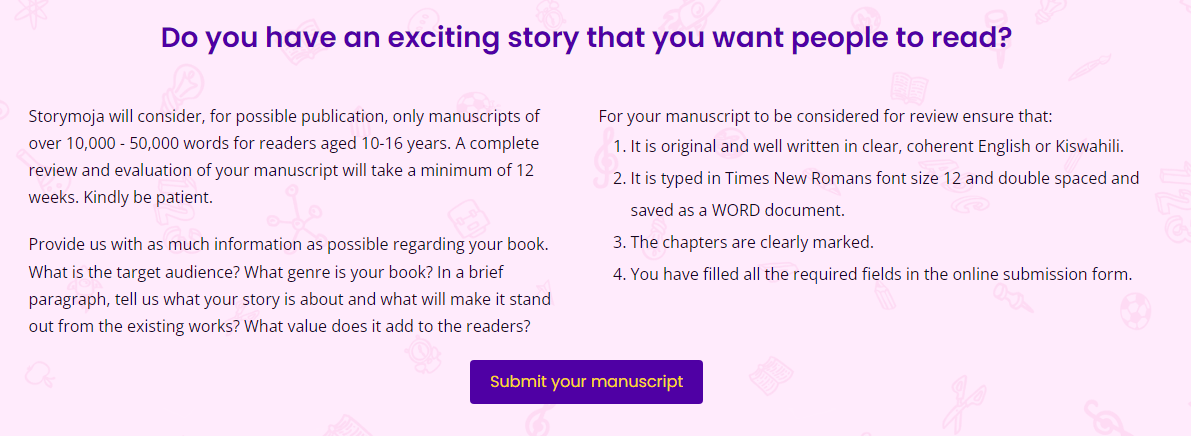
    Storymoja Publishers


    Storymoja will consider, for possible publication, only manuscripts of over 10,000 – 50,000 words for readers aged 10-16 years. A complete review and evaluation of your manuscript will take a minimum of 12 weeks. Kindly be patient.

    East African Publishers – They write a complete guide for your submission and what to expect. Please note the types of books they publish listed on the side.


    Every manuscript that is sent requires a minimum of twelve weeks to be properly assessed and evaluated. After a manuscript is assessed, the author may be sent (a) written report(s), or be requested to appear at our editorial offices for a verbal discussion on the work, or be asked to react in writing to the report(s)

    Moran Publishers – This site also has clear directions on how to submit your work for consideration. Please read their submission guidelines carefully before you submit your synopsis.


     Moran (E.A.) Publishers Limited focuses on printing Educational material, Novellas, e.t.c Moran does not accept full manuscripts. We accept a synopsis of the manuscript and chapter samples.

    There are loads more not mentioned above. Do your research and get to know them. To note, Traditional Publishing in Kenya is very heavy on education and storybooks for young children and schools. Creation of set books, etc. If you’re thinking of publishing poetry and fiction novels, your life will be full of interesting experiences. Be prepared for it.

    To boost your chances on your journey into Traditional Publishing, you can also send out queries to a Literary Agent. I will be honest and let you know that Kenya is sorely lacking access to these. (Here’s a call out to genuine literary agents willing to work with Kenyans, please set up shop already. Kenya is eager. ) The few I’ve heard about led to horror stories of being paid before they read your work, with no guarantee of publishing. Ouch! However, here is some hopeful information on Literary Agents from Kenyan Writer Alexander Nderitu.

    Why is Traditional Publishing so Attractive?

    The idea is that you write your manuscript, send it to a publisher and if they like and accept it, they will pour their considerable resources into marketing your manuscript, with no effort or little effort from you. Acknowledge that, Traditional Publishers have access to wide networks of brick-and-mortar bookshops, readers in schools and institutions, and know market trends better than anyone. So yeah, they are an attractive ideal. You need to work hard as ever to make your manuscript remotely attractive for consideration. Deal with it! That’s not going away.

    Let’s move on to the next road.

    What is the Self-Publishing Road?

    The first thing I told you here is ‘Arm yourself with information’. Why? The writers I know have all chosen this road, and have gotten results by learning how to do this right. We shall start with Digital Publishing, as it seems to most, to cost the least. Truth is, cost is relative! Your product is only as good as what you’re willing to put into it.

    Digital Publishing includes selling e-books in different formats like PDFs, epubs for Adobe editions, .mobi for Kindle, and formats accessible by Apple products among others. It is the most attractive form of self-publishing as it places control in the hands of the author.

    An author who understands that their work is a product, and therefore needs customers, excels in this form of digital publishing. Let me give you an example: I love examples, don’t you? No…oh, well, here is a good one for you anyway.

    Writer A

    Genre: Writes from the heart

    Blog: – Doesn’t like to share content, so hasn’t tried blogging

    Social: – Facebook sucks, Instagram is for kids, Trump rules Twitter, it’s not for me. What’s LinkedIn? Social Media is too hard.

    Dream: I want to publish and be known for writing books.

    Writer B

    Genre: Fiction, (Mysteries, Thrillers)

    Blog: writerB.blog

    Social: Facebook -@writerb (1,000 follows), Instagram- @writerb254 (558follows), Twitter-@writerBwhowrites (900 follows), LinkedIn – Author Writer B (200 connects) Tiktok-Writeislife

    Dream – Sell 100 copies of 70k word book.

    Who do you think will sell more books? Writer A or Writer B?

    Answer: Writer B

    This is the reality of life today! You need to build a community around your work, as an Author, an Artist, a Musician, a business person, well I’m talking to Authors mostly, so I hope you get what I’m trying to say. It’s hard work to even get the numbers under Writer B’s social following. After which you need to keep up content that’s engaging enough to keep your followers, and have those followers interested in your work. (Don’t buy the follows, really that’s so 2017!) When you have them good and interested, drop your book for sale in all its available forms and watch some magic happen. You might sell 25 in the first week, and then you continue the grind of selling until you hit 100 copies sold. All this on a really good day! Digital Publishing costs you time, serious editing costs, and an attractive cover. (Yes, you need to invest time in editing. Seriously!)

    Or, you can print your books!

    Self-publishing is a great word in Kenya. You can provide your book in both digital forms and actual books. In Kenya, this depends on your resources, cash-wise. As I’ve mentioned before, printers come in all shapes and sizes. (The example in the link works for fiction books too.) Each Printing Shop has its own requirements, please take the time to discover the printer that will fit your needs best. You can choose to print 10 books of your poetry and/or fiction book or 1000 copies. After you print the book, your job now is to find customers to buy your books. Like Writer B, the wider your network, the more customers you gain, and the more books you sell. Be a social bee, a busy bee.

    The challenge, find time in all your busyness to write your next book.

    A Note on Digital Publishing Platforms like Amazon and Smashwords.

    I am a BIG fan of Do-it-Yourself. I mean that, even at home, you know when kids write on the wall with permanent markers and every adult is having a blowout. I don’t worry. Do you know why? I’m very capable with a brush and paint. That wall will look as good as new with the right paint. Simply keep the paint handy at home…the writing on the wall will disappear. Hahaha

    Now, when I hear scandals about people who got their books put on Amazon for them and they have no access, I wonder why it’s even happening. You, starting out author, you, Amazon’s KDP has pages long of information on how to publish with them. Take the time to read, and learn. Please, Please Arm yourself with information. Smashwords.com even has a How to book you can download for free to get started. Don’t allow yourself to be a victim when there is no need.

    Learn how to do it, if it’s something you want to do. Take the time to learn.

    Once you’re armed with information you will be able to make the right choice for you and your work.

  • Calculating Self- Publishing Costs in Kenya – Non-Fiction Books

    Break out the calculator!  It’s all about the Word Count!

    I have had a few questions about what the process of self-publishing a physical book in Kenya looks like.  What does it take?  How much does it cost?  So, let’s calculate the cost of printing a book in Kenya in this post.

    Are you ready to self-publish?

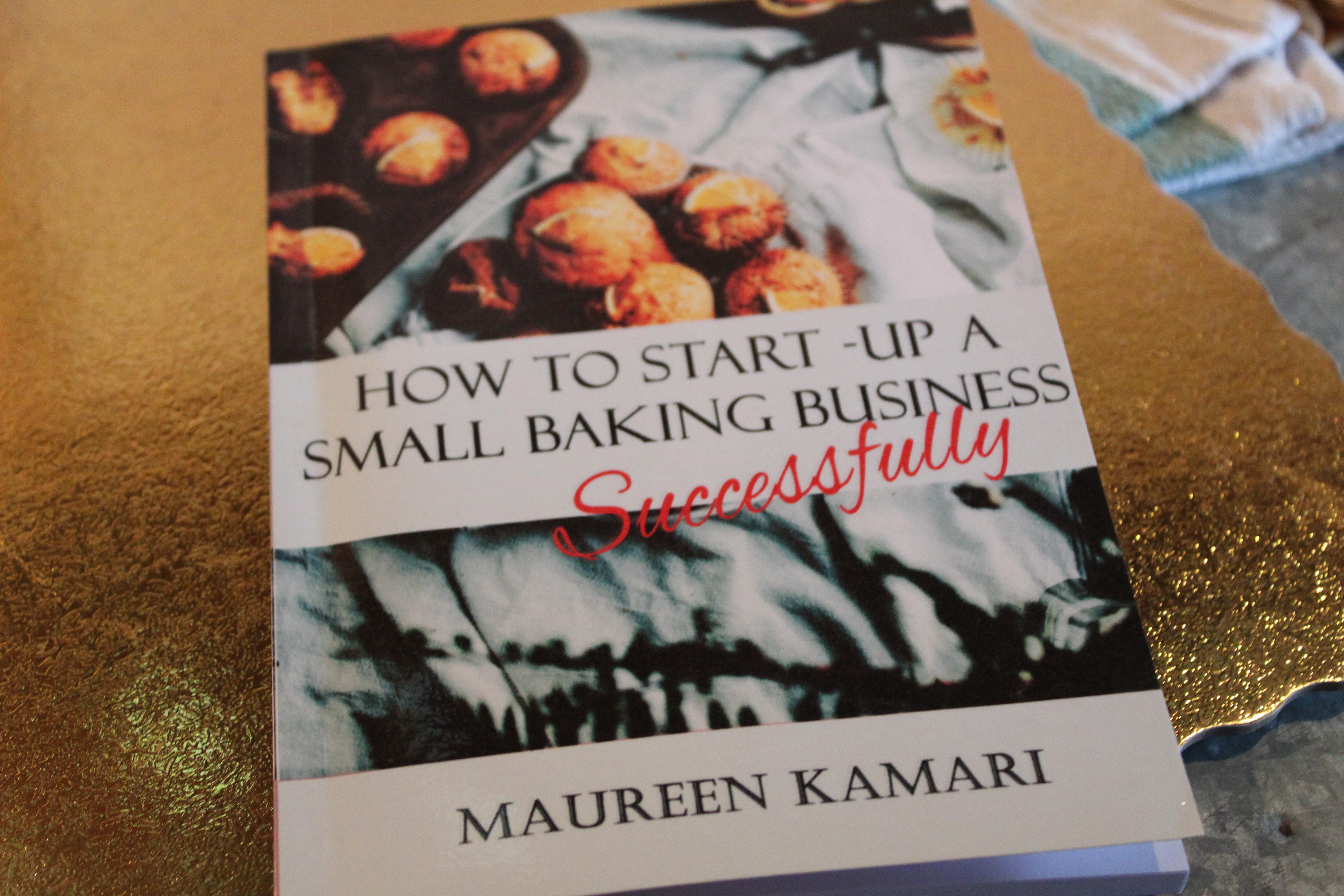
    Writing in Kenya is a journey! A myriad of experiences that sort of take you through very high highs and low lows, but when you find the perfect fit, you end up in a sweet spot.  You can lower your costs depending on how hard you decide to work.  I can only share a snippet of the journey my sister and I have traveled under The E.i.N Company on our publishing journey.  As you know, or are now learning my sister runs Baking with Amari, a baking training center.  The center has published recipe books and a How To book on the baking industry.  Publishing the center’s recipe and business books has been quite a process.  I will share some of that with you here, as documenting it all would take a few pages.

    Let’s start with a question.

    Is your manuscript finished? 

    This is a question you need to ask yourself the moment you write the last word on the last page of your work.

    1. If your answer is yes, then seek a Beta Reader before you find an Editor.  Beta readers are test readers.  Your first test reader.  You can have one, two, or five, have them read your work, and let you know what they think.

    A good beta reader will give you valuable feedback.  They help you clear your mind, and refine your thoughts as you want to lay them out in your book. They don’t mind having a discussion with you about your content, and they save you thousands, helping you refine your manuscript.

    Listen to each beta reader if you get five, you can also have just one who really gets you, and that is also important.

    Best places to get a Beta Reader:

    1. A Friend/family with the same interest.  Someone who will not coddle you, and is honest about your masterpiece.
    2. Join writing groups or critique circles.  Be warned, you might go through a few groups to find the perfect fit.
    3. Online resources – Goodreads has a Beta Reader group, explore it.  Writing.com, join the writing.com community, and find a group you are comfortable with.  You can even get critiques on your work.  Absolutewrite.com the links are a great resource.  Facebook Writing groups like this one: Beta Readers & Critiques.

    Find your right Beta Reader fit.  The person who makes you comfortable enough to discuss your work and how to improve it for the better.  If you are not relating with your Beta Reader, stop and seek a new relationship.  Sort of like dating…hahaha, get your right fit.

    Cost in this part of the process: Your Time. Beta Readers are beautiful souls if you find someone willing to gain experience in reading/editing, it costs you nothing cash-wise but work and a willingness to listen to your beta reader.

    Once you are satisfied your work is ready, find an Editor.

    2. Invest in an Editor.  There is no way around it.  I’m serious.  They are gold to your work.  Find someone willing to work with you, and if you find you are not melding with your editor, please, stop and find someone who is singing to you.  That way when they yell at you about the commas you keep adding in the wrong places, you won’t hate them for life.

    Our cost in this process was as follows: Cost: 0.20 cents per word, or Kshs. 45 per 250 words. (We had about 35,000 words in the manuscript the end cost was Kshs. 6,300)  The service included the following: 

    • Proofing for spelling mistakes, typos, punctuation problems, capitalization errors, and awkward grammar.  The overall structure of the manuscript.  Which includes managing your content flow, word choice, and clear narrative, and offering research help to ensure situations and scenes are factual.

    The process took a little over two months as we worked to ensure everything was just right.  Inputting time for Re-edits, and general discussions among all involved.  Quite a process.  When it was done, it was time for the cover.

    3. The Book Cover – The first cover for this book was simple.  It cost Kshs. 500 to design.  I had taken on the role of publisher at this point, so we had numerous chitchats, and we weren’t looking for something expensive.  It was an industry book, one we were testing out, so that’s about how much we felt it deserved at the time.  We printed 50 books to start, but more to come on the printing. Here is the first cover.  Pretty basic, but it was the first, and so still proud of it.

    Book Cover1

    The second cover we worked harder.  It cost about Kshs. 2,500, and it now included the ISBN barcode.  Very proud of this one as well.

    Amari Cover

    What to know during the book cover process:  Understand your budget, and the person working with you, and what kind of book you want to sell.  This creation process took a week, though with the second cover there was a lot of back and forth, going almost to two weeks.

    Now: The first cover had no ISBN and we had not even gone searching for copyright, so those costs didn’t factor in.  However, it’s good to get copyright and your ISBN the first time you get published. So, here are the ISBN and Copyright Costs.

    ISBN – Kshs. 1,500 (confirm with Kenya Libraries on this as you get yours)

    Copyright Costs – Kshs. 1,000 (The price at the time, confirm with their site as well)

    A Note on Copyright Registration in 2024: The Kenya Copyright Board now has a Copyright Portal that allows you to complete this process much easier. The cost has also reduced from Kshs. 1,000 to Kshs. 100. Register an account and make sure to copyright your complete manuscript including the book cover.

    In total our book costs were as follows:

    First-time Print:

    1. Editing – Kshs. 6,300
    2. Book Cover – Kshs. 500
    3. Printing – (Kshs. 180 x 50) = Kshs. 9,000
    4. Total = 15, 800 (We sold it at Kshs. 500)

    We weren’t happy with our first print.  Pages misprinted, and arranged wrong, about 10 of the books were given for free. So, that first time was a bit of an experience.

    Second Printing

    1. Re-editing – Kshs. 2, 000 (There were a few changes we needed to make)
    2. ISBN – Kshs. 1,500
    3. Copyright Costs – Kshs. 1,000
    4. Cover – Kshs. 2,500 (including the ISBN bar code)
    5. Printing – (Kshs. 180 x 50) = Kshs. 9,000
    6. Total = Kshs. 16,000 (We sell it for Kshs. 500 still, but now all we need to do is reprint for restock)

    A very generous and kind client of ours shared the Publish4All  contacts with us.  A simple email actually. (p4akenya@gmail.com). He said they print really well and this book would come out so well with them.  They were really fast to respond, and very helpful. So, that’s how we redesigned the cover and sent the book to Publish4All for second print.  The end result was amazing and they even helped us sort delivery, becoming our perfect fit at last.

    Do note that Publish4All requires you to have your book edited and formatted for print, as well as formatting the book cover for print.  You can reach out to them and learn more.  Remember, word count is key.  The larger your book, the cost rises as well.

    So, this is the process of printing a non-fiction book in Kenya.  The end product has 102 pages, and the cover, pages neat and sealed to perfection. You have a snippet of the costs to get you through a first print. Be brave and try and get something printed, it’s the only way to know what works for your work.

    Friday June 8 2018 167

    Friday June 8 2018 173
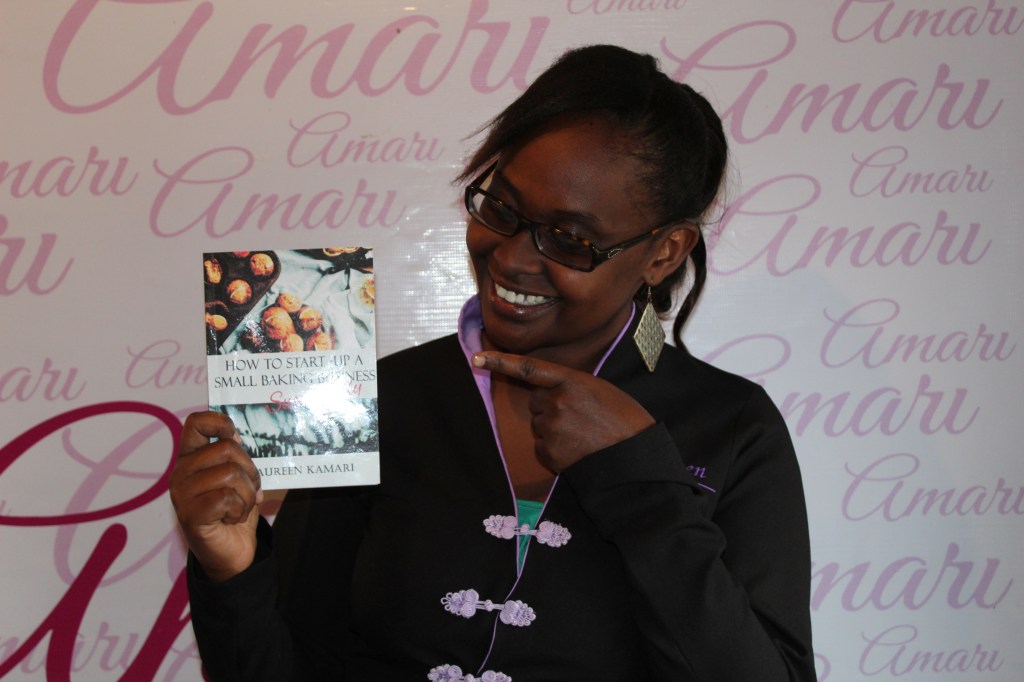
    Sis proudly spreading the news! She’s awesome.

    With the book in hand, the rest is marketing in all shapes, forms and sizes.

    Thoughts on this process:

    Before the first print, we had walked all over Nairobi trying to find the best printer.  There was a printer who had the best product, but wouldn’t take our book without us printing 500 copies in one go.  Imagine our shock, that was a low, because we really liked their work, but couldn’t afford all those copies at once.  So, you shake it off, and keep looking. We went to the second, and a third, I think we found the first printer after talking to six printers.

    I believe it depends on the amount of money you are hoping to spend, and the end product you are hoping for.  So, shop around, don’t be in a rush, just be sure to have all the information you need before you start investing.  That is what this process comes down to.  An investment in your manuscript.

    Then, start marketing like the end is tomorrow.

    Please note, that the costs mentioned above were quoted according to our book size, and word count in 2018. As you seek your printing costs now, keep current economic fluctuations, such as inflation, in mind. I hope this post is of insight to you.  I will work at compiling an editors in Nairobi list that you can use for your editing process.

    Keep writing, and sharing, let’s get published!

  • Tips on Promoting Self-Published Books in Kenya

    Reader Question: What self-promotion tips result in high sales?

    I got this question on my blog, and it had me thinking, of course.  When I first started writing, I felt a little bit a lot like a fish out of water.  Gasping for air, with no real idea on what to do next.  I know what it’s like to feel as though you have this need to keep writing, but have no real solid foundation to make it a workable financial solution for

    tom-holmes-556800-unsplash
    Photo by Tom Holmes 

    your life. In short, this question filled my head on a constant when I started.

    Two things to remember :-

    1. Yes, when you start, you will need to find other means to fund your life until your book turns out sales that satisfy you.  If you haven’t already.
    2. Yes, you will need to invest in your book to make it a success, and a product worth purchasing.

    You cannot escape these two things.  Once you have understood that, and accepted it, now we can discuss self-promotion and sales.  I’ll explore three options today, and post the rest next week.  I’ve been on a writing binge, and want to post fiction the rest of this week…hehehe.

    Tips on Self-promotion that will lead to High Sales!

    1. Great Content – I stress this every time I write about self-publishing.  Take the time to evaluate your work.  Discover your strengths, your weaknesses, your opportunities, and your threats.  Yep (SWOT) coming at you.
      1. Did you choose a topic you know?  A topic you love and are passionate about?  Do you sound convincing?  Can the reader trust you when they read your book?  Are they going to fall in at the first page, and not regret getting straight to the last page? If you answered yes to all of these questions, hey, you’re working on your strengths.  If not, find a way to do just that.
      2. Your weaknesses are found by your editor, your first fan, the person who reads your work and makes suggestions.  Listen to them, and find a solution.
      3. Opportunities are found where you work, who you spend time with, family and friends.  For example,  my sister writes recipe books, and has written on her journey in the baking industry.  Her opportunities come when she meets those who want to join the baking industry and those already in the industry and would love to try out new recipes.  If you are writing fiction, your friends, family, school mates, and those around you are your first readers.  Exploit them to the fullest.  Don’t be shy and grow a thick skin for when you face rejection.  Shake it off, and keep moving forward.
      4. Threats are your competition.  Whatever book you have written, or are thinking of writing, there is an author three steps ahead of you.  Search them out, seek them out, read what they have done, learn from it, but don’t plagiarize. ^_^  What you learn, use it to improve your own work.
      5. In one bundle, make sure you are treating your content like a high quality product.  You want to provide your readers with the best content possible.  Polish it, edit it, get a great cover and blurb, enough to entice readers at first glance.
    2. Build a Strong Platform – To be truthful, this is a challenge. I  won’t lie and say it is easy to build a place where you have people running to read your blog, facebook page, twitter, instagram, or your book sitting on the bookshelf in the shop on the first day.  It takes work. Hard, daily work.  Some days are great, others not.  The key is not to stop.  Now that I’ve said that, let’s get into it.
      1. Platforms are a central place to find your work, and all about your work, and you, the author.  I chose a blog because it was easiest for me.  I love writing and sharing ideas.  I don’t mind sharing fiction, so most of my stories can easily be found on this blog.  The readers I’ve gained have found me through this blog, which then shares my content to my social accounts: Facebook, Twitter, or Instagram.  This blog is my strongest platform.  You can have a different platform.  Just have one place your readers can get to know you and your work.  Here are a few examples of writers with similar platforms. Peter Nena, Dilman Dila, there are more, but these two remain constant favorites for me.
      2. You are your marketer.  Share your work with people you meet in person, in groups you join.  Let people know you are writing, where to find your work, and how to access it.  I’ve said before, I prefer Smashwords as they are really great at getting your work in more online bookshops, as opposed to Amazon’s exclusivity.  You can also choose to explore Kenyan online bookstores like Magunga.com.  Connect with brick and mortar bookstores and see if they will carry your book, or even bookmarks directing people to your site.  Run an ad on Facebook/Instagram, see how many people get to know about your work. Remember that you are the PR team, and share your work constantly.  Don’t be discouraged if one idea doesn’t work out, get back to the drawing board and explore another.
    3.  Converting to High Sales – The first two parts of this list build a community around your work.   Your goal is to make this community love your work, so much, that when you publish your next book, they won’t mind paying for it. Your main job is to grow this community, nurture it, and they will, in turn, support your work in ways that will truly surprise you.  This is why you need more than one book, more than one story, more than one of all that you do, to build readership.

    Writing Tips Blog GraphicAs with every plan, there are small goals in between the growth process.  Some of those are:
    1. Get readers to review your work if you have already published.  Reviews are a great way to get people to know that your work is worth a look.  I bet before you buy a book on Amazon, nook, etc, you check out reviews to see if it’s popular.
    2. Join communities that focus on your chosen topic.  Fiction writers choose genre communities to find readers.  Non-fiction writers choose their industry to find readers.
    3. Social media is a great place to start the conversation.  Tweet it, gram it, facebook it, page it, if you have the camera, make videos and youtube it. 
    4. Start a podcast, and build a following. 
    5. Don’t keep quiet, and talk about it to friends, make small business cards to share when you go to meetups. The amount of chamas (groups) people join in Kenya come on…share your cards with everyone there.  They will check it out for curiosity out of the five curious, you will get two who will turn into fans.  Fans buy books.  Just think, If no one knows, how can you sell?
    6. Going back to the start, make sure you have your work edited write right.  Your readers will love it if they don’t have to work at reading it.

    I hope this is helpful to you.  If you have written a book, and self-published it, don’t hesitate to share it in the comments below.  I love sharing stuff…great place to start right?

    Happy May Day!


  • How to Self-Publish your Books in Kenya

    there is no reason to stay unpublished

    Self-publishing might seem like an uphill battle, but with experience, it gets easier to get into this sunny part of the world.  There is no reason not to write.  A few years ago, the only way to access your money after you sold e-books and your money was in your PayPal account was through a bank.  It took eight days for it to process. Such a long time. Well, that’s changed now, thanks to Safaricom’s Mpesa.  So, I thought I should post this little how-to today because I’m excited about it.

    So, Simple how-to self-publish your e-book/book in Kenya:

    1. Write your book. – I advocate fiction books because that is what I primarily publish, but this works for non-fiction books too.  Your book must be entertaining, engaging, and in the case of non-fiction, informative.  Don’t cut corners.  Find an editor, pay them, do the work, and get your book to perfection.
    2. Design your cover  – Great Covers are essential.  Find a graphic designer who can create a cover that will market your book in the best possible way.  Discover more about genres, and how covers play a role in distinguishing them.  If you’re writing non-fiction books, make sure your cover speaks to your audience and the topic you are discussing.
    3. Write a Blurb – When you go to the bookshop and are browsing books, you pick one out and read the back, and if you don’t like what it says, you return it to the shelf.  If you do like that small paragraph in the back, you immediately head to the counter to pay for it.  Hehehe…Now, take your book that you’ve spent months writing, and come up with a great blurb to entice your readers with one glance.
    4. If you’re publishing this book as an e-book on Smashwords/Amazon’s KDP, you are good to go.  The next step is to log on to your account and start uploading the files as specified by each site.  Set your price, and hit publish.  Then start marketing your e-book like there is no tomorrow.
    5. Amazon has yet to offer any easier ways of getting paid in Kenya.  You still get a check in your mailbox with these guys when your sales reach $100.   Smashwords is more lenient.  They now pay out monthly to Paypal.  And as I said earlier, Safaricom’s Mpesa now has an easy way for you to get your money through Paypal. 
    6. If you’re publishing your book as a physical book, get in touch with the copyright board, get your ISBN, and make sure you have crossed your T’s with them.  Then consider your printing options.  There are many different types of printers in Nairobi.  Some are efficient, others not so much. You need to find your perfect fit, money-wise, and emotional-wise too.
    7. The rest is marketing and awareness.  Don’t forget that your book is a product.  Create a brand, embrace every reader who comes to you, and give them more with lots of love.  Share your work, and if readers love it, they will pay for it.

    I write these little how-to’s because I believe the fiction/non-fiction books market is growing in Kenya.  We need more authors writing fiction and publishing it.  We need a bigger presence in the e-book market, and authors to take ownership of their fiction.  Then we can really have a vibrant industry, enough to entice more readers.  So, if you’re a writer reading this, get started today.  Get published!

  • How To Copyright Your Book in Kenya

    Copyrights in Kenya

    Protecting your work is most important to a creator.  We recently went through this process as we start on actual publishing of real books.  It’s both nerve-wrecking and enlightening.  Nerve-wrecking in the discovery of limitations: like costs and printing drama, and enlightening in that with every book printed, you discover mistakes and tell yourself, I’m going to get that fixed in the next print.  It’s been an interesting time.

    So, for copyrights, I thought I should share this process with you.  It’s not so hard, you can do it too.

    Firstly, you need to have your work fully completed, and ready to go.

    The process below is the original method of copyright registration.  You may also visit the Kenya Copyright Board offices for any questions if you registered your rights using this method.

    1. Get a registration form from the Kenya Copyright Board (KECOBO).  You can either visit their offices or download the form from their site.  Here is the link to that →Copyright Registration Forms You no longer need these forms.  You simply need to Register an Account on this Kenya Copyrights Board Portal.
    2. Fill out your information.  To be noted, don’t copyright someone else’s work if you do not have the permissions from the original author (owner of the work).  This is very uncool.  Just don’t do it.  Respect the original author/creator, alright.  Of course, if you are copyrighting your own work, write your name with no mistakes. ^_^  You wanna have bragging rights when you get that certification.  If you don’t understand the site, email or visit the Kenya Copyright board offices and they are very happy to explain them to you.
    3. Take your completed forms to a lawyer.  The wording is “Get the forms commissioned by a commissioner of oaths.’ A lawyer will help you with that.

    The processes below have been updated, please refer to this post for more information. or visit nrr.copyright.go.ke

    1. Attach two original copies of the work to be copyrighted – they prefer it in CD or DVD form. (Yep, that’s right. That means you will have 2 CDs/DVDs. Save it on a CD/DVD and label it.)  
    2. Deposit a non-refundable fee of Kshs. 1,000 in the Kenya Copyright Board bank account.  The form you get gives you their banking details.  They insist on the fee being paid in the bank direct, don’t use bank agents. (Confirm this fee when you get your forms)
    3. Take the bank deposit slip with you to the Kenya Copyright Board offices, and they will issue a receipt.
    4. Certification is issued within five (5) working days from the day of registration. In case there is an exception, they will let you know right away.

    And that’s that.

    Simple, right?

    No more excuses saying you can’t copyright your amazing creativity.

    Do you have an ISBN? Here is the procedure in case you want one.

    The Kenya Copyright Board offices are here: 5th Floor, NHIF Building, Ragati Road.

    Visit their website to learn more.

  • How to get an ISBN in Kenya.

    How to get an ISBN in Kenya.

    Assigning an ISBN number to your book in Kenya

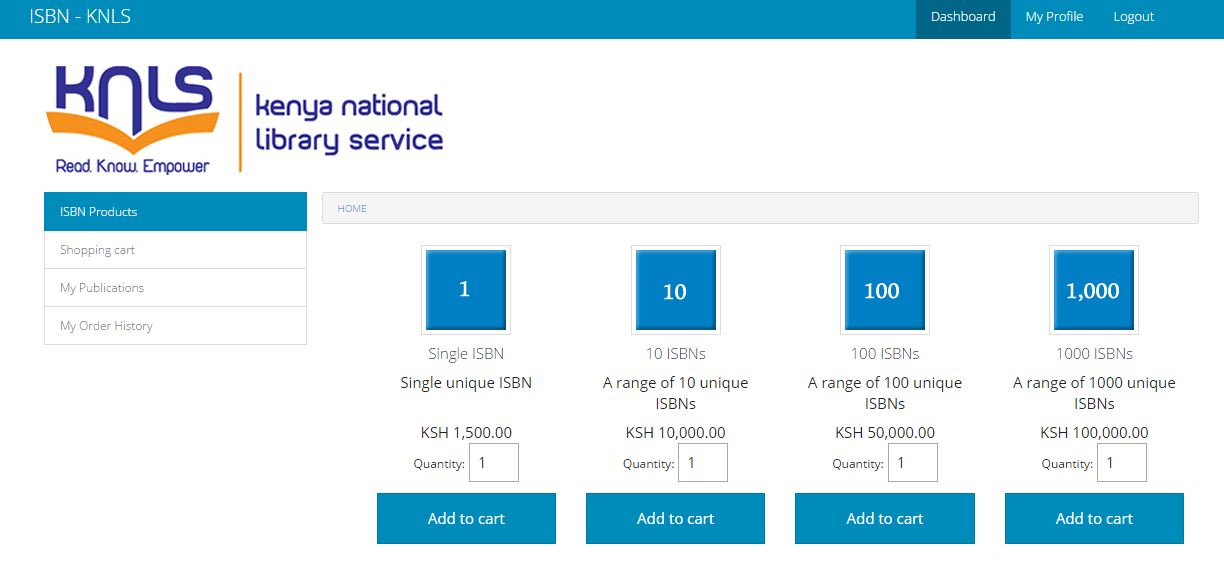
    1. Get an account with the Kenya National Library Service(KNLS)  ISBN service here: ISBN website
    2. Create a Profile, adding important personal details. You may also do this as a publishing company, you just need your business registration number.
    3. Once you are set up, click on the ISBN Products.  They offer options of buying 1 ISBN, 10 ISBNs,  100 ISBNs to 1,000 ISBNs.  Choose the number that fits your needs, and make the purchase.  This process is easy and flexible, you may do it in cash, mobile payment, through the bank, or whatever works for you.isbn
    4. Once payment is approved, wait to hear back from KNLS.  They are very fast about this, and you will get a message from them giving you your ISBN numbers, as well as the barcode that goes along with it.
    5. Here is a short guideline of how and when to use your ISBN when you get it and what to do with it once you get it. The ISBN site sends these guidelines to you once your ISBN is approved.

    You may allocate ISBN to the following publications:
    – Printed books material
    – Microfilms
    – Educational video or movies
    – Atlases and maps
    – Publications in braille
    – Electronic publications

    ISBN should NOT be allocated to the following publications:
    – Off print from periodicals
    – Advertising materials (sales catalogs, price lists, prospectus, instructions publishing flyers, etc.)
    – Wall posters, newspapers, leaflets
    – Programs of theatrical, music and other performances
    – List of exhibits without additional text
    – Curricula of schools and colleges of all kinds
    – Lecture and teaching materials of manuscripts character
    – Calendars and diaries
    – Form and coloring books

    PLEASE ALSO NOTE that ISBN should always appear on the verso of the title page, or if this is not possible at the foot of the title page. It must also appear at the foot of the outside back cover at a prominent outside position.

    FINALLY, remember that the BOOKS AND NEWSPAPERS ACT CAP. 111, Laws of Kenya, stipulate that every publisher MUST deposit 2 clean copies of their (new, future and back issues) with the Director, Kenya National Library Service, (National Reference and Bibliographic Dept.). This process begins by filling in details under the “My Publications” section when you log into the ISBN service, and later depositing the copies physically at the National Library for approval. You shall not be allowed to purchase further ISBNs until you complete this process for all issued ISBNs.

    Now that you have your ISBN, consider Copyrighting your book with the Kenya Copyright Board

    This procedure is for a first-time buy, for a second-time buy, make sure you have met all their requirements on submitting books to the National Library.

  • 7 Things to Know when Self-Publishing on Smashwords in Kenya

    About Smashwords.com

    smashwords

    Smashwords is a global ebook distributor serving authors, publishers, readers and major ebook retailers. Smashwords is ideal for publishing novels, personal memoirs, poetry chapbooks, short and long-form fiction, and non-fiction. If you’ve written it, we want to help you share it and sell it!  We distribute books to Apple iBooks (51 countries), Barnes & Noble, Kobo (which powers the bookstores of multiple other retailers such as FNAC in France and WH Smith in the U.K.), Flipkart, Oyster, txtr, Baker & Taylor (Blio.com and the Axis360 library platform), and others.

     Smashwords.com is an e-book self publishing site.  Smashwords distributes e-books to a wide network of online retailers, mobile app platforms and affiliates.  They have 3 catalogs:

    1. Premium  Catalog – Every author aspires to get their e-book in the premium catalog in smashwords.  This means that your e-book is distributed to major global online retailers.  These are:

    •  Apple – Ibook stores available in 51 Countries
    •  Barnes & Nobles – US and UK market
    •  Kobo Bookseller
    •  Page Foundry – (Inktera.com, Versant.Com as well as Android e-book store apps for Cricket wireless & Asus)
    • Baker & Taylor Blio
    • Txtr
    • Flipkart
    • Oyster
    • Scribd
    • Amazon – (Limited distribution for books that reach over $2,000 in sales)

    To get books in the premium catalog, your e-book needs to have a quality book cover image, a proper copyright notice, and an ISBN no.  The author should also format their book according to the Smashwords Style Guide.  Smashwords have a program that runs your document and if any errors are found then the book doesn’t pass to the premium catalog.  Some of the errors include, having multiple font sizes, inconsistent line spacing, lines overlapping one another, multiple successive paragraph returns to arrange text…etc…All these can be fixed if  you go through the Guide.

    2. Standard Catalog – This is the Smashwords catalog.  Your e-book should satisfy the copyright and content requirements found in the Smashwords terms of service.  Your book is available on this catalog the moment you upload and publish it to the site.

    3. ATOM/OPDS Catalog – This catalog is for all major mobile app platforms.  Your book is available to millions reading on their phones. Sample distributors include Stanza on the iPhone and Aldiko on the Android mobile device platform

    How to get started:

    2024 Updates: 
    Please Note: Smashwords.com has been acquired by Draft2Digital.com. All new authors now need to register into Draft2Digitital.com to sell their books on the smashwords.com shop. So, if you're hoping to get your books on smashwords.com, please check out Draft2Digital.com.

    Firstly, Register for an account with Smashwords.Com.  Go through the set up process, as well as the payment registration.  This means you need a Paypal account too if you’re planning on selling the books.  If you don’t want to sell the books and only want to share them, then finish your Smashwords registration.  There are 3 Smashwords Accounts

    – An Author Account – This is for an author self-publishing his/her books

    – A Publisher Account/ A literary Agent Account – Use this if you’re representing multiple authors/ own a publishing house, You’re a literary agent…e.t.c

    7 Things to Know Before Publishing on Smashwords in Kenya

    smashwords book

    1. A Finished Story –  Polish your story, until you’re satisfied it can be read by others.  Download the Smashwords Style Guide and make sure your document is formatted according to the instructions in the book.  This is really important as your .doc is then turned into different types of e-book formats.  If it’s formatted wrong from the start, your book won’ t make it to the Premium Catalog.

    2. A Title for your story – Make it unique, and eye-catching.

    3. A Book Cover – Smashwords needs a good quality cover, usually a cover with a 1,600 width and 2,560 height.  The minimum width should be 1,400.  Make a pleasing cover.

    – A Description of your story – This is the synopsis of your story.  That short paragraph behind a book makes you want to read it.  Write one that fits your story.

    4. Smashwords Categories – Smashwords classifies their books into the following categories: Fiction, Non-Fiction, Essay, Plays, and Screenplays.  These categories are then broken down into different genres.  So if you’ve written Fiction, you should choose a category of fiction, that is, Romance, Mystery, Thriller, etc.

    5. E-Book Formats – This is the part you must understand to get your book into the premium catalog.  It’s also why you need to download the Smashwords Style Guide. Smashwords allows you to turn your book into different formats.  They are:

    • E-pub – Widely used by readers on Apple Ibookstore, Sony, Kobo, Barnes & Nobles, and Aldiko.  It’s the most popular format, and if your .doc fails to pass through the Smashwords check, you get autovetters because it failed the e-pub check. The Smashwords guide can help you sort out autovetter errors. If you have issues, check the Smashwords FAQs and you’ll find your answers.
    • Sony Reader – LRF Format
    • Kindle’s .Mobi
    • Palm Doc (PDB) – Used by readers on palm pilot devices, Windows Mobile Pocket PC/Smartphones, Symbian OS, and Palm OS.
    • PDF Format
    • RTF Format – Rich Text Format
    • Plain Text 

    You can choose all formats, or choose certain formats.  The file you upload should be a Word Document with a .doc extension.  Trust me, this makes it easy for you.

    6. ISBN No. – To get your book in the Premium Catalog, you need an ISBN.  Now, Smashwords offers FREE ISBN Nos. You can assign a  Smashwords ISBN no. to your book.  If your book previously has an ISBN, Smashwords allows you to assign it to your book.

    images (1)
    Write a Book, Publish It

    7. Pricing and Sampling – So, you’re in Kenya, and you’re wondering how to deal with pricing your e-book.  After all, Smashwords only does Dollars.  Yikes!  This was a challenge two years ago, but PayPal and Equity Bank recently made a deal that is making life easier for all of us online business people. ^_^ So, whatever the content of your book, if you can market it, then, by all means, price it and make extra money.  The minimum price you can set in Smashwords is .99 cents.  (Edited) If you manage sales of more than $10 a month, Smashwords pays the money into your PayPal account at the end of the month.  As for you accessing your money in Kenya, Paypal works with Equity Bank…read more here.

    2024 PayPal Updates:
    It is now easier than ever to access your PayPal funds. You can withdraw to Equity Bank, or use Mpesa. Get your royalties easier from smashwords.com or Draft2Digital.com.

    READ the Smashwords FAQs for any other questions you might have.

    If you have all of the above, you can hit Publish after agreeing to the Smashwords publishing agreement.

    You can pursue this avenue if you’re thinking about writing books.  The best part is that once you publish the book, leave it to circulate in the different online stores that Smashwords ships to for years.  Don’t unpublish it because then the book loses momentum. You can publish Fiction or Non-Fiction books.  Don’t forget to market the books offline and online.

    Examples of Kenyan Books on Smashwords:

    1.Yellow 

    2. Kenya as an Outsourcing Destination


  • Choosing a Genre for Your Fiction in Kenya

    What is a Fiction Genre?

    It is a fiction classification based on content, setting, and mood of the story.  A book may fit more than one genres but most times a story leans to one type of genre.

    Genres
    Make a Choice of Genre

    Why is it important to choose a genre when you write Fiction?

    Choosing a genre helps you focus your writing.  It gives you a niche to concentrate on, instead of writing for everyone, you write for a specific target market and it helps you market your book easier after publishing.

    Types of Book Genres

    There are many different types of genres.  When you choose one, learn all you can about about that genre, read other authors who excel in the genre, then get to work.

    Book Genre List

    1. General – This is a book with no particular theme.

    2. Action and Adventure (For kids and teenagers)

    3. Anthologies – Stories compiled in one book without any particular theme

    4. Biographical – If you have a stunning life story that must be told, this is your genre

    5. Religious – Your story may have a strong religious theme, maybe focused on faith, or morals.  Basically, an exploration of a life with religion.  Your imagination, your story. This genre can have the following sub- genres:-

    • General
    • Fantasy
    • Futuristic
    • Historical
    • Romance
    • Suspense
    • Cultural

    6. Coming of Age – These stories are about finding yourself, leaving home, or finding out what you want to do.

    7. Contemporary Women – Stories about women, think Maeve Binchy

    8. Cultural Heritage – These stories are mostly about culture, tribes, once again let your imagination go wild

    9. Dystopian – Usually these stories feature an end-of-the-world-as-we-know-it theme.  Think the movie I Am Legend with Will Smith, the Host by Stephanie Meyer

    10. Fairy Tales/ Folk Tales/ Legends/ Mythology – My grandmother used to tell us stories about ogres who ate children when they did bad things when we visited her in her rural home.  She’d scare us that if we did something bad, that ogre would come get us when we slept.  Terrifying but that’s enough fodder for this genre.  Other ideas are like Cinderella, Maleficent…create your own.

    Harry potter
    J.K. Rowling’s Harry Potter

    11. Fantasy – If you love Harry Potter, this is where those books lie.  This genre has different sub genres as follows:

    • Contemporary
    • General
    • Dark Fantasy
    • Historical
    • Paranormal
    • Urban
    • Collections/Anthologies – These should have a specific theme

    naruto_597_progress_by_iitheyahikodarkii-d5bg2bf
    Photo courtesy of the iiYahikoDarkii from Deviant


    12. Graphic Novels – (Comics) If you love drawing and don’t know what to do with it, this is a good idea.  Make a character, and story.  They’re very fun to read. I love them. Most popular graphic novels are  Bleach and Naruto.

    13. Holidays – Stories about Christmas time, New Year’s Day, Valentine’s Day and so forth…

    14. Horror – Think Stephen King Novels.  Scary stories that won’t let readers sleep at night.

    15. Humorous – If you have a great sense of humor, translate it on paper, write a funny story.

    16. Legal – I think the person who’s done this the best is John Grisham.

    17. Literary – For the more serious writer, Moby Dick/ Chinua Achebe/ e.t.c. such great minds. Are you up to it?

    Eight Days to Live
    Iris Johansen’s Eight Days to Live


    18. Mystery/Detective – Who-Done-it theme. These stories have sub-genres that give them such a diverse range.

    • General
    • Collection & Anthologies – These must have a theme related to the main genre
    • Historical
    • International
    • Police Procedures
    • Private Investigators
    • Women Detectives


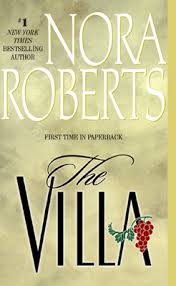
    the villa
    Nora Robert’s The Villa – A mixture of romance and a family saga

    19. Romance – I’m partial to this genre.  You don’t have to go for the soppy romance story, you can add a sub-plot to add to the story’s texture.  Sub- Genres are as follows:

    • General
    • Collections & Anthologies – These must have a theme to them e.g. lost love, Nairobi romance, e.t.c.
    • Contemporary
    • Military
    • Fantasy
    • Multi-Cultural / Interracial
    • New Adult
    • Paranormal
    • Romantic Comedy
    • Science Fiction
    • Mystery – Suspense
    • Historical – Think those rebellion days before Kenya’s independence, or even further in times of the chiefs, so much fun to be had here, spark your imagination.


    splinter cell20. Thrillers – Bring your readers to the edge of their seats with chilling stories, adventures across the country that leave you shivering.  Sub-Genres include:

    • General
    • Crime
    • Espionage
    • Historical
    • Legal
    • Medical
    • Military
    • Political
    • Supernatural
    • Suspense
    • Technology

    How do you choose a Genre?

    Your interests rule your decision, don’t tackle a genre you don’t understand or dislike.  If you are partial to horror stories, then learn all you can about that genre and bring your take on the topic to the table.  If it’s romance, learn all you can about the different sub-genres, and find where you’re most comfortable.  There are people who are great at creating the intricate plots found in a Thriller novel, and those who can sustain the emotional suspense found in a romance novel.  Explore your interests, and find what genre captures your imagination.

    Do you have to choose a Genre?

    When you go to the supermarket to buy baking flour, you find different aisles, each with a specific product.  There is the sugar aisle, the bread aisle. e.t.c…since you don’t want any of that, you go straight to the flour aisle.  There are different companies selling baking flour, but you have that one particular brand you like.  So, you walk up to it, and take it with you.  If you have time, you might browse the other aisles, and choose a different item.  If not, you go on to the check out aisle and go back to your business.

    Fiction writers should equate the book industry to a supermarket. Choosing a genre is important because no matter what,  readers have different tastes. You cannot write for every one.  You’ll find people who only read thrillers, and nothing else.  You’ll find those who mix different genres.  When Readers walk in to a bookshop, or browse books on amazon, they are most likely to seek a book in the genre they like most.  If it’s romance, they’ll explore all the sub-genres in that category and never move anywhere else.  If it’s mystery, they’ll look for the different types of mysteries offered out there.  If you don’t choose a genre, readers might never stumble on your book.

    Elly in Nairobi Thoughts:

    You might have to explore a few genres before you find the one that fits best.  Don’t get discouraged, and make it a fun exercise.  If you choose a genre, find out who the big hitters are, read their books, find out why readers love their stories, and then get to work on your own interpretation of that genre.  Don’t copy a particular author’s style, because you’ll burn out very fast.  If you find a genre you like, at first you might tailor your stories like your favorite author’s style, but please, work at finding your own style.  Then your muse won’t stop talking to you.

    Love Books
    Learn your Genre, Love Books

    The purpose of this list is to show a budding writer the diversity of fiction.  I hope Nairobi Fiction Writers will jump in and write in some of these genres, to add more titles on the shelves.

    Keep Writing Folks!

    Related Topics

    How to Choose a Genre for your Novels

  • 4 Questions to Ask Before You Self-Publish in Kenya

    First question, Are you a writer?download (1)

    • You’re a writer if you fill notebooks with stories and random thoughts that could be stories.
    • If your laptop/PC is full of files of stories you’ve written.
    • You wonder why publishing can’t get easier in Kenya.
    • You get jealous every time you see that Saturday story running on the dailies and wonder why it’s not your story and how you can be that person….^_^ You know you do.

    So, now we’ve established you’re a writer.  (So that we’re all on the same page, the writer I’m talking about is one who writes Fiction)

    The second question is, Are you any good?

    booksThe word ‘good is relative.  Readers have different tastes.  The world of fiction has different genres.  There are those who are partial to a particular genre, and those who can read from each genre.  Wherever your story fits, you’ll find readers who think its good, and those who don’t.  If you get readers who love your stories, celebrate!  You’re entertaining someone.  If you get readers who criticize your work, take it with a grain of salt then shake it off.  Grow a thick skin and don’t stop writing.

    Bad editing, however, does not make your story attractive.  No one wants to read a story with glaring mistakes on every page.  Work hard, spend extra time reading your story aloud and fix those grammatical errors.  You may also ask a friend to check them for you, if you’re anything like me, if I read a page repeatedly; my brain starts auto-correcting errors. That means you’ll have a sentence that says knead, when you meant need, but you can’t see it.  Pester the people next to you so they can read your work and catch those problems.

    The third question is, How do you get published?

    Traditional Routes are tough to follow in Kenya.  Publishing companies have strict criteria when choosing manuscripts.  Most times, you’ll feel like giving up when you send in manuscripts and you get no response.

    Hey, that’s life.  So, buck up!  There are many avenues to follow.  Get online and start publishing, the entire world is online, and there are no more excuses about how no one will read your work.

    The fourth Question, How can I get an Audience?

    Publishing online made simple. – You’re in Kenya, you’re thinking I want an audience, and I don’t know how to reach them.  Maybe, you do have an audience, and want to expand it.  The first step is to establish your identity online.

    downloadStart a Blog

    I was in a meeting recently where someone mentioned that blogs are taking over the world.  There are so many blogs out there, and that’s how most people get their voices heard.  So, you, my dear budding writer, why don’t you have one?

    Get started right now.

    You can use WordPress, Blogspot, Tumblr, Flicker, and other platforms that allow you to Blog without cost.  The goal here is to create your space.  It will be a space filled with your words.  It’s also a place where people give you feedback on your writing.  Get noticed.

    • Don’t just write three posts and stop because no one has commented.  I’ve seen people who quit writing their blogs.  Please don’t quit.  Commit to that Blog, and don’t stop.
    • Talk about your Blog, share your posts, get others talking about it too, through social media, also through your friends, and family.
    • Build a brand around your writing.  If you’re confident in your work, others will be too.

    Self-Publishing Your Stories

    If you have written stories and they are typed up neatly, complete and ready for other people to read, think self-pubabout self-publishing.  First, ask yourself why you’re thinking of self-publishing.

      • Is it to make money? – This takes time, it’s doable, but it takes time.  So, don’t quit your day job just yet.  Making money through self-publishing means, you’re marketing your book daily, getting people to talk about it, and buy it.  If you’re determined, you’ll get this done.
      • Is it for name recognition while you try to get a publishing house to pick your book?  – Well, this takes work too.  Time and work.

    Whatever the reason, the first rule is not to stop at publishing one e-book.

    • The best marketing is publishing constantly.  Don’t stop with just one title.  Otherwise, you end up as the one none-hit wonder.
    • Be creative.  A good story will sell itself.
    • Don’t stop learning.  Research what other authors have done, teach yourself grammar, and spelling rules, learn what genres are, find your niche, and explore it.  Don’t stop learning.  When you think you’ve mastered writing, hit the books some more.
    • You’re in Kenya,  there is loads of inspiration – The best part about our culture is that it’s so full of color.  Don’t be afraid to explore it.  Include the characters in your life, and you know they’re many who leave you wondering and asking questions.  Turn them into fun characters in your stories, and highlight your culture.

    My Humble Advice is Don’t stop, no matter what.
    manuscriptThis part is important, so important; I had to write it in red. ^_^.  Don’t stop writing.  Most budding writers encounter a lot of challenges that make them shy away from writing.  It could be the pressures of life, and making money.  You know what, that’s understandable, make sure your life is going well.  But, don’t shelf the idea of writing.  Carry around a notebook, and that spare moment you have waiting for the bus, or taking a break, jot down a few thoughts.  It will turn into something more, and before you know it, you’ll have a bunch of stories.

    Others stop when someone reads their work and they get negative feedback.  Oh, this is not good.  Oh, I didn’t like it. Don’t let such words stop you.  I’ve had someone tell me that, and I made them tell me what they didn’t like.  Was it the characters?  Was it the story plot?  Why didn’t you like it?  Ask why, think it over, and then find a way to fix it.  If the answers given don’t sound reasonable, then find a second opinion and a third.  Just don’t quit.

    In fact, when you get that negative feedback, it’s time to write even harder.  Hit the books, research what others have done, and then get back to your writing desk, and challenge yourself to do better.  Go to seminars, seek out fellow writers, join platforms and learn more about the writing industry.  You’ll slowly find your voice and your niche.

    So, are you interested yet? Get to it then!  Start writing already!