When authors complete their manuscript edit and are in the process of book formatting for print or eBook sales, they often start thinking about ‘The Book Cover’. Denma Digital Consulting is a creative agency that offers various services, including book cover design.
Our creative process commences with detailed discussions with the author to grasp their vision, genre, and target readership.
Denma Digital Consulting
If you’re looking for a book cover designer, or wondering how to get started on your book cover, read on for insight on how to get your book cover designed.
What is Denma Digital Consulting?
Denma Digital Consulting is a full-service Video Editing, Web, and Graphic design agency based in Nairobi, Kenya. We provide a wide range of services including Video editing, Animation, website development, branding, corporate identity, and Creative logo design.
Our experienced Video editors, designers, and developers work closely with our clients to create unique and effective solutions that help them stand out in their industry. We pride ourselves on understanding our client’s needs and delivering results that exceed their expectations. If you’re looking for a partner to help you create a stunning online presence and build your brand, look no further than Denma Digital Consulting. Contact us today for a free consultation!
When authors complete their manuscript edit and are in the process of book formatting for print or for eBook sales, they often start thinking about ‘The Book Cover’. What would you tell an author who is looking for a book cover?
Denma Digital: If you’re considering your book cover, that’s fantastic! Your book cover serves as the face of your book, the initial impression readers encounter. Therefore,
My suggestion is to carefully consider the atmosphere you wish to convey.
Is your book mysterious, romantic, or thrilling? Select a cover design that resonates with this ambiance and captivates the audience’s attention.
Additionally, collaborating with a skilled designer who comprehends your vision is crucial.
Take your time with this step – a remarkable cover significantly boosts your book’s visibility!
What do you need from an author to create a book cover?
Denma Digital: To craft the ideal cover for your book, I’ll need the following details:
Provide a brief overview of your book! What’s the story about? This allows me to grasp its essence and tone.
Identify your target audience. Are you targeting teenagers, romance enthusiasts, or mystery aficionados? Understanding your readership aids in tailoring a cover that resonates with them.
If you have any concepts or visuals in mind for the cover, please share them! It’s beneficial to draw inspiration from your ideas.
Lastly, don’t overlook specifying the book title and your name as you wish them to appear on the cover.
Armed with this information, I can create a visually stunning cover that encapsulates the essence of your book. Let’s collaborate to craft something extraordinary!
Authors also need to have websites, or social media content and banners for their author brand. How can an author looking for a book cover creator, or a website designer reach you?
Authors looking for a book cover creator or website designer can connect with us at Denma Digital Consulting through various avenues. They can visit our website, denmadigital.com, to explore our portfolio, learn about our services, and contact us directly via the provided contact form. Alternatively, authors can reach out to us via email at denmadigital.com or give us a call at +254 706085502. We eagerly anticipate inquiries and are excited to help authors bring their creative visions to fruition.
What is Denma Digital’s Book Cover creative process?
Each of these book covers was carefully designed to capture the essence of the stories while also attracting the intended audience.
Our creative process commences with detailed discussions with the author to grasp their vision, genre, and target readership.
Subsequently, our skilled designers transform these understandings into visually captivating cover designs that aptly communicate the book’s tone and theme.
We endeavor to guarantee that each cover not only captures attention but also resonates with readers, ultimately aiding in the success of the author’s work.
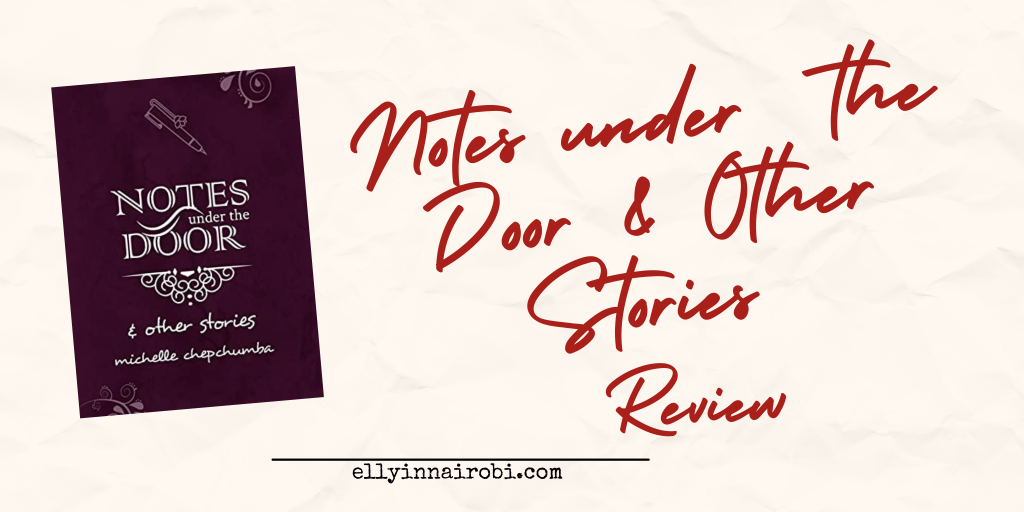
Dead fathers. Critical mothers. Abusive marriages. Body insecurities. Young love. And always, expectations. Notes Under the Door is an anthology of seven African literary short stories that explores what it can mean to be a girl, a young woman, in a world that demands too much of women, and gives back too little. Set in urban Kenya, each story follows a girl or a woman grappling with the experience of being who they are – young, female, African, layered, complex, whole.
Book Review
Notes Under the Door & Other Stories is a collection of seven short stories. Each story is a glimpse into a deeply profound moment. A moment delving into the secret, complicated mind of Kenyan women at different stages of life. The experiences described in these moments are tangible and feel very real.
Chepchumba’s characters speak on diverse, sensitive issues such as, unexpected pregnancy, and how hard it can be to acclimate to the dramatic change of life a baby brings. She delves on relationships, and how hard they can be to maintain. A short story on domestic violence from the perspective of a young girl shows the impact it has on children. How domestic violence changes a child’s view of a parent.
Notes Under the Door gives this book its name. It is a story tackling grief, obligations, and abortion. Each one of these adding on to the damaging effects on a mother at the time of abortion, and years later, when life continues on.
In Spilling into the World, a character asks, ‘…why can’t you decide you’re beautiful?’. What a powerful question. Spilling into the World looks at body image in a world where mainstream stereotypes impact women’s views of their own beauty, and their self-confidence.
A heartbreaking story told from the perspective of a young girl whose father does not look at her, nor treat her as ‘his princess’, concludes the collection.
Overall, Notes Under the Door & Other Stories reads like tales told from a best friend’s perspective. Stories to make you feel, ‘Ah, I’m not alone in this. There are others like me.’ These stories depict women living experiences in our rapidly changing modern world. They are a conversation to continue, and normalize. I most enjoyed the realness of these short stories.
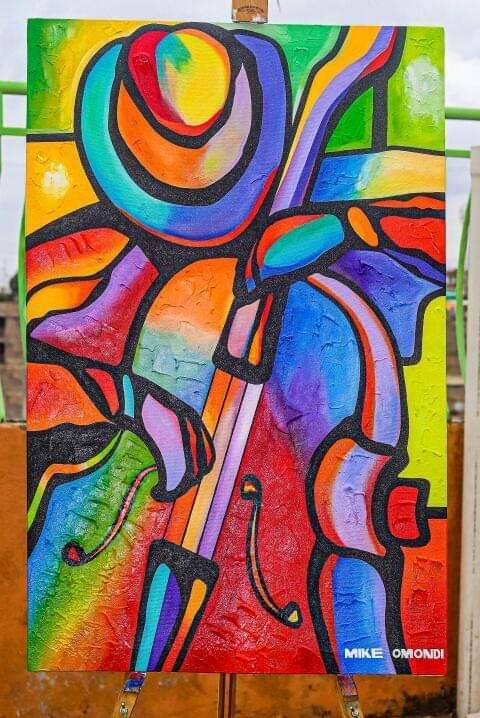
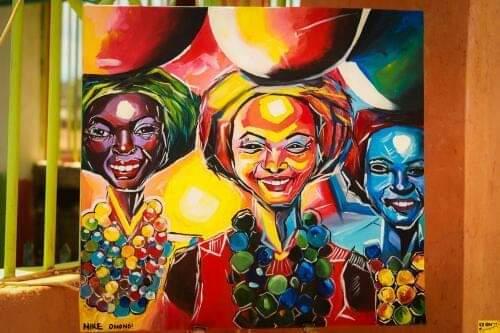
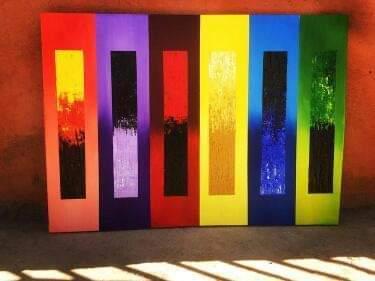
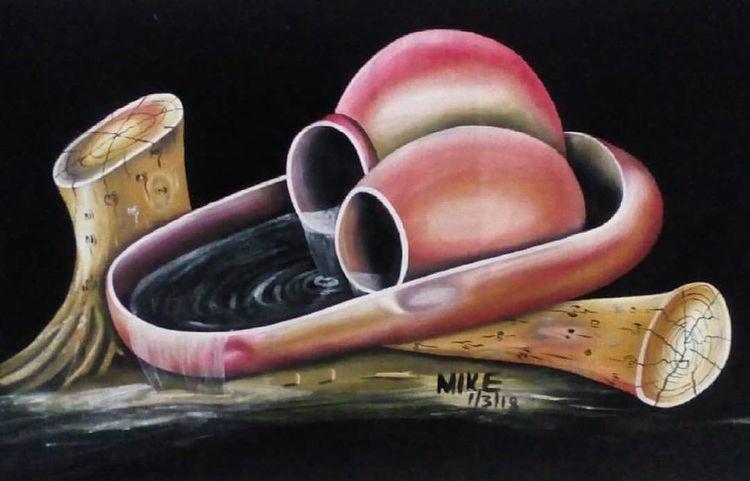
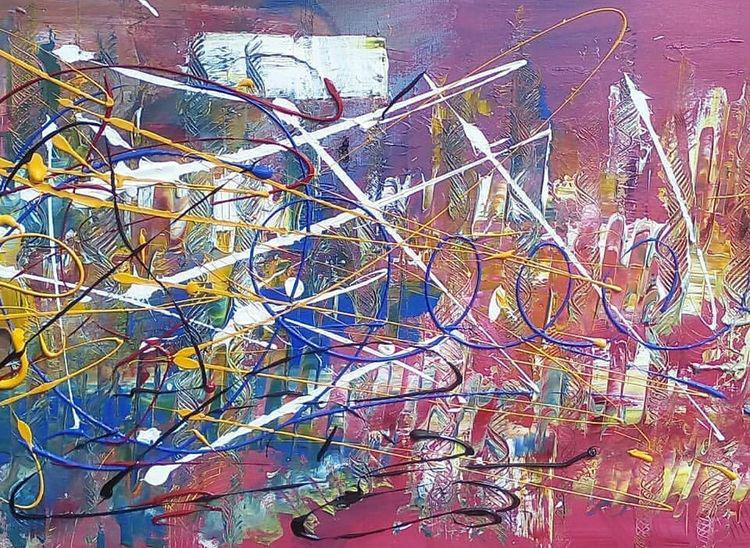
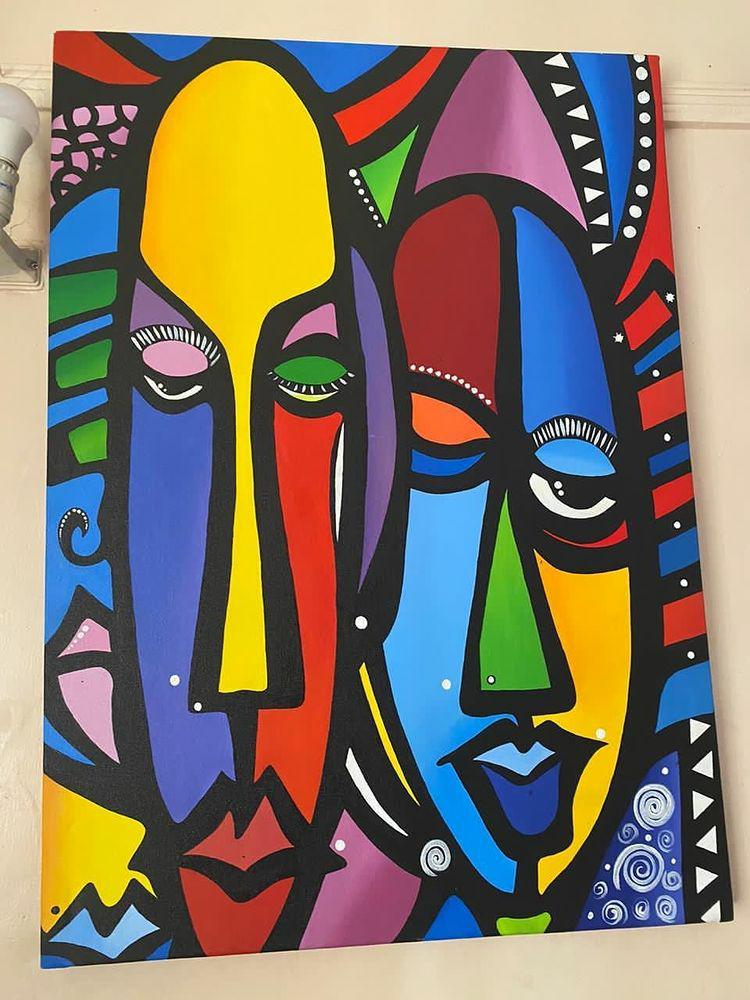
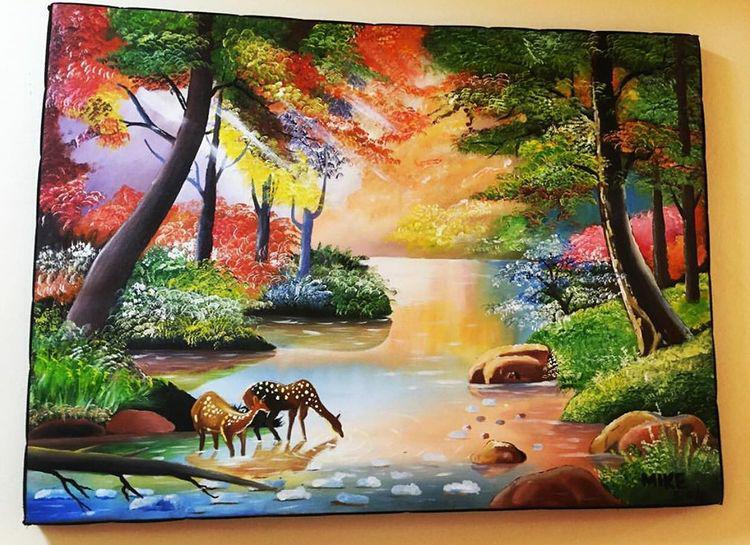
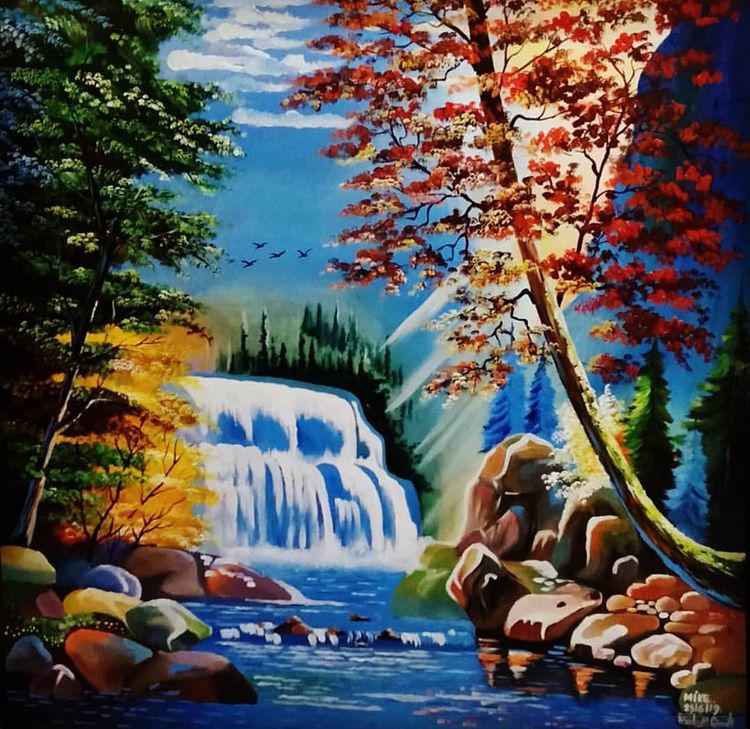
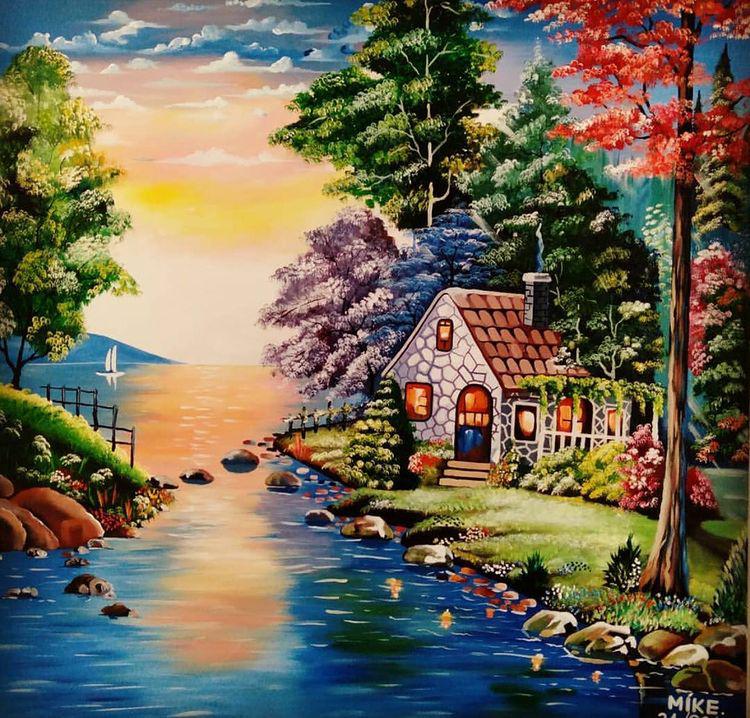
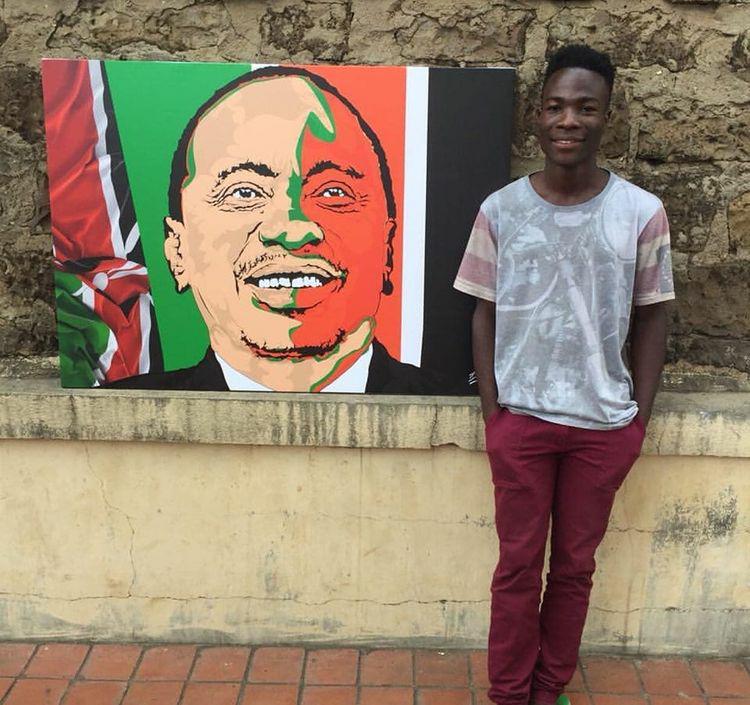
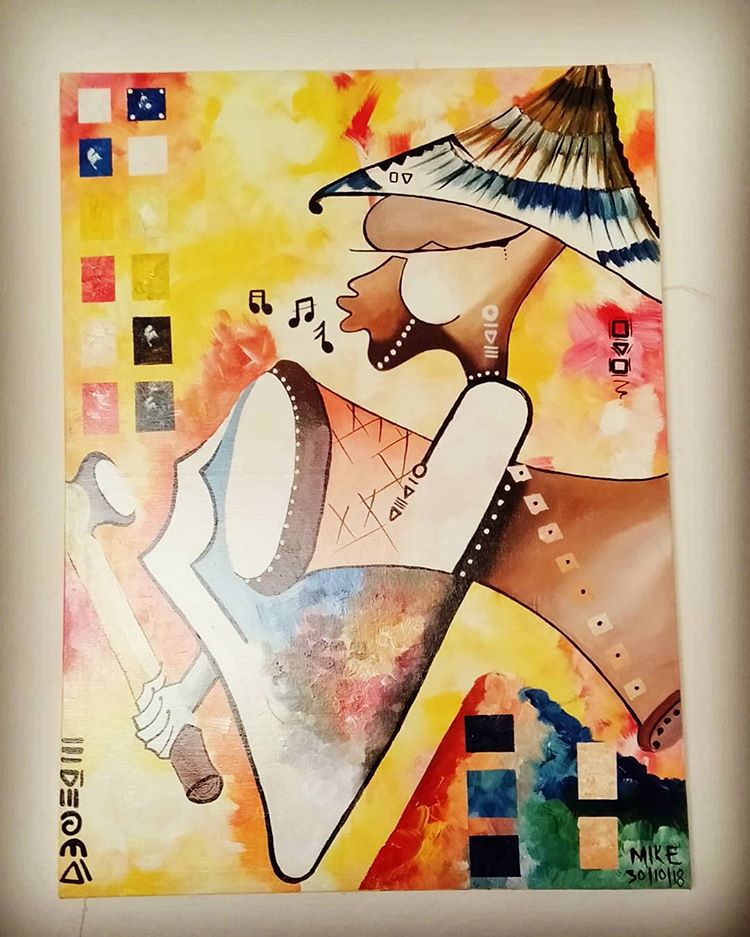
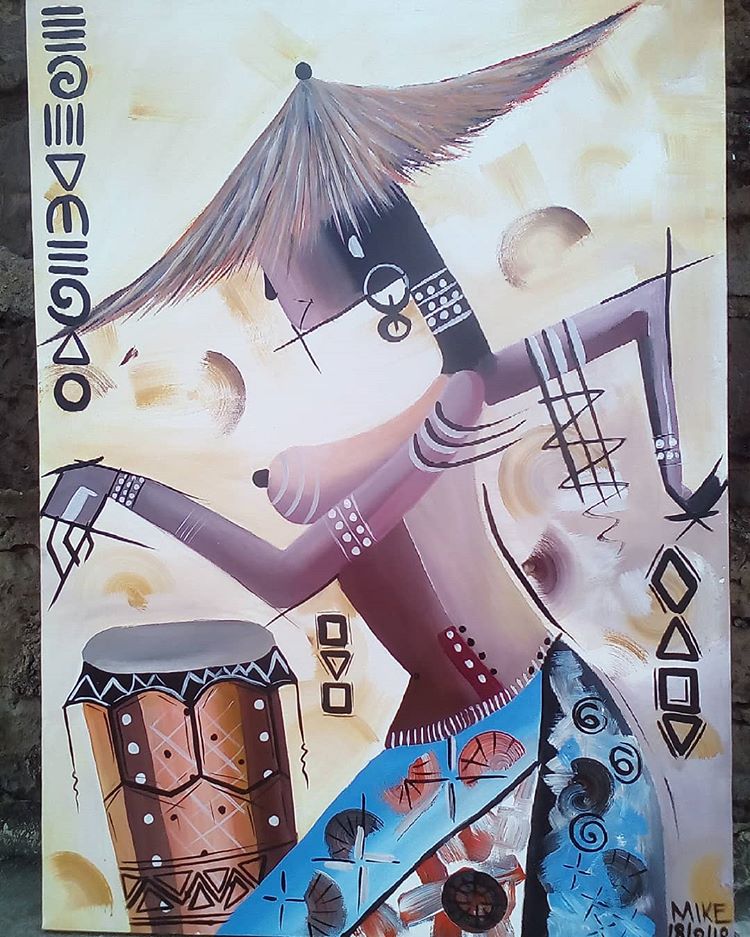
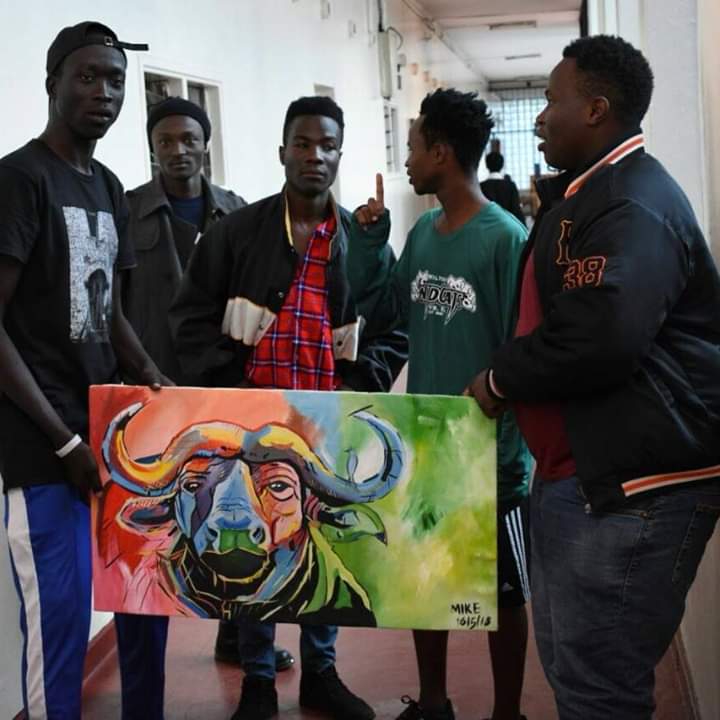
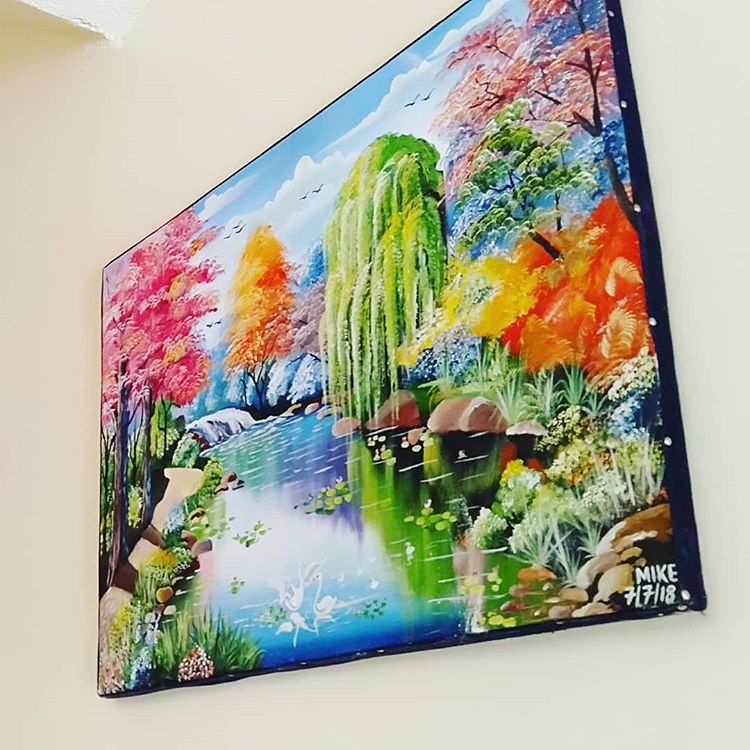
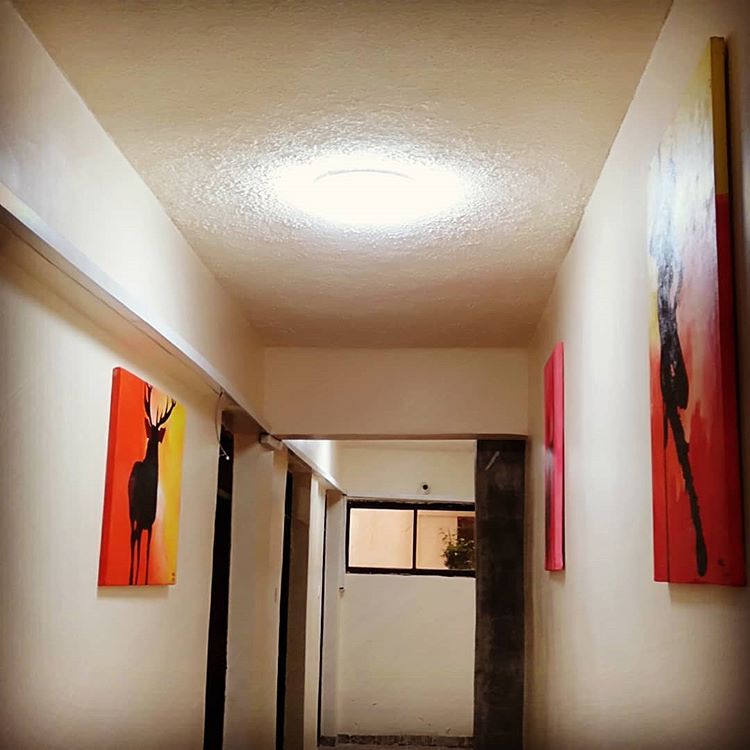
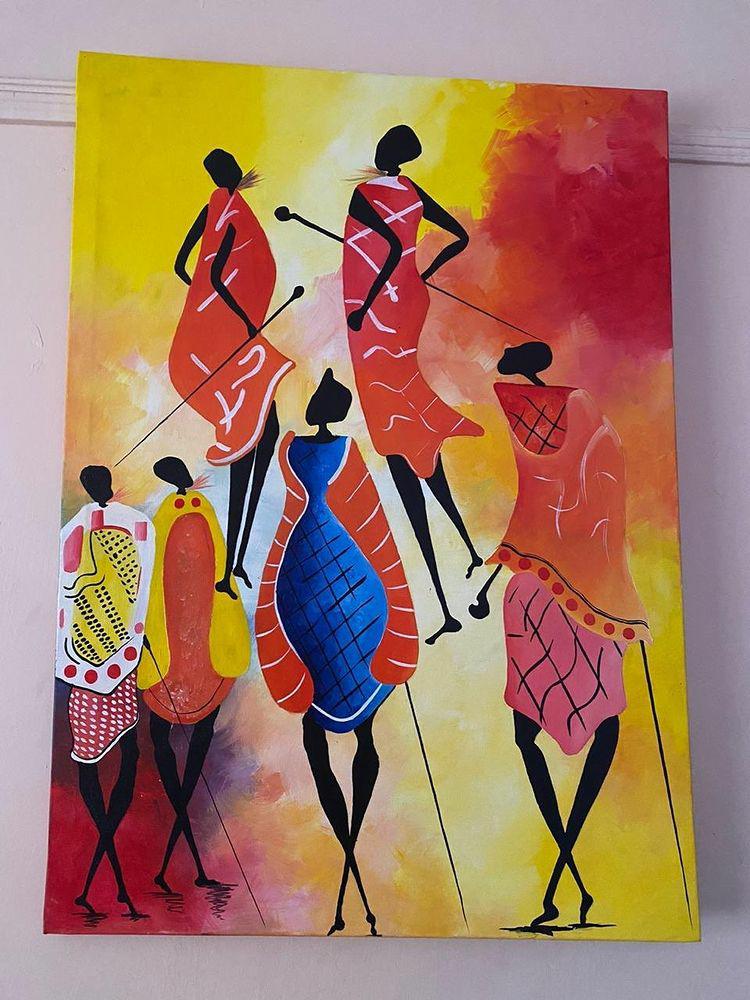
Mike Omondi Mulinya is an artist focused on painting on Canvas and Mix Media. He is the owner of Olympus Art and is based in Ngara, Nairobi. He often documents his progress on canvas on Instagram. You’ll find a work-in-progress post and a project-complete post on his feed.
Art by Mike Omondi
What I love most about his work is the color that explodes on canvas: so vivid and authentic. Read on to discover more about Mike and his art, in the following interview.
“Don’t give up on your dreams. As an artist, stand up bold and be what and who you want to be in life because we live once.“
Q. Tell us about yourself and what you do.
My name is Mike Omondi Mulinya. I do Art and Design to satisfy my spirit of creativity and adventure.
You’re an artist, what is your experience in your industry in Kenya?
The art industry in Kenya though not so tough, is also not an easy walkthrough. Though the industry has prominent artists, not many of them are willing to sit and have a chit-chat of encouragement and prosperity (with new artists). I think there is a fear of overtake in their monopoly market of art. To add to that, I started up with four paintings in 2017 and went to ask for a chance at Alliance Française. They told me that they don’t exhibit the paintings that I was doing. They (the paintings) were kinda small I guess. So, lucky for me, they were bold to my aunt who bought them all.
What Inspires you? What inspired your most favorite artwork?
My dream and passion of having the Olympus Art Gallery is my wheel that I push daily. This dream inspires me every dawn and dusk. What inspired my most favorite work is nature. God was creative with the world, so God is an Artist and so nature inspires my paintings.
How or why did you start making art?
I started making art in high school to preserve the art culture that I see is almost coming to an end. I also started making art since I’m art-coherent. It’s in me and I really wanted to bring the art culture to bold light and say Art is what I dream and I paint my dreams. In this world, one can’t survive without cash. I had to look for a source of income. I chose making art as my source of income.
What is your most important artist tool?
My important artist tools are my paintbrushes since they help me create vivid artistic images for the future and for utilization purposes.
Do you only paint on canvas, or can you make art in other forms? For example, painting murals, making greeting cards, or even on clothes?
I paint on canvas and any hardware material that paint is compatible with. I can paint and make things to order.
What are your thoughts on aspiring artists in Kenya?
My thoughts are don’t give up on your dreams. As an artist, stand up bold and be what and who you want to be in life because we live once.
There is special magic in a painting on canvas hanging on a wall. If you’re looking for an artist to get art for your walls, your place of work, your …insert preference…do check out Mike’s Art. His contacts below:
I’ve been lucky to be introduced to awesome illustrators this month. This post today features another artistic talent based in Kenya, David Maloba. His art is fresh, and certainly, up and coming. I sent him a few questions for this interview, which he gladly answered. Read on to discover what he has to say about his work.
Who is David Maloba? Tell us a bit about yourself, and what you do
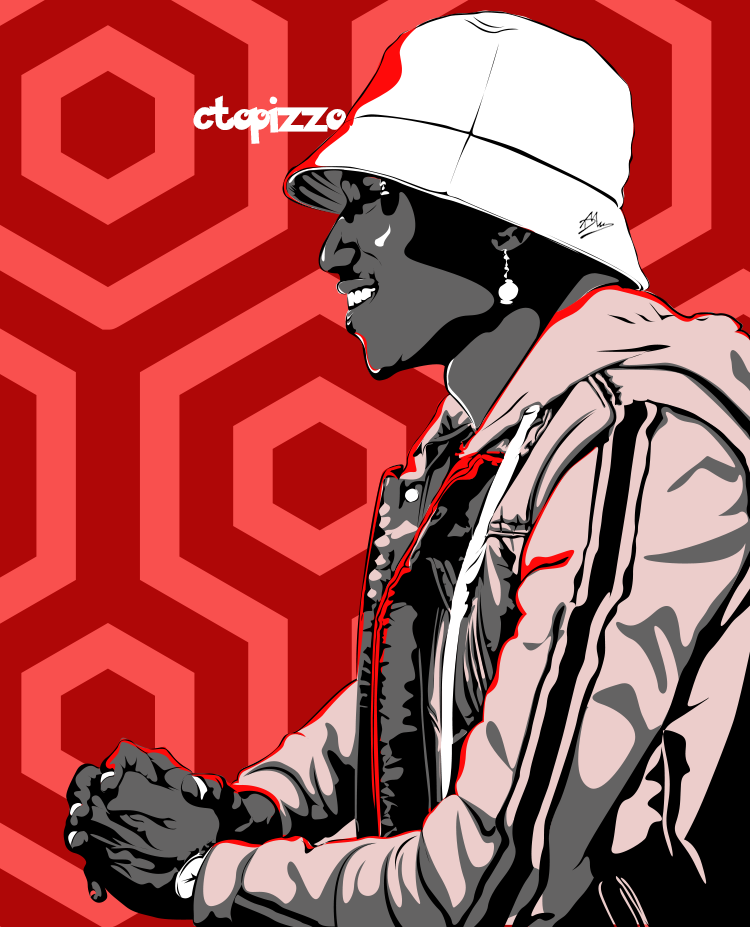
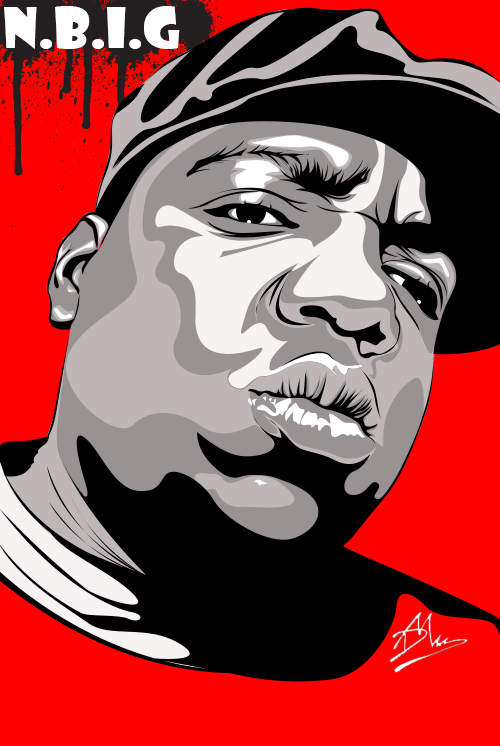

I am a graphic designer who deals mostly with digital illustration portraits famously known as vector/vexel portrait artworks. They are cartoon-style artworks that have artistic elements in them. It’s my daily drive and my passion, something I really love doing.
artwork by D. Maloba
I started out when I was in my third year at the university. I bumped into a tutorial video on YouTube that had the whole process of making vector artwork using Adobe Photoshop. That tutorial helped me big time and due to my prior knowledge and skill in the software, it was easy for me to create this type of artwork. It took me a couple months of constant practice to be able to not only master the way to draw the artwork but also develop my own style. I am just simplistic for the simple reason, life.
You’re an Illustrator, what is your challenge in this industry in Kenya?
Well, being a digital illustrator in Kenya is kind of difficult because not many people know about it yet, and others haven’t accepted it as one of the forms of art. Let’s say for example, in my case, some people say I use filters while that isn’t the case. So cases like these tend to pull us behind and slow down the growth and recognition of this type of artwork. There is also the issue of low pay to no pay, where some clients might underpay you or even not pay you at all just because the artwork is drawn using a computer. They want it to be free. To do these artworks one needs certain tools, which are quite expensive to acquire, making it a challenge too. It’s also time-consuming to do.
artwork by D. Maloba
EllyinNairobi Thoughts– Time consuming, but beautiful work!
..Keep creating. Someone will soon take notice of you. Keep your focus on and take each and every advice/comment positively. Some people might give you good reviews and some bad reviews, so don’t let them kill your morale with a few negative statements.
D. Maloba
What is your most favorite work and why? (Artwork you’ve done)
artwork by D. Maloba
My favorite artwork, I can say, is one I did of our esteemed president H.E Uhuru Kenyatta. It’s a special piece to me because it’s the one that I first got to print on canvas and second it exposed me to a wider range in terms of ideology and market. It’s something I am proud of doing each and every time I look at it hanging on the wall.
What type of skills or techniques do you need to develop for your work?
One needs to be creative, know how to draw different elements, and have the knowhow of drawing using computer software like Adobe Illustrator/Photoshop/Inkscape/CorelDraw, just to mention a few.
What is your dream/Goal? Where do you see yourself as an illustrator in a year or two?
artwork by D. Maloba
My dream/goal is to see my work inspire more Kenyans like me to develop and grow this kind of digital illustration portrait. Though it hasn’t gotten recognition like other forms of traditional art, it’s steadily picking form by the day.
In one/two years’ time I see myself being successful
and having my own digital illustration company/business where young
illustrators will have a chance to showcase their works and get the knowhow of
how to develop their art and also make a career out of it.
Who is your favorite artist/illustrator?
My favourite digital illustrator is Zac Dynes. He is one of the few artists who have a unique style of drawing illustrations. He calls them “drip art” going by how he expresses them with the drip effect.
What’s the last book/comic you read and why?
Wow!!! It’s been long. Ok, the last comic I read is Unaffected by my best friend Humphrey Osoro. First of all, it’s obviously done by a Kenyan, and has a good storyline plus nice illustrations and a work many people have not yet gotten the chance to read because of a lack of belief in Kenyan comics due to other foreign comics being given a number one spot/platform. It’s work that inspires me to work harder to grow my art. So, I can say I enjoyed reading it because it has humor in it, plus the illustrations are just amazing. I urge people to go and check it out because they will not be disappointed.
What are your thoughts on aspiring Illustrators in Kenya?
First and foremost is to always put GOD first in all
that you do.
Second is to keep creating. Someone will soon take notice of you. Keep your focus on and take each and every piece of advice/comment positively. Some people might give you good reviews and some bad reviews so don’t let them kill your morale with a few negative statements.
artwork by D. Maloba
Third, do more research on illustration because it’s growing at a fast rate with different kinds of styles coming up. Also, interact with fellow illustrators not just in Kenya but other parts of the world and get to know how they do their artwork to have a better understanding of the art. I, myself, have interacted online with a few and have also seen the work they have done. For example, Paul Kawira, theartofvosty, and Joe impressions just to mention a few. They have amazing artwork, go check them out too.
Connect with David Maloba
Are you interested in creating a project with David’s help? Connect with him on Instagram – @maloba_david
Elly’s Thoughts
And, there you have it! Passion, Commitment, Research (get your knowledge pool going), and Consistent Dedication! All the goodies you need to cultivate to be creative! It’s always inspiring to discover the creative journey from a different perspective. Whatever it is you want to do, know that you can achieve it. Keep creating folks!
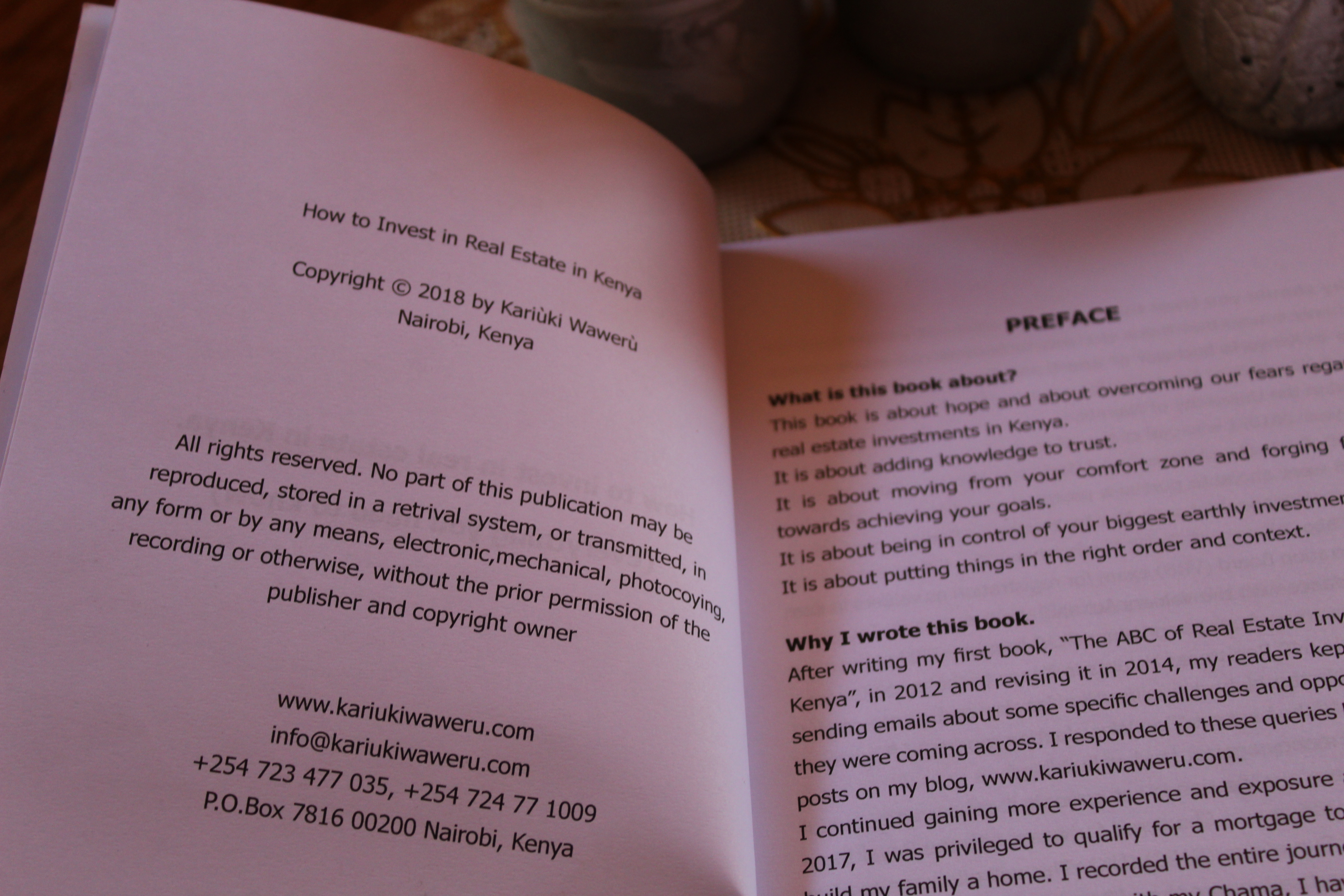
On this post, we celebrate and feature one of Kenya’s Registered Valuers, Kariuki Waweru. He has written an invaluable book on How To Invest in Real Estate in Kenya. This book has a wealth of information on how to invest, tips on home ownership in Kenya and how to navigate the confusing world of loans and mortgages in Kenya. Mr. Kariuki was kind to answer my questions on his book and his publishing journey. Let’s take a look!
1. What is the most favorite question you’ve ever
gotten from a reader?
I have had people who are at the verge of making a decision on real estate investing and when they ask questions, I direct them to the book. (How To Invest in Real Estate In Kenya). It feels good to have all the answers to their questions in one book. Feels like the motto for Nakumatt, “ You need it, we’ve got it”.
2. Did you
always want to be a published author?
I didn’t always want to. My first article was on whether to buy a car or a plot? I was dating my then fiancée, now my wife, and I needed to convince her that land is a good investment but I also knew that a car can earn one some extra cash… so I thought I should write down my arguments and see. I did that and she was very impressed. She encouraged me to keep writing and I wrote so many articles which I could send to her. She then encouraged me to start a blog, which I did. It’s now called www.kariukiwaweru.com … I then extracted some articles from the blog to publish my first book and extracted some more to publish my second book.
3. What
prompted you to write, ‘How to Invest in Real Estate in Kenya’?
After publishing my first book in 2012 and revising it in 2014, I realized that there was a gap in the market for a more practical book. Between 2016 and 2018, I went through a practical hands on experience of taking a commercial bank loan, a mortgage, buying a plot, building my family a house and investing in a commercial property for rental purposes. I blogged about this journey, the lessons learned and these came to refine my consultancy journey and made me a more practical consultant. I compiled all the experience and lessons learned and came up with this book. This book has everything you need to know about home ownership, commercial investments, loans, and mortgages set in a Kenyan context by a Kenyan Registered Valuer and consultant.
4. What is your
most memorable experience as a Registered and Practicing Valuer in Kenya?
It took me 13 years from the time I joined the University of Nairobi as a first-year B.A. Land Economics student to becoming a Registered Valuer. Getting that title was my highest professional achievement and a culmination of dreams… it was a dream come true. Later on, seeing my name published in the Kenya Gazette alongside the less than 600 valuers in Kenya since Kenya got its independence was also one of my greatest achievements.
5. You have published two books, that is, ‘The
ABC of Real Estate Investments in Kenya’ and now ‘How to Invest in Real Estate in
Kenya.’
a. What has your publishing journey been like?
I have learned a lot. There is a need to keep reviewing your work, get good editors and designers, and most importantly a good person to print the book. My first book was poorly printed in downtown Nairobi and I had to redo the printing and change the layout and design in 2014. In this current book, I have used very well-established printers and designers (which is quite costly) and I have not regretted the outcome.
b.Which book was easier to publish? The first or the second?
The second was easier as I knew exactly what I wanted and how to go about publishing, editing, and marketing.
c. What challenges, if any, did you face the first time, and were they present the second time around?
The challenges from the first time were using
inexperienced designers and printers to do my work. This cost me a lot in terms
of money and time.
6. What is your
view on publishing books in Kenya?
I think we should immortalize ourselves by publishing books.
7. What advice would you give to someone hoping to publish his or her first book?
The longest journey starts with a single step. Start writing. Start a blog… your readers will critique your work and you will be a better writer. Once you are ready, talk to someone who has published before and learn from them how to proceed.
8. Lastly, will you write another book? What do you think the title will be?
God willing I will write many other books. Ng’ugi wa
Thiong’o has more than 15 titles under his name…I have 3…I’m just getting
started.
The titles normally come after the content is done…so I don’t have any ready titles as yet.
Elly in Nariobi’s Thoughts:
It is always so inspiring to see an author’s journey in to publishing. If you’re wondering if the journey is possible, I hope Mr. Kariuki’s answers are enough to let you know that yes, it is. Whatever your idea, fiction or non-fiction, you can get it published in Kenya.
How to Invest in Real Estate in Kenya is a great addition to your bookshelf.
1. Because it simplifies the process of purchasing land, navigating mortgages, and helping plan for the future in terms of real estate investments.
2. All the content is based on Kenyan experiences. I always feel we need more professionals sharing, and demystifying their industries for Kenyans, as Mr. Kariuki has done.
To purchase this book: The book goes for Kshs. 500.
Are you curious about what it’s like to be a Comic Artist and Graphic designer in Kenya?
I’m excited to feature Humphrey Osoro who fits both of these titles. There was a time I thought I’d try to be a comic artist ( manga-ka – CLAMP had inspired me at the time) but the drawing talent was missing and I definitely prefer to read them.
So, I’m beyond excited to present this interview from Humphrey who has worked to realize the dream for himself. I hope his answers inspire even more comic artists in Kenya.
Q. Who is Humphrey Osoro?
A; I’m a comic artist and graphic designer based in Kenya. I make comics on the side and do my graphic design work as my day job. I’m a simple guy really, I love anything comics. Anything that tells stories just gets my attention: whether it’s movies, a good book or even a good work of art.
Q. So, why comics?
A. Growing up, I dabbled a lot in traditional art forms and in creative writing/storytelling. Once I got good at both, I wanted something that could combine the two and comics did that for me. Comics allowed me to combine my artistic side with my writer side. I was now able to use my art to tell an actual written story and since then I’ve been hooked on it.
Q. You’re a Comic Artist. What is it like establishing yourself in Kenya?
A; Being a Comic Artist here in Kenya is very different from another Country like let’s say Japan. Over there, they have Otaku Culture, which is this strong following around their manga (Japanese comics) and anime artwork. It’s a little easier to kick off a career as a comic artist and all this is possible because people are aware of what manga art is and they appreciate the value of it. Those guys are basically rock stars in the art world in Japan. Japanese – owned companies like Viz Media who run “Shonen jump” and many others have capitalized on this and they sponsor these artists. They also give new upcoming artists opportunities in their magazines by running their work in black & white, only giving them coloured runs when they prove successful with the masses. This system works very well there, the artist gets paid his due, people get to read good content, everyone’s happy.
In Kenya, the picture is a little different. It’s harder to establish yourself here. Comics just started getting popular recently, so not many people even knew what they were. Some can’t tell the difference between a comic book and a cartoon strip in the editorial newspaper, so it’s a bit of an uphill task trying to explain what it is you’re making. Most really just think that comics are meant for kids, which isn’t the case. Comics these days are more targeted at adult themes like crime, passion etc. They address such a wide variety of topics as opposed to a few years ago when they were exclusively limited to children’s themes. It’s the younger generation that grew up watching these cartoons on TV, like myself, who make up the bulk of the current comic readers and artists. These people are the ones who appreciate the true value of comics. They recognize that comics are like movies, just in picture form. These are the readers that give me hope that the industry is heading in the right direction.
Giving up gets you nowhere. People will eventually start taking notice of you if you stick around long enough. You’ll start getting calls and gigs you never thought you’d get. The beauty of it is, not everyone has the patience to make a comic, so count yourself lucky, they’ll look for you specifically. So hold on, keep cranking out some art!
H. OSoro
Establishing oneself as a comic artist here in Kenya is a bit of an uphill task, though once you do, it’s really rewarding. You really have to be patient as it doesn’t happen in a day. Anyone willing to take on this behemoth of a task should be willing to take the untraveled path. If you’re an introvert like me, then be prepared to polish up those people skills. You’ll have to hit the ground running, reach out to other comic artists in the industry, learn from them but don’t expect too much from them (They’re also struggling as much as you are, just at a different level). In short, its a labour of love, you do it because you love the craft, money will follow in spades.
Speaking of money, don’t quit your day job just yet. Because no one knows who you are, chances are no one will be willing to give you any commission. Most of the Kenyan mindset is of the opinion that western stuff is better than the locals, which is true, but only because those guys got a chance to shine. They were all beginners like us, it’s just that someone listened. If you don’t aggressively market yourself, you’ll never get anywhere here. Prepare to be ignored online, receive cold stares when you make proposals and many more of the stuff I can rattle off the top of my head.
But, its not all gloom, there’s a light at the end of the tunnel. Get inspired by other people when you’re down. I recommend reading Elaine Kamari’s post on Self Publishing here in Kenya in her blog “Elly In Nairobi”. Everything was so much clearer and easier after reading that, so give it a chance. Giving up gets you nowhere. People will eventually start taking notice of you if you stick around long enough. You’ll start getting calls and gigs you never thought you’d get. The beauty of it is, not everyone has the patience to make a comic, so count yourself lucky, they’ll look for you specifically. So hold on, keep cranking out some art!
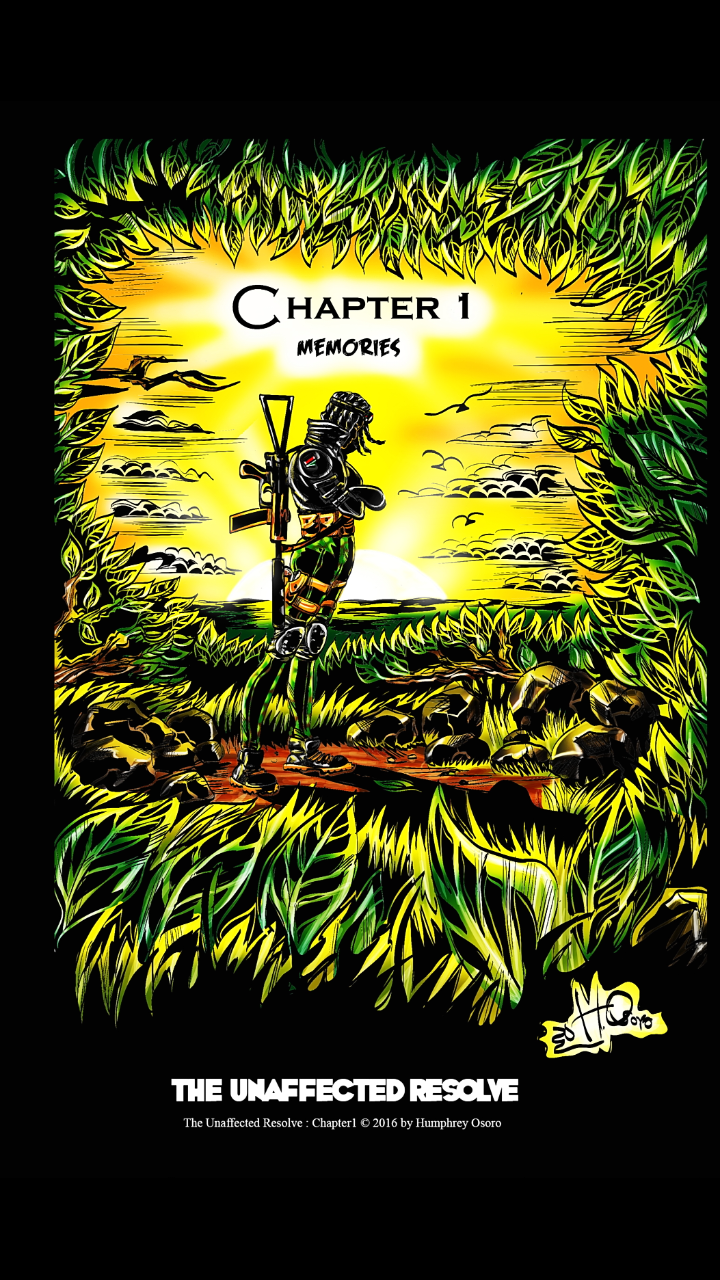
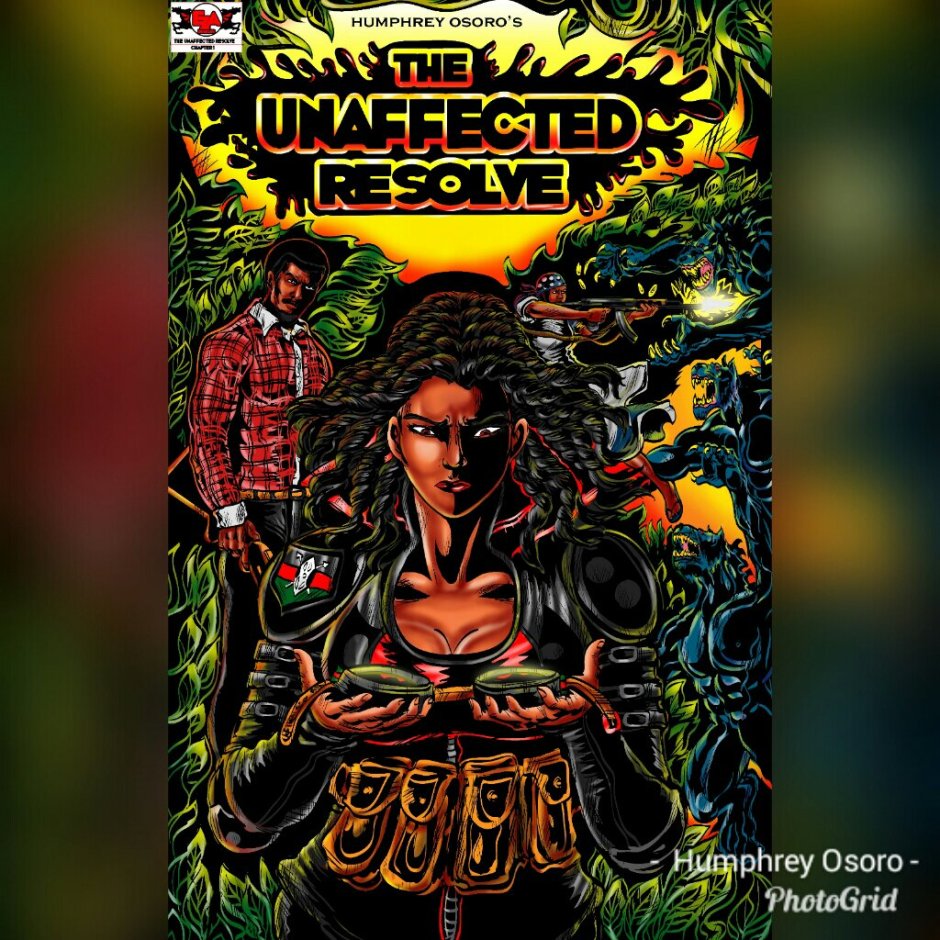
Q – The first 30 pages of your comic, The Unaffected Resolve- Chapter 1 are released at 254Comics.com. Will you release Volume 2 at 254comics too?
A; Yes, definitely! The book is actually more than just those 30 pages, I released those because they were the ones already done in colour. It’s actually 114 pages long. Yeah, I know. That’s a LOT of pages. Well, when I began making the book, I decided I would create the thing until I finished the whole of Chapter 1. I’ve written dozens of scripts for “The Unaffected Resolve”, they’re a total of 11 Chapters for the first story arch. Each script has more than 24 pages of words in it, which in a comic made up of pictures and those words translates to almost 100 pages. 100 is the magic number because I’m targeting at creating a true graphic novel of “Resolve”. Each Chapter will have at least 100 pages so that at long last they can be compiled together into a 500-page graphic novel. My inspiration is the likes of Graphic novels like “Akira” in Japan. Now that one has 600 plus pages!
Right now, this comic book is finished, though in black and white. I’ll release the rest slowly as I keep colouring but you can head over to 254comics and read the first 30 pages in all its full colour glory. Stand by for a review of the book here by Ellie, It’ll be a detailed review of all 114 pages so for those who want to get an idea about it, stay posted right here. Though here’s some bonus art for Chapter 2 that’s currently in the kitchen! Completely reworked art-style for chapter 2!
H. Osoro Art – Unaffected Resolve – Chapter 2
Q. You’re also an
illustrator, what type of commissions have you taken on since your start?
A; I’ve done so many of them so far. I used to dabble in the
traditional pen and paper collisions whereby someone wanted a hand-drawn piece.
I still do them but only exclusively because of how taxing they are.
I also did a lot of painting on canvas for clients and friends.
These were really enjoyable, seeing a mess of colours come together into a nice
final piece of art is just so satisfying.
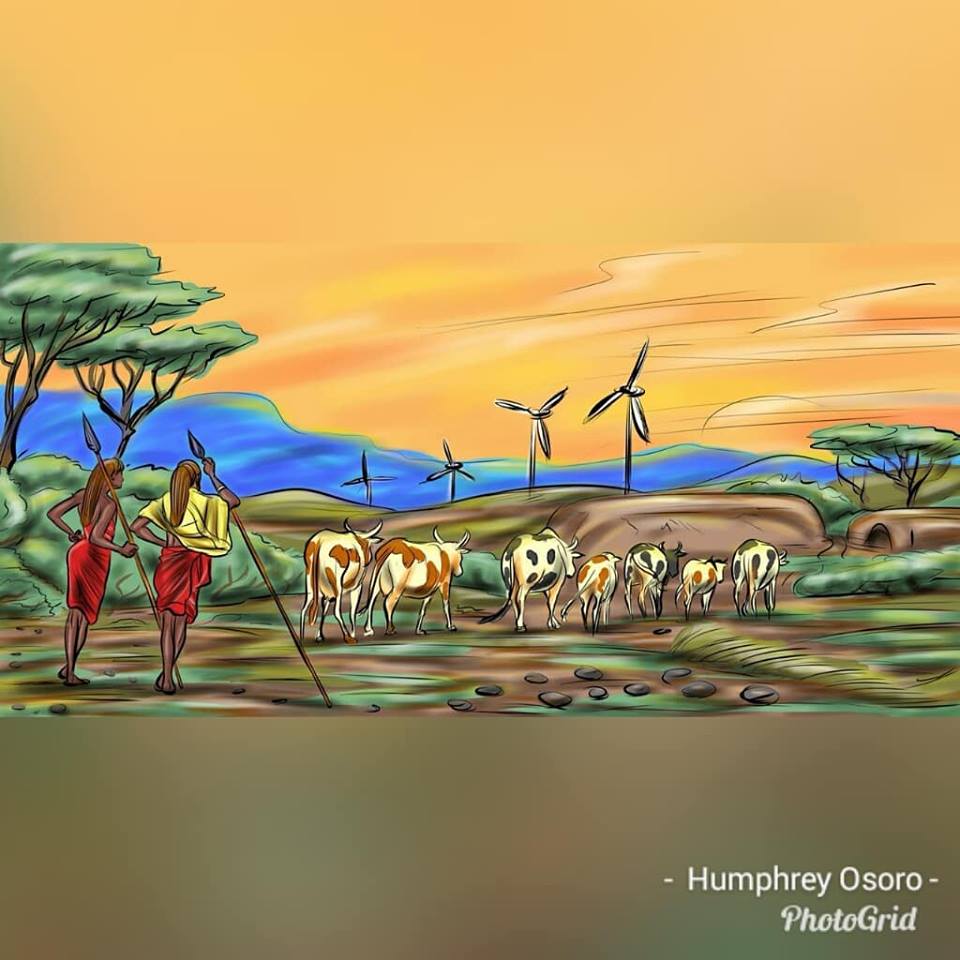
I also do book illustrations. I’ve worked with publishing companies mainly on children’s illustrations. These are done digitally and require a completely different kind of art style. My style is usually highly detailed and complex, so having to make them simple was a nice fresh change for me.
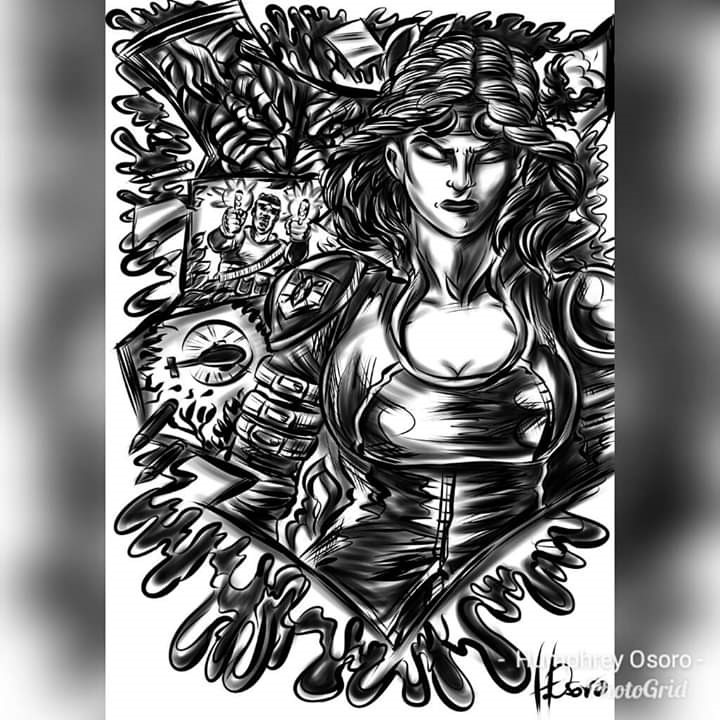
H. Osoro
I also do book illustrations. I’ve worked with publishing companies mainly on children’s illustrations. These are done digitally and require a completely different kind of art style. My style is usually highly detailed and complex, so having to make them simple was a nice fresh change for me. I do these in a cartoony kind of style that will appeal to the kids. The biggest book illustration project had me handling 65 coloured pages. I was able to crank out 10 pages a day at the time so within a week I was done. It was challenging but it taught me a lot about sticking to deadlines.
I’ve also handled logo design, business cards, banners, strips, posters and other stuff relating to Graphic Design. I’m a Graphic Designer by profession at the Nation Media Group at the moment, so I do the normal graphic stuff like making advertisements, proposals, posters etc. It’s been an eye opener on what it really takes to be a good Graphic designer. So anyone looking to be an effective Graphic designer, try applying there and see if you’ll get lucky. The deadlines and pressures at work really prepare you for when you have to deal with clients in your illustration hustle. Overall, it’s the illustration type of logos and designs that really pique my interest. I find these make full use of my talents as a human being. I get to combine both Graphic Design and my love for illustration.
H. Osoro art
I can say that as long as I can remember, I’ve been doing comics since the beginning. I did them for my high school magazine back at “Friend’s School Kamusinga“. It was a piece called “Demolishon” that addresses many of the negative vices in society. I still do it today, so make sure to check out my Facebook page & other media platforms. I finally undertook a personal project to create my own comic book back in 2017. It’s called “The Unaffected Resolve”, go check it out at. There’s nothing more I enjoy like making comics, it’s like seeing a movie in your mind and your hands are there to translate that to paper.
In comics, I’ve done comic pages for a couple of clients that I really can’t name due to non-disclosure agreements. I also offer some of those comic book services to fellow artists whereby I do inking of your basic sketches and colour them for you at an agreed fee. A good example of this, is a good friend of mine, he’s called “Kimzy Flimzy” on Facebook, go check out his art. We collaborate on a couple of gigs when he’s really busy and I step in to help out so we can beat the deadlines, so big thanks to you bro if you’re reading this!
Q. What is your
creative process like? Do you have a
favorite spot where you must work? Or a
favorite pen?
A; My creative process is simple. It usually starts out with
me just closing my eyes and playing out a movie in my mind. I see the
characters, I see them alive, breathing , talking and moving about. From here
when I grab my pen to sketch them out it’s easier from there.
When I’m down on creative gas, I just put everything down
and let loose. Play a computer game on my PlayStation, ride my bike on a
mountain run in my area because there’s so many cycling trails over here or
just get down and do some exercise.
My favourite pen is the good old blue “Bic” pen. The ones we all used in high school and campus. I was that kid that looked like he was paying attention but if you looked closely, you’d always find me sketching. I sketch everyday. I found that by doing this, I was able to master movement of my characters by not being too rigid in my drawing approach. So yeah, get a trusty pen, doesn’t need to be blue like mine!
Q. What would you say
to aspiring comic artists and illustrators in Kenya?
A; First, nothing comes easy. You want to be a comic artist? Then be prepared to be a jack of all trades because if you only know one thing, then chances are you won’t succeed. Take the time to learn other forms of traditional art, learn the basics of proportion, colouring and more. All these will apply at some point when you’re working on your book.
Second, consider learning some basic Graphic Design. You ask, “Why?” Well, because comics are essentially picture books at the end of the day. This will equip you with knowledge on layout, formatting of your book since chances are no one around you knows how to format a comic book. (The dimensions of a comic are different from your average book on the shelf.)
First, just have your comic ready. Finish it. At least in Black & White because you need to have something to put in front of your potential readers. From here, market the hell out of your book through various channels available such as blogs, social media platforms etc.
H. Osoro
H. Osoro art
Third, be assured it’ll take some time before you get your name out there. First, just have your comic ready. Finish it. At least in Black & White because you need to have something to put in front of your potential readers. From here, market the hell out of your book through various channels available such as blogs, social media platforms etc.
I could go on and on but at the end of the day it depends on you. How badly do you want to tell your story? Because I know you didn’t get into comics to just make money, you had this story in your head you wanted to share with the world. You do it because you love the craft, even when you’re paid peanuts. Now that’s true passion right there. I know I did, so what about you?






























 Stories and Book Talk