Author: Elly in Nairobi

  • 4 Ideas on what to do with your completed manuscript in Kenya

    4 Ideas on what to do with your completed manuscript in Kenya

    Have you completed your Manuscript and are wondering what to do?

    You have finally finished writing your manuscript, be it Fiction or Non-Fiction, and you have saved your work on your laptop or in the cloud.  You’re asking, ‘What do I do now?

    Photo by Ylanite Koppens on Pexels.com

    First, Congratulations on finishing your writing project, a finished manuscript is cause for celebration.  I mean it.  Celebrate that moment of completion, because it takes a lot of time to get to that last full stop.

    Now, let’s get to work.

    Idea 1: The Intensive Editing Process

    I hate to say it but you need to consider this.  Be very honest with your finished work and answer this question.  Is your Manuscript a First Draft/Rough Draft?  Is it a shell of an idea you have about your book?  I’m asking, is it work you think still needs more effort?

    – The Editing Process is intensive and it transforms your first draft into a worthy book.  There is no way around it because you’re not writing this manuscript for you, but for readers you hope will engage, love and understand your work.  Your thoughts or your story must be cohesive and understandable.  Getting to this moment of perfection takes a few rewrites.

    The process might go like this.  When you finish writing a manuscript, you print it out and give it a few days before you read it.  When you do pick that manuscript, read it holding a pen and make notes on a notepad.  Find scenes that feel incomplete.  Find sentences that read wrong.  Fix typos and spelling mistakes.  Discover insane plot holes that need reworking and rewriting.  This happens before you let anyone else read your work.  Once you have gotten your story to where you feel you have done the most editing you can yourself, let someone else read it.  Why?  You can’t see the flaws anymore.  You’re too close. 

    Photo by Bich Tran on Pexels.com

    Beta readers always have notes for you.  Discuss them and more changes will likely happen in the manuscript.  Try to make this a fast process instead of making it endless.  Endlessness sends you into limbo world.  You keep working on the same manuscript over and over and it never ends.  If you have a good beta reader, you’re able to create deadlines that you both meet leading to a state of completion.

    Any editor you reach out to gets the fourth or fifth edition of the manuscript.  Be aware that the editor will have a few changes for you too.  I’m saying this with all my love.  Editor Feedback is a blessing to you.  Rant and rave if you must, but get back in there and refocus your attention.

    Look at the suggestions given from the perspective of your editor, the reader, and try to see what you can take from that feedback.  It’s a painful process.  You rewrite entire chapters or lose them, as in cut them out.  You gotta keep track of these changes.  It hurts when you lose changes that you really needed.  I’ve cried tears over this.  Anyway, your editor gets you to that nirvana that is the Last Draft, the draft to release out to the world.

    Is this Intensive Editing Process important?

    You’re thinking, ‘I’ve written and completed a manuscript.  Other than spelling typos and a few sentences that sound off, I think I have this, no need for rewrites and second-looks.  Let’s just sell this thing.

    Great! Confidence is important in all undertakings.  If you don’t have confidence, well, why start in the first place, right?

    Still, take a moment to really ask yourself, ‘What is the goal of you writing this manuscript?’

    1. Is it to gain readers?  Is it for crazy sales? 
    2. Is it for fun? Is it just a phase?
    3. Do you just want to tell people you write?
    4. Are you educating people in an industry?  Do you want to entertain?
    5. Is it for mad fame and culture-changing insight?
    6. Is it for an important cause?  Are you creating a fiction masterpiece?

    If you answered 1, 4, 5, 6, then you need the intensive editing process to get your work into sparkling condition.  You have competition and you need to get ahead of the other millions of writers who want the very same things.  Editing gets you there.  It makes your work stand out.

    You know your readers measure your manuscript’s worth in reviews and sales.  You want to give them the best, so you work at it until you’re satisfied with the last edition.

    There is nothing wrong with answering 2 and/or 3.  Still, even at this stage, you should work to polish your work, and then create a platform that is your very own real estate.  Have a place to share your work and direct people to see and read your work.  Stages 2 and 3 launch you into the next step.  They help you grow an audience and give you the courage and confidence to go all in.

    Selling your Completed Manuscript

    Self-Publishing Tidbits:  Have stories you create for sharing everywhere: on your blog, on social media, on looseleaf notebooks for your close people to read.  Have stories you list for sale.  Spend money on the stories you list for sale: on editors and book cover art.  Get a website and allocate a marketing budget.  You may also have stories you submit to Traditional Publishers in the hope of getting them published. (Don’t publish submissions elsewhere, please.)  All these stories should have one thing in common.  Make sure they are presentable in all their available forms.  They are your brand and represent your body of work.

    Ideas 2 & 3: Literary Agents and Traditional Publishers

    Question: My Manuscript is ready. I’m in Kenya, or East Africa, and I’m wondering, what do I do next?  Do I choose a traditional publisher, or should I start thinking of self-publishing? It all depends on your goals.

    The ultimate goal for any writer is to publish their work on a grand scale with worldwide publishing.  This means getting your book published by the Big Five Publishers around the world.  You need a Literary Agent to get to this level.  Literary Agents are a great asset.  Their skill in negotiation will get you to your goals, as they work for your best interests.

    Getting a Literary Agent requires hard work on your part in terms of editing your manuscript.  You then need to write queries and submit them to Literary Agents who represent writers in our East Africa region.  Please note, there is a delicate dance between finding Legitimate Literary Agents and meeting the Right Literary Agent to represent your work.  I will acknowledge there is a fair amount of networking and searching to get this connection in our region.

    Published by Traditional Publishers in Kenya-

    • Publishers in Kenya receive manuscripts from thousands of writers in the region.  Your work is to get yours noticed.  This means, finding an editor who will help you get your manuscript up to level, if you can’t afford one, using all your effort to get to that level.  
    • Do your homework.   Publishing Houses in Kenya each have different types of genres they prefer.  Do your research.  Educate yourself on genres and discover how your work fits in their house.  Reach out to them and take their feedback seriously.
    • When your work is accepted, the publisher will get you to the next step.  Educate yourself on royalties, copyrights and contracts in Kenya.

    The Traditional Publishing Route is as intensive as the Editing process.  If this is your chosen route, do not quit in the middle.  Send in your submissions, and if you get rejections, study why and grow from it.  Keep going until you get that yes.

    Idea 4: Self-Publishing Route in Kenya

    On this route, you take on the challenge of putting out your completed manuscript to the world.

    • The Editing Process – Work to get your editing done at the same level as books churned out by Traditional Publishers.  Make sure your content is cohesive and engaging.  Do not take shortcuts and push out loads of typos.
    • Book Cover Art, Blurbs & Formatting – You’re the publisher now, so once you finish your last edit, you get to jump in and design your book.  These decisions are yours to make and formulate.  Do your research.
    • ISBNs and Copyright – Don’t neglect your legal needs, to protect your hard work and to get your book in the library systems.
    • Digital Platforms & Hard Copy Books – You get to decide what type of medium you want to pursue to sell your book.  You can print a physical book, or publish it as digital content (e-book).  You may choose to use both.
    • Marketing and Getting Reviews – Once your book is ready and available, you start building a marketing network.  Find bookshops that will carry your physical book and websites to advertise your e-books.  Talk about it on social media.  Sensitize your audience on the book’s existence.  Get the word out there, and don’t stop.
    • Write your next book – The journey does not stop at one book.  Keep writing.

    Self-publishing is essentially starting your own business.  You product is your book.  Your work is to create a brand, grow an audience or a following for your book, and keep writing.  It does give you the freedom to choose your platforms.  However, it also requires a great deal more effort from the author.

    This blog post is courtesy of questions in my email on completed manuscripts and what to do next. What challenges do you face when you think of getting your books published? Thank you for reading my blog.

  • Church Fairies and Catways – The Little Girl

    Church Fairies and Catways – The Little Girl

    “Hubert, where are my red heels!” she shrieks out, as she frantically searches for her shoes among her many pairs.

    She has a particular set of shoes in mind, matching her newly bought handbag from Duscs wear. She needs to stand out, look good, it mattered to her.

    I join in the search, a slight frown on my face, perhaps wondering why these particular shoes meant so much to her.

    “Got it,” she shrieks again, and immediately fumbles into the new pair.

    Slightly irritated, I reach out for the car keys by the dining table and head for the back door leading to the garage. I start the car engine, close my eyes and rest my head on the Volvo seat’s head rest, waiting.

    A few minutes later, Aidleen storms into the car, eye pencil and lipstick in hand.  I hear the front passenger door shut, but I remain still, eyes closed. I am deep in thought.

    My wife had changed over the years, tremendously. Sundays had become red carpet occasions ever since her re-union with her long time group of flashy friends from campus days.  The conversations had changed to who has the latest Gucci bag matching with shoes, wearing the latest fashion trend, and so on.

    Hubert was born into a conservative catholic family, where church Sundays were more of worship days than fashion show offs, where dress codes really didn’t matter, or the kind of car you owned didn’t raise an eyebrow when you drove into the church compound.

    The local community knew each other by their last names. What mattered was the genuineness of your worship, what was in your heart, how you spoke to God one on one, how you saw people for who, and not what, they were. For all we know, God looks into the heart, not into your Ferrari, MLG Mercedes or two thousand dollar custom-made Armani designer suit.

    He really believed that, deep down.

    “Hubert! Hubert! Can we go please?  We’ll be late, honey. Why didn’t you wear the blue suit I had taken out for you? Babe, you need to look good.”

    He leans forward and kisses her forehead, and whispers, “I’m good”.

    He had worn a plain t-shirt embroidered in white and blue stitches, and faded khaki pants to match his oxford brown leather shoes.

    “I look alright,” he whispers to himself, as he as he stepped on the accelerator and listened to the soft humming of the powerful Volvo engine as it came to life.

    He loved the engine’s sound, how the machine picked up with ease, gliding past other cars on the highway with effortless power for such a big car.

    “Hubert, let’s go!”

    This time there was a heightened sense of impatience in her tone.

    He obliged, and finally straightened his back.  He changed gears, pressed the accelerator and eased into the driveway leading to the gate.  The sun was hot, perhaps too hot for that time of day. He put on the air conditioner, it was instant, and the cold air felt refreshing to the skin.

    The church usher stood at the gate entrance in bright blue African attire, clean-shaven and neatly dressed, patches of sweat clearly visible under his armpits, as he brilliantly tried to squeeze in as many cars as he could into the small parking area. Our turn came, and we were ushered into a small space beneath a leafy small tree right next to the entrance. It was a good spot, easily accessible and under a shade.

    Aidleen was busy waving frantically at her friends as I parked. I couldn’t help notice the parking lot looked like an exotic car exhibition, a paradise for car lovers, fit to pass for a diplomatic convention of some sorts.

    Melany was the first to catch up, looking very exquisite in a dark blue Bavaria suit with a matching handbag and shoes. Mike, the husband, was beside her, proudly clutching his newly bought iPhone 8 masterpiece, and we exchanged niceties over hugs and kisses.  The ladies had already began making their way to the church entrance, greeting acquaintances and friends along the way.  Catching up on the past week with church members.  I turned to lock the car, and then she caught my eye.

    Our eyes locked in what might have seemed like eternity.

    She just stared, a beautiful little girl in a pale-white wrinkled dress that seemed too big for her, dark short hair and a pair of worn out slip-ons for shoes. Despite the creases and over-sized attire, she looked very neat, perhaps trying to fit in, as much as she could in a world she knew very little about.

    She stood beside the entrance gate, motionless, hands clutched together in front of her. She smiled, but her eyes told a different story, one of sadness and despair. Eyes never lie. I slowly walked towards her, trying to smile as reassuringly as I could, vaguely acknowledging greetings from incoming congregation members.

    My gaze locked on the little girl.  The fixation growing the closer I got to her.

    “Hello.  How are you?” I asked.  “Are you okay?”

    She nodded, hands still clutched in front of her. She looked frail and weak, perhaps saddened by how life’s cruelty did not discriminate against age. Her cheekbones stood out, almost piercing the thin skin under which they held so tightly. Shoulders back, she had a confident pose, and despite her pale skin, her beauty still stood out.

    She looked frail and weak, perhaps saddened by how life’s cruelty did not discriminate against age

    Gilbert Kariuki

    Unconsciously, I held out my hand to her, as gently as I could. She did not hesitate. She put her hand on mine, clutching it tightly, as if never to let go. I didn’t want her to let go. There was something special about the little girl.  I didn’t know what it was, but it was special.

    We walked hand in hand towards the church entrance, and sat beside Melanie and the husband.

    Church service had begun, and though the sermon was about giving unto others as the Lord had blessed, I wasn’t paying much attention. My mind wandered to the little girl beside me, hand still holding tightly to mine.

    “Who is she? Why was she standing all alone by the gate? Where were her parents?”

    I was lost in thought, as the priest’s voice became fainter and fainter….

    ~~~~

    Fifteen years later, I sit in the front row of a dignitary-packed conference room.  I listen to a well-dressed, young lady telling the extraordinary story of her journey to her current status.  She is the youngest leader in the history of a global humanitarian organization that focuses on Children Rights and Welfare.

    Her story is captivating, inspiring, emotional, exuding faith and persistence all through. Against all odds, she made something of herself. Against all odds, she triumphed over life! Against all odds, that beautiful little girl in a pale-white wrinkled dress that seemed too big for her, short hair and a pair of worn out slip-ons for shoes, was now a global symbol of what it takes to achieve dreams.

    All it took was a ‘hello’, and stretching of a hand.  I took her in and cared for her as my own. Our eyes locked, as they did fifteen years ago.

    She smiled, and this time her eyes told a different story, one of appreciation and love. She ended her life story with a soft ‘thank you’, amid a roaring standing ovation from the crowd. Our eyes still locked, tears streaming down both our faces, she came down the podium.  We hugged and just like fifteen years ago, at the small church compound, she put her hand in mine, and clutched it tight, as if never to let go.

    I never did let go – it’s been fifteen years, and it all began with a stretched hand to a beautiful little girl in a pale white wrinkled dress.

    In life, we come across people on our paths whose destinies are intertwined. A simple stretch of a hand can mean a lifetime difference. As we are blessed and cursed in different capacities, so do we have a spiritual duty to reach out to others and try to correct the imbalance this world serves humanity!

    Story by Gilbert Kariuki
    Email: maheniagk@gmail.com


    I hope you enjoyed this story feature today. Nairobi is cold this month, stay warm. – Elly.

  • Happy and Grateful for having a Reading Culture

    Happy and Grateful for having a Reading Culture

    Happy New Year! 2020 is currently very beautiful. My Sunday is full of perfect sun, and birds chirping on the trees around our compound. Peaceful perfection.

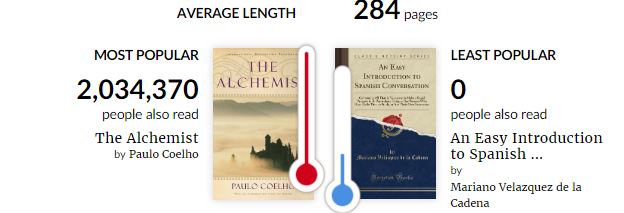
    This post is a gratitude post. I was on Goodreads deciding on my 2020 reading challenge number, and got to check out last year’s accomplishment. It suddenly occurred to me that I ought to be very grateful to my parents. Very grateful because they gave me the gift of nurturing a reading culture.

    It’s a small action, really, but also the most powerful gift ever. My dad had a serious obsession with science fiction. He gave me my first Arthur C. Clarke books, (Rendezvous with Rama), and my mom has a thing for literature, she had a stash of African plays, and a box full of reader’s digest romance books. When I was done reading theirs, they bought me fiction books, one every month, and made sure I learned how to borrow books from my school’s library. The biggest challenge was taking care of that book and returning it in good condition. Better yet, learning how to keep books they bought so that my sister and brother could read them too. These small lessons have turned into the biggest blessings now.

    I am grateful for my parents who taught me how to be a collector of books.

    The Goodreads reading challenge is a great way to track books on the shelf at home, or in your virtual library. That’s a thing now by the way. My kindle has an endless list now. This year, I plan on 120 books, as opposed to the 200 from last year. I’m anticipating a busy 2020 in terms of actual activities on my time, so the number has reduced. I don’t know why it’s so exciting to see Goodreads make a report and list of books I read through the year. It makes me want to have a more impressive review for this year.

    I’ll tell you that real world obligations can take over and suddenly you’re in March and haven’t started the reading challenge at all. I’ve found downloading a book every week on my kindle app helps me keep track. Read during a commute, when waiting for someone, or instead of scrolling endlessly on social media.

    My first book this year is going to be finishing Everything is Figureoutable by Marie Forleo.

    What’s yours?

    I wish you a wonderful 2020!

  • Nanowrimo and Picture Perfect

    Nanowrimo and Picture Perfect

    November is here! You know that means NaNoWriMo! Have you started writing your novel for the month yet? The NaNoWriMo: Kenya Region has an exciting whatsapp group, that keeps you going even on the days you want to stop. If interested, join the daily writing sprints. Here is the link to the NaNoWriMo whatsapp group. Get in and write your 50,000 words this month.

    My project this year is called Kipepeo. I hope to get about 50K words of it done. It’s Nov 5th, I’m at 6K. 44k to go!

    Picture Perfect

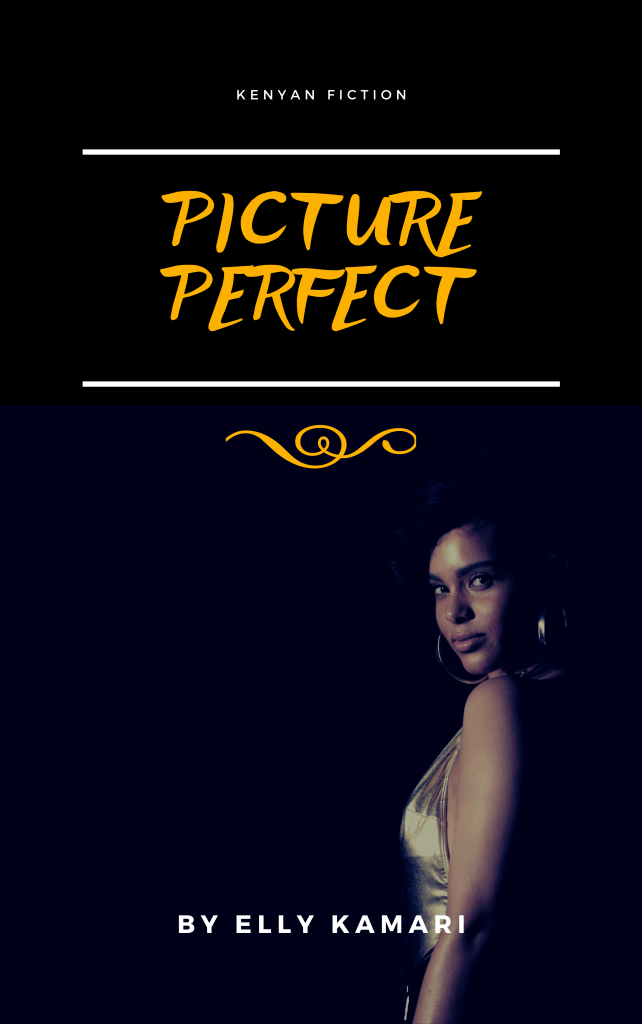
    More News! Picture Perfect finally has a cover and a completion schedule which is this Month (November 30th). I’ve had a long journey with this story, and you’ll find a chunk of it on this site. I’m excited to finally finish this and get it out there on e-book platforms. Please look forward to it. Here is the cover!

    November is exciting!

  • How do you find out the cost of self-publishing your book in Kenya?

    How do you find out the cost of self-publishing your book in Kenya?

    This question paralyzes the majority of writers in Kenya. It is the most asked question in my inbox. So, I am going to make a be-courageous-and-take-matters-into-your-own-hands post. Educate yourself on the words Word-count, Book size and Genre. Your manuscript is a product. Fiction or Non-fiction, it is a product. Know what your desired product looks like.

    What is the cost? How much will you need? How do I know the cost?

    In this post, we came up with a short guideline on how to decide what type of book you want to create. There are six questions you need answers to, only then can you decide the size of the book you want to produce.  

    If you’re writing fiction, know what size of work you want to create and in what genre you want to write in. That is:-

    • 1. Short Story – 0 to 7,500 words
    • 2. Novelette – 7,500 to 17,500 words
    • 3. Novella – 17,500 to 40,000 words
    • 4. Novel – 40,000 words and above.

    Where does your current work fit in the list below?

    This is a list of Genres / categories when publishing on Amazon’s KDP. Use it as a guideline. Where does your current work fit?
    • Choose a Genre: (Read this post on why you need to choose a genre) Once again, you cannot write for everyone, ‘everyone’ s’ tastes are different. Genres are as follows:
      • Children’s books
      • Romance
      • Action
      • Historical
      • Mystery
      • Thriller
      • Fantasy
      • Slice-of-life and many more etc.
    • Remember each size of story requires a different type of workload from you.  You must understand that the cost of printing a novel with 40,000 words and above is more than the cost of printing 7,500 words.

    The word count determines the amount of money you’ll spend when it comes to self publishing. It becomes very important to choose the number of words you want to produce in the type of work you want to create. 

    If you’re writing a non-fiction book, decide what size of work you want to create as well. The word count is leveled the same as the list above. Remember your chosen topic and industry. If you’ve chosen academic writing, follow the rules of that process. Do the research e.t.c. The cost of printing non-fiction is also determined by the presence of photographs and diagrams (color or black & white). The more photos and colored-diagrams, the more cost.

    Once you write your manuscript, then you can start thinking about editing and the cost of editing. Once again, editors look at the amount of words (Word Count) you need edited, and the work you have already put in to make it easier to edit.

    Scenario: if your manuscript has typos, misspelled words, grammar challenges, for fiction – a confusing story, for non-fiction – a mishmash of ideas with no real point, an editor is looking at your manuscript and seeing a huge workload. They’ll either charge you a large number or decline your work.

    If you’ve made the effort to clean up your manuscript of a lot of the troubles above, an editor will have an easier time working with you, as they’re able to understand what your work is about, and what you want to achieve. The cost might reduce from a huge shocking number to a manageable number. ^_^

    So how much do you need?

    • Editing – Depends on the word count, the work you’ve already put in to your manuscript, and the type of editor you get.  It can range from 9,000/- to 50,000/- or more. An editor may help you with formatting at an added charge.
    • Book covers – From 1,500/- to 5,000/- It depends on the illustrator or graphic designer you choose.
    • Formatting and Printing – Depends on the size of book (Book Size).  Some printers don’t do the formatting services, others do.  A book with around 30,000 words costs about 180/- per book to print, depending on the type of printer you get, and how many books you want to print.
    • Printing Cost is absolutely dependent on your desired end product.  You can get it cheap, you can get it expensive.

    Shop around and discover which printer will work for you.

    So, your cost is determined by Word Count. Word Count determines your Book Size and Your Editors’s Costs. Small word-count costs less, large word – count costs more.

    Genre is what your book is about, the category it fits in and how easy or fast your readers will find it.

  • Six Things to know when Self-publishing in Kenya

    Six Things to know when Self-publishing in Kenya

    Self-Publishing is a learning journey

    Think of it as a learning journey when you enter the publishing industry. At first, you don’t really know much, but as time goes you get to learn and know what is working and what is not.  You will need patience and the will to put in work.  Your dedication is a must.  Most important, know what you want out of it.  Here are six questions you should ask yourself at the beginning.

    1. Are you publishing fiction or non-fiction?

    Are you a creative with an abundant vault of stories, poems, musings that you feel would entertain, or bring joy and inspiration to people. Fiction is art, it is very creative and comes in a myriad of forms. Best of all, there is no restriction to it. Fiction books give you more freedom to be creative.

    Are you writing non-fiction? Non-fiction books are fact-based. They are also industry-based, or educative. People read them to learn. You need to be very conversant on the topic you choose for your non-fiction book. What non-fiction topic are you passionate about? Decide – Fiction or Non-fiction.

     2. In what Fiction Genre? In what Non-Fiction Industry? 

    Now that you’ve decided what type of book you want to write, let’s break it down further. In this post, I’ll assume you’re after writing commercial/popular Fiction books as opposed to literary works or literary merit work (which is also a choice by the way). Fiction is categorized into Genres that are recognized easily by readers. For example, mystery, thrillers, romance, children’s books, e.t.c. Educate yourself on the different types of fiction people read. Then, choose a genre for your fiction work.

    For Non-fiction, decide what industry you want to write for. Are you a baker with expertise? Are you a chef with awesome cooking skills you want to share or teach? Are you a teacher who has discovered a new way to teach kids without having them memorize boring texts? What kind of content do you want to provide in your non-fiction book? At what level are you in the industry, that is, beginner/intermediate/expert? Decide –> Genre or Industry

    3. Who is your target audience? Who is your core audience?

    Now that you’ve chosen the type of book and in what genre or industry, choosing a target audience or a core audience comes next. I will tell you right now, you cannot write for everyone. Everyone is different. We all have different tastes when it comes to our fiction reads. I might enjoy Game of Thrones, someone else might find it unbearable. GOT is categorized as fantasy, on account of the dragons….lolz. Their target audience is Adults who love Fantasy. Be very niche based with your fiction, it will help you grow an audience. Are you writing for kids, young adults, adults, women, young women, young men, high school kids, the older generation, younger generation? Who are you writing for?

    In Non-Fiction, who is your core audience? Beginners, experts, novices, hobby people, intermediate, startups, people seeking inspiration? If you’re writing an autobiography, biography, life story, a literary work, what point are you trying to put across and to whom? Know it. Decide –> Who is your audience?

    4. Who is already in the game?

    Whatever your idea, fiction or non-fiction, you’d best believe that someone has already written it. You need to know it, read that content, and find inspiration from it. Your main goal is to find out what other authors, in the fiction genre or in the non-fiction industry you chose, are doing. Learn from their work, their experiences, and transform your work into something close, good, or even greater. Decide –>Who do you want to be like when your writing career grows up?

      5. What are the authors in the game before me doing to get an audience?

    Popular authors have a following, or die-hard fans that will read their work no matter what they publish. e.g. I will read anything Nora Roberts produces. Why, because I read to be entertained and know her books won’t let me down. She’s made a brand of her work. Now, your turn to make your brand. P/S – Your work at the starting point is triple, you need to convince an audience to read your work. Then, you must assure your growing audience that you’ll consistently deliver great work to entertain. Learn from the greats in your chosen Genre, or Industry. Decide–>What kind of audience do you want? e.g. Nora’s rabid fan(Elly) who will buy my work no matter what. how do i get her loyalty?

    6. Will it work for me? How can I work out my own plan?

    Now, it is very common for authors/writers to copy or emulate authors they idolize or admire. There is nothing wrong with that, unless you’re downright plagiarizing published work, which is absolutely wrong. (don’t plagiarize) However, you need a starting point, your chosen idol is a great start.

    Use it to grow your work, your voice, your style. Once you’re clear on what type of content you want to create, what it looks like at its absolute best, then find a way to make it your own. Audiences gravitate to authenticity. Decision –> Be real, don’t cheat, and map out your goals for your work. Most of all, be passionate, and that should get you passionate fans too.

    Once you understand the answers to these six questions, then you’ll have a plan to run with as you start your self-publishing journey.

  • Olympus Art by Mike Omondi

    Olympus Art by Mike Omondi

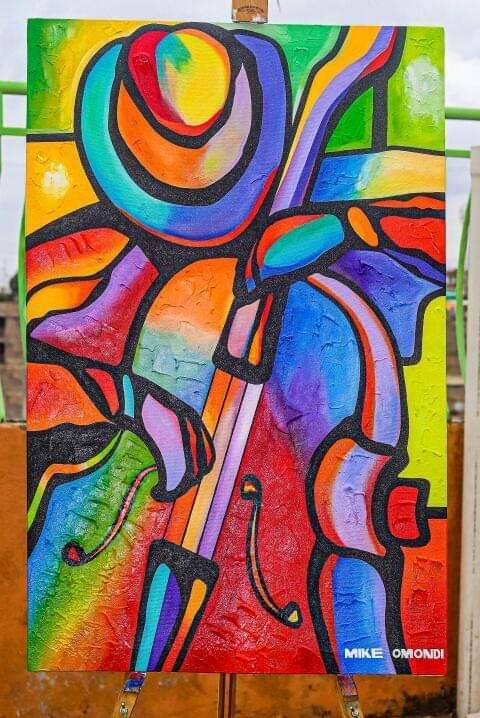
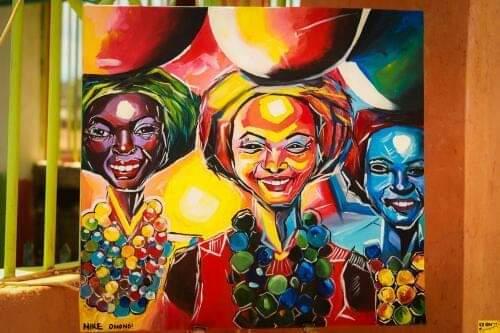
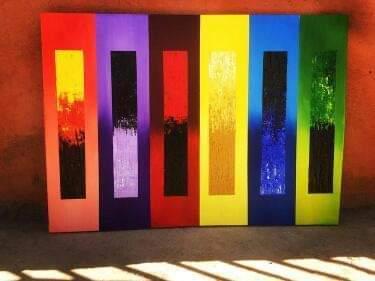
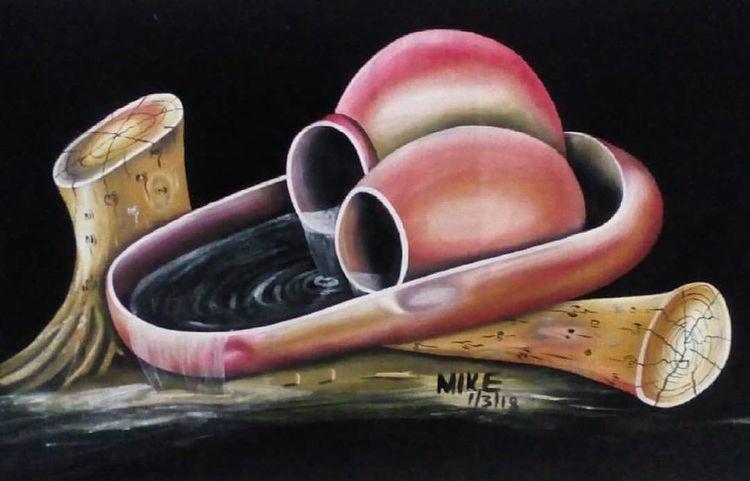
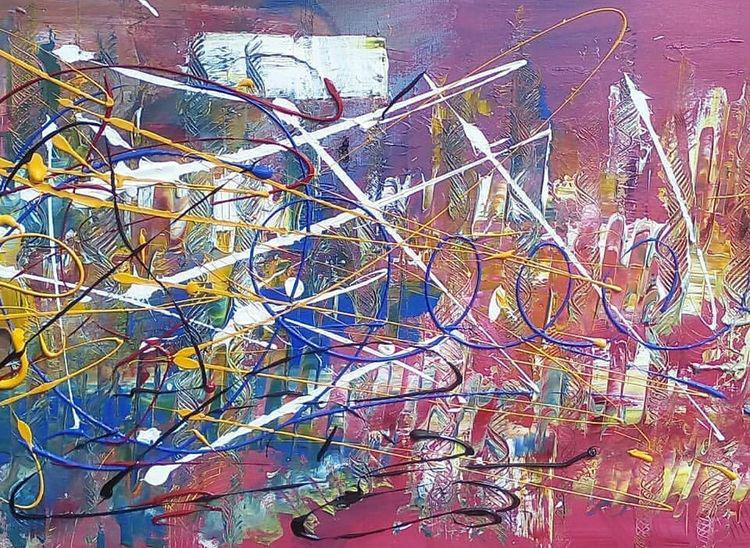
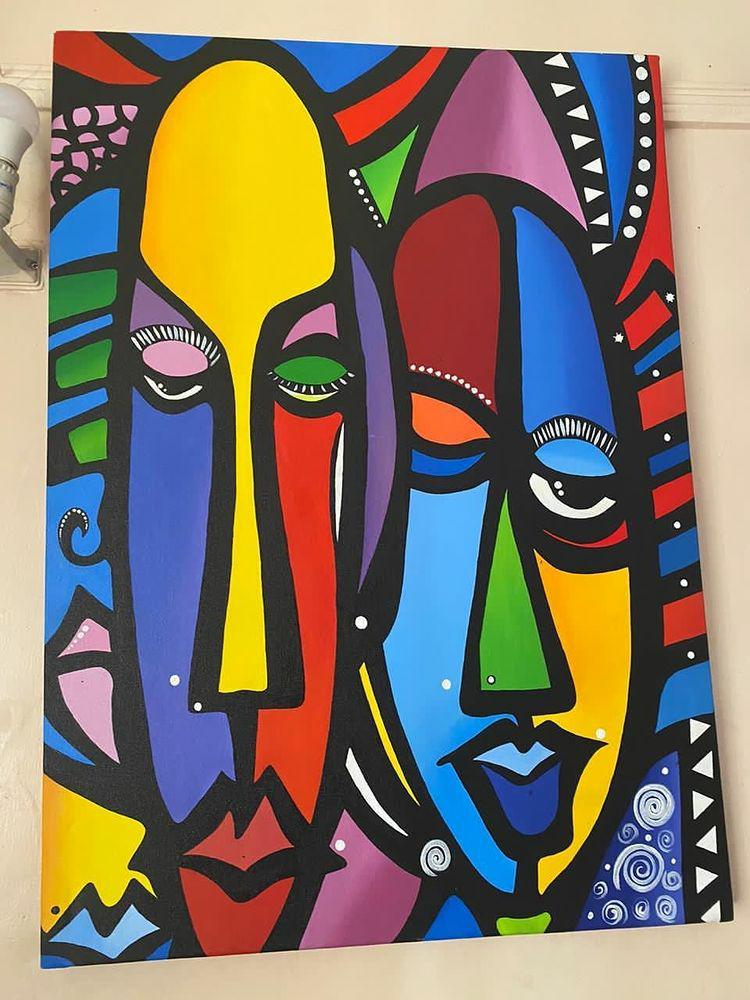
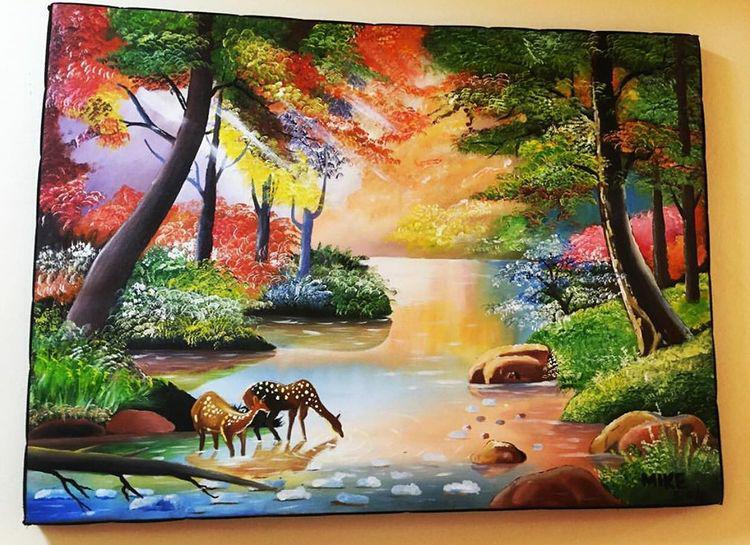
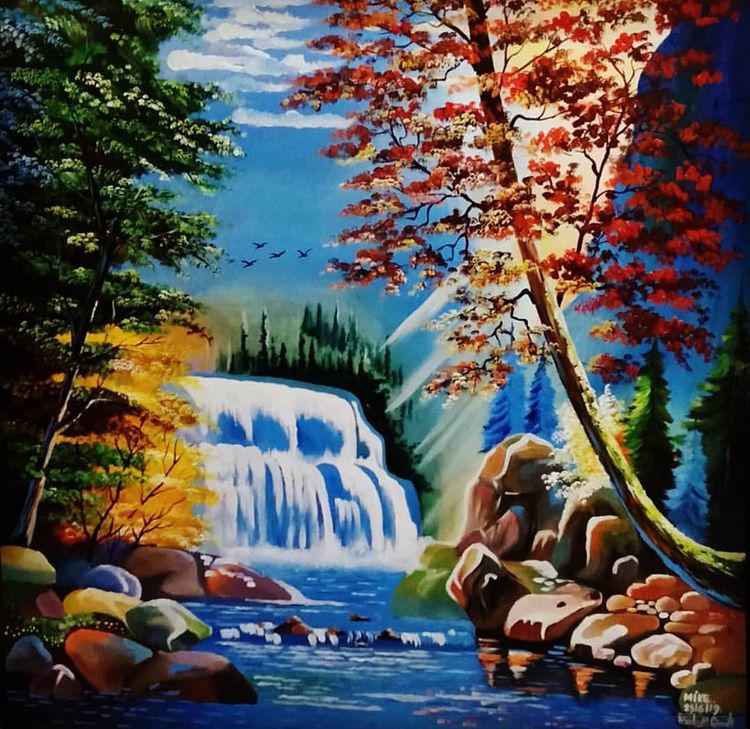
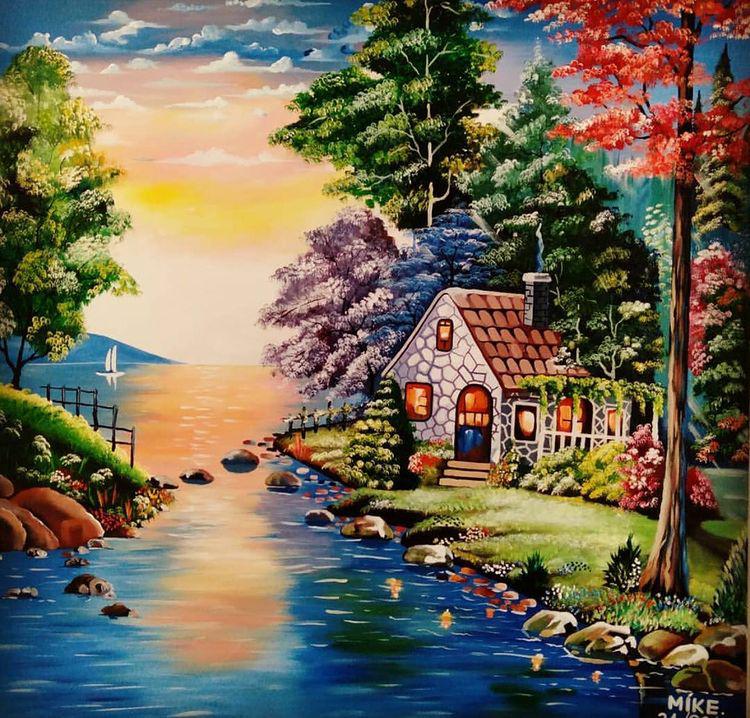
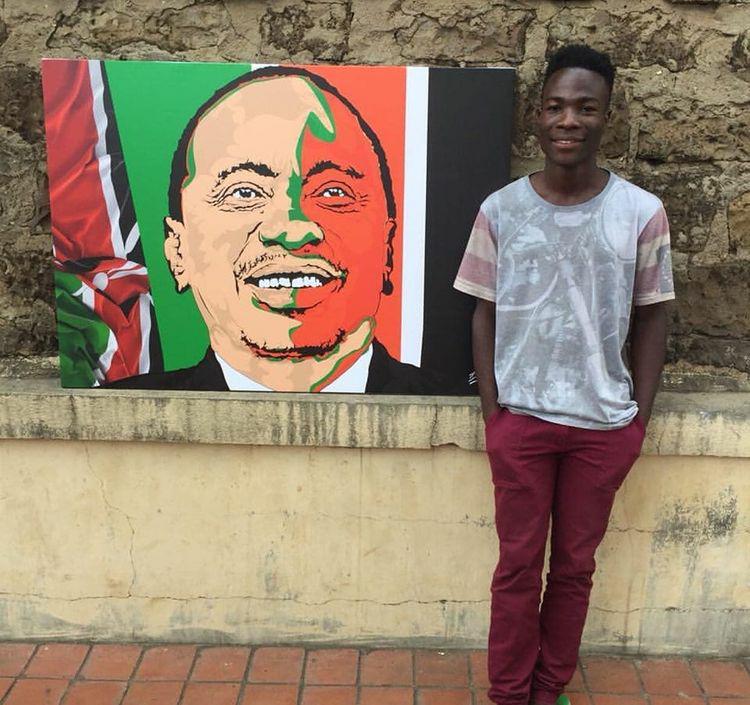
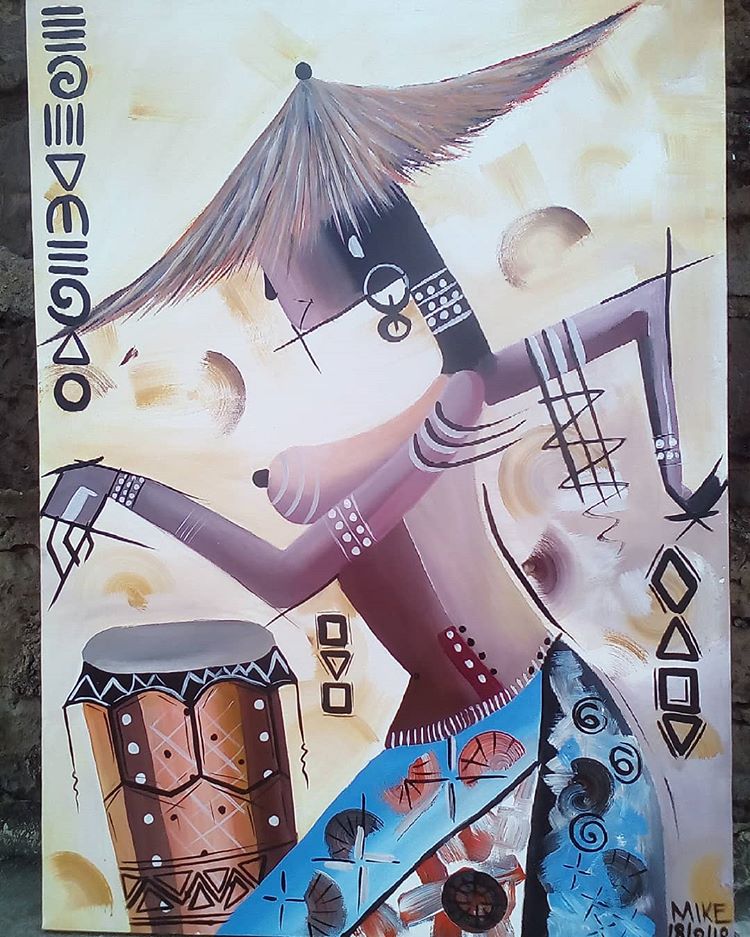
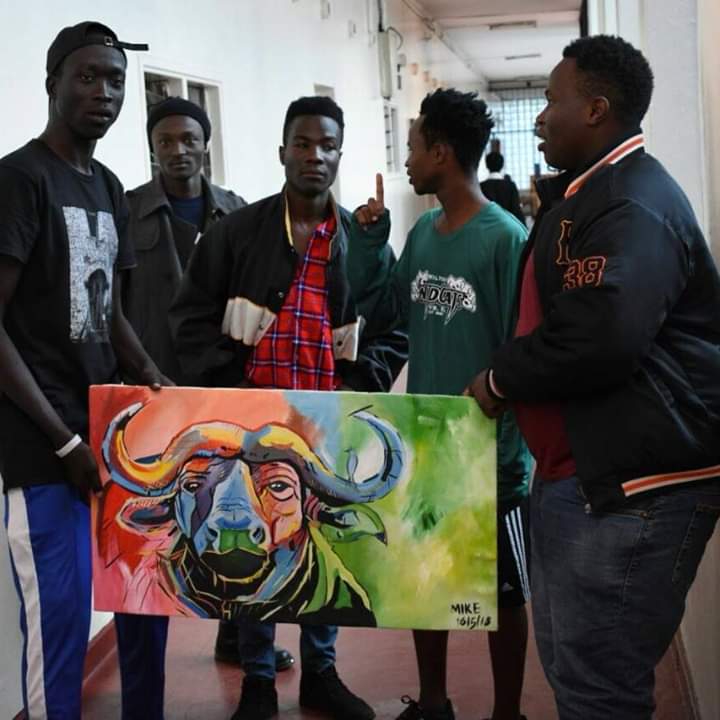
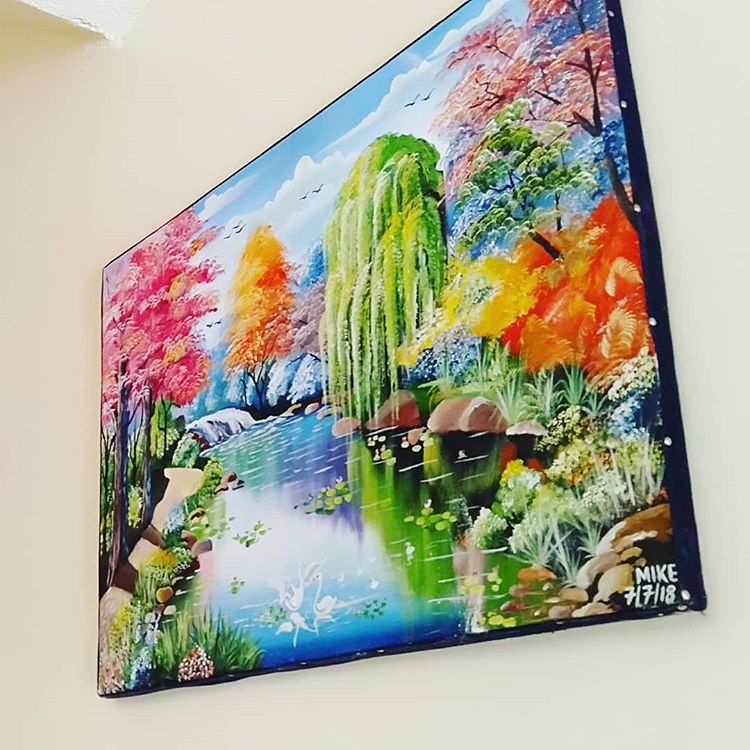
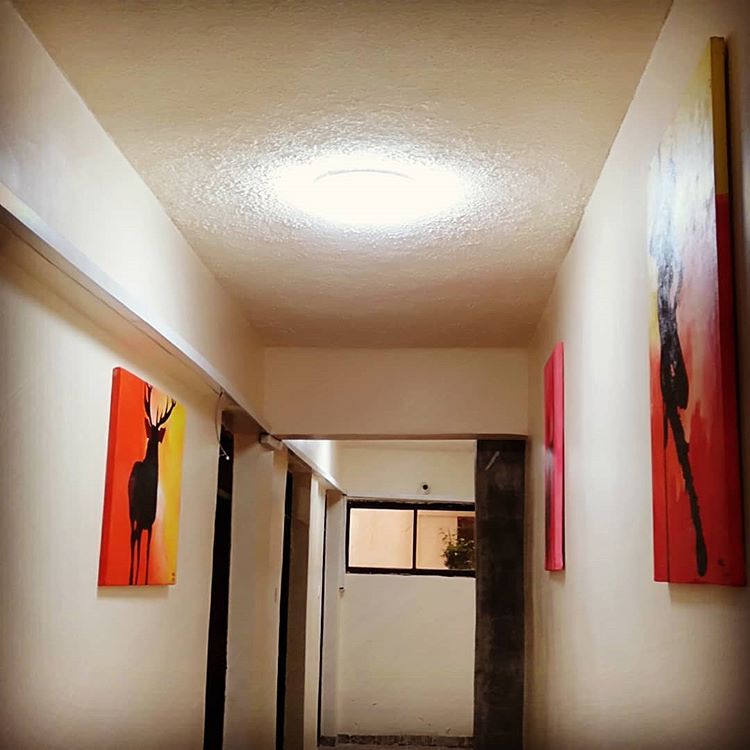
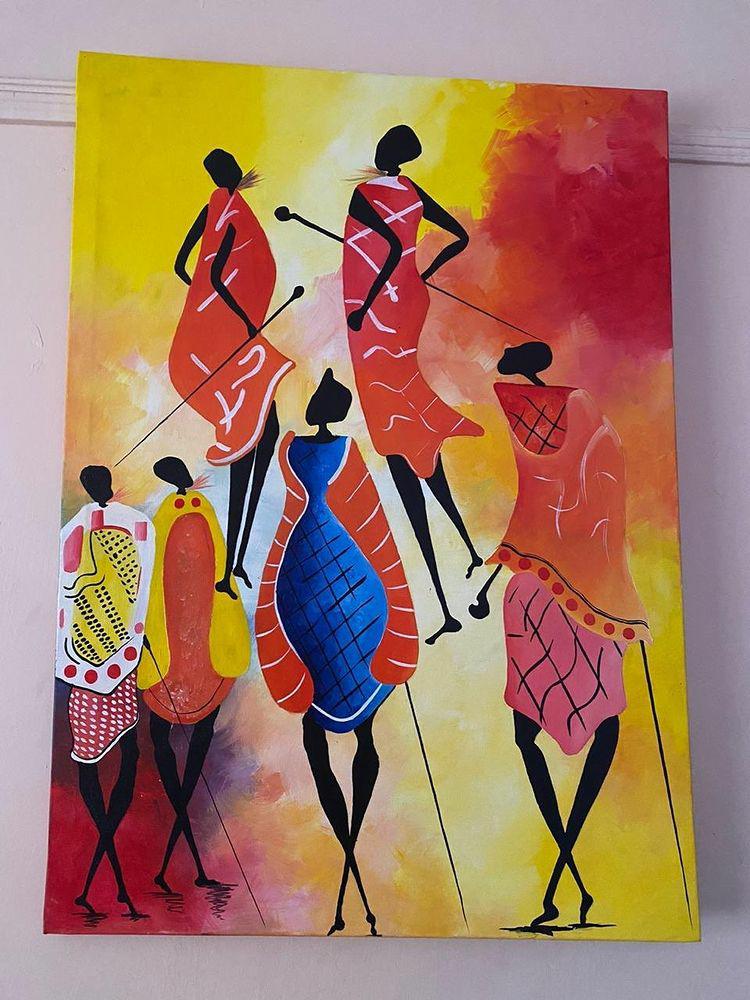
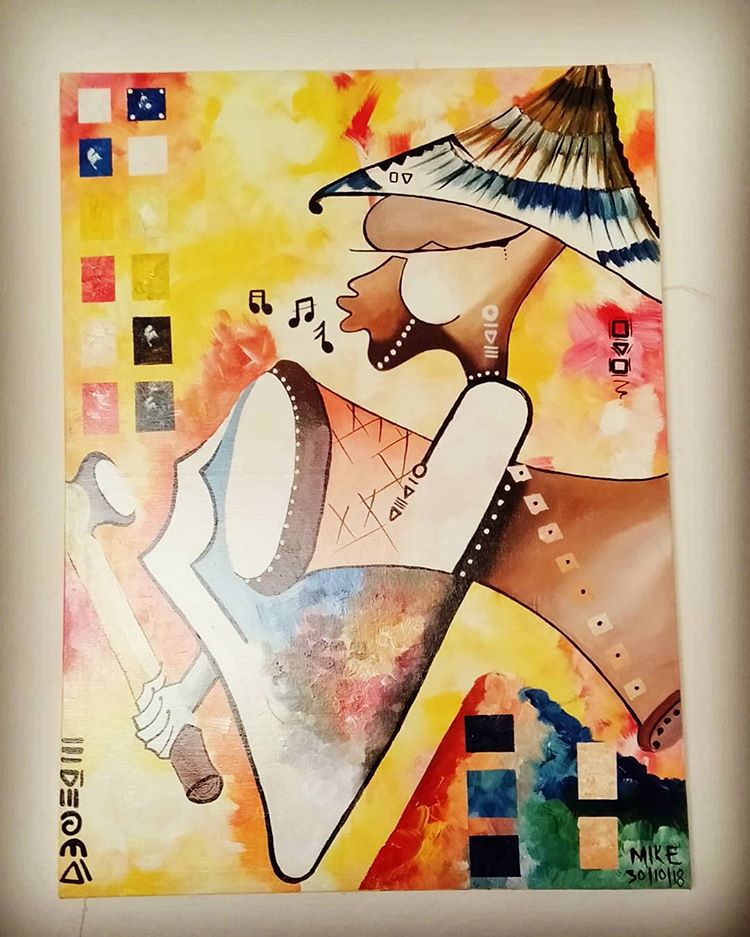
    Mike Omondi Mulinya is an artist focused on painting on Canvas and Mix Media. He is the owner of Olympus Art and is based in Ngara, Nairobi. He often documents his progress on canvas on Instagram. You’ll find a work-in-progress post and a project-complete post on his feed.


    What I love most about his work is the color that explodes on canvas: so vivid and authentic. Read on to discover more about Mike and his art, in the following interview.


    Don’t give up on your dreams. As an artist, stand up bold and be what and who you want to be in life because we live once.


    My name is Mike Omondi Mulinya. I do Art and Design to satisfy my spirit of creativity and adventure.

    The art industry in Kenya though not so tough, is also not an easy walkthrough. Though the industry has prominent artists, not many of them are willing to sit and have a chit-chat of encouragement and prosperity (with new artists). I think there is a fear of overtake in their monopoly market of art. To add to that, I started up with four paintings in 2017 and went to ask for a chance at Alliance Française. They told me that they don’t exhibit the paintings that I was doing. They (the paintings) were kinda small I guess. So, lucky for me, they were bold to my aunt who bought them all.

    My dream and passion of having the Olympus Art Gallery is my wheel that I push daily. This dream inspires me every dawn and dusk. What inspired my most favorite work is nature. God was creative with the world, so God is an Artist and so nature inspires my paintings.

    I started making art in high school to preserve the art culture that I see is almost coming to an end. I also started making art since I’m art-coherent. It’s in me and I really wanted to bring the art culture to bold light and say Art is what I dream and I paint my dreams. In this world, one can’t survive without cash. I had to look for a source of income. I chose making art as my source of income.

    My important artist tools are my paintbrushes since they help me create vivid artistic images for the future and for utilization purposes.

    I paint on canvas and any hardware material that paint is compatible with. I can paint and make things to order.

    My thoughts are don’t give up on your dreams. As an artist, stand up bold and be what and who you want to be in life because we live once.


    There is special magic in a painting on canvas hanging on a wall. If you’re looking for an artist to get art for your walls, your place of work, your …insert preference…do check out Mike’s Art. His contacts below:

    • Email: omondimike88@gmail.com
    • Instagram: @olympus_arts_mike
    • Phone: 0708825023 (based in Ngara, Nairobi)

  • The Client Meant for Me

    Nouta Ahito stood at her door, her gaze intent, as she stared at the fat drops falling on the steps outside her house.  Rain, the blessed waters from the skies, the tears wept by the earth, her most feared enemy, taunted her.  The faster it fell, the more it mocked her, and she could do nothing.  She wished for super powers.  How wonderful it would be if she could wave her hand and stop this rain.  She groaned long and hard, and closed the door, escaping the upsetting scene.

    Nouta walked to her chair at the dining table and stared at her cup of tea, now cold.

    “What are we going to do?” her sister asked.

    She looked up to see her sister watching her.  Everyone in the house knew that when it rained, she worried.  At some point, in the past two years, rain had become her nemesis.  She loved the hot months, and never complained even when it got too hot in January.  Everyone complained then, but not her.  No, hot months were her favorite days.

    Why?

    Well, during the warm months, she did not have to worry about a muddy access road.

    Nouta was a business woman.  She ran a baking skills training workshop at her family home.  She was proud of her training workshop: a neat green building, constructed with mabati she had painted green.  She had furnished it with all the baking equipment she could find, and more to come.  She liked calling it a workshop because it was not an institution.

    Photo by Eye for Ebony on Unsplash

    She enjoyed focusing on her work: on the process of imparting knowledge to a new baking student.  It was hands on, practical, and personal.  Her workshop would never be an institution.  She was proud of that.  However, banks consistently and with precise prejudice categorized her as a small business, without the enterprise in the SME acronym.  They did not look at her or favor her business.  Not even when she had all the necessary city and government permits.  Banks would not touch her with a ten-foot pole.

    Sometimes, Nouta imagined, they probably smelled her coming into the bank to seek a loan for her small business and locked the vaults.

    Don’t let her know we have the money, the officers would say to each other, and then chortle when she walked out.

    She was too young, the loan officer would say.  As if, twenty-eight was just right, she thought.  Her faults were that she was single, with no rich husband in sight.  Her business was a passing fancy: because doing business in her family home was a temporary thing, a passing thing, it won’t last, they said.

    Ah, her personal favorite was when once, a loan officer told her not to worry because her parents would get her a job soon.  In this day and age, jobs were about as available as unicorns in the sky.  Nouta rolled her eyes at that memory.  She doubted that loan officer had seen a unicorn in the sky.  How did he know her parents would help her find a job?  Her mother did not have that kind of motivation.

    The rain amped up its rhythm as though demanding Nouta’s attention, she sighed.  Her biggest challenge in life, was not running a business, she was managing that.  No, her challenge was getting a decent access road, one that didn’t flood, or get muddy with each flash of rain.  She needed money to fix the access road to their home.  Her business could not afford it as an expense, yet.  She couldn’t get a loan, so it was not a quick fix.

    Customers hated muddy roads, especially when they came from neat tarmac roads.  No one wanted to trudge through the mud and ruin good shoes.  She could understand that even respect it.  However, her business had to move forward.  She needed her customers to reach her, so that she could keep saving to fix the muddy access road.  And so, the love of sunny months and the hate and stress of rainy days started, and turned into her daily struggle.

    Nouta got up from her seat and went to heat up her tea and sweet potatoes.  She needed a good breakfast.  She needed to be at full energy to convince the two women visiting her workshop today to sign up for a class.

    What was a little rain, she thought.  What was a little mud?

    She was strong enough to face down barbarians if they ever appeared in her corner in Nairobi.  Nouta chuckled at that stupid idea and set the microwave to heat her tea.

    “We will manage,” she said to her sister, when she got back to the dining table.

    “Well, if the two ladies don’t sign up, we’ll look for others,” Lita echoed, nodding her head.  “I’ll offer to get them from the road with gumboots, if they need it.”

    “Or, we could pay someone to carry them on the back to the gate,” Nouta suggested, making her sister laugh so hard she almost spilled her tea.  “God help him if they are chubby.”

    “As if that will happen,” Lita scoffed.  “We could try Mutheu’s mkokoteni.”

    “I’m not pushing it in the mud,” Nouta said, thinking of the wooden cart with car tires Mutheu drove.  “Besides, he’ll just walk away if you suggest it.  He hates stupidity.”

    Lita sighed and sipped her tea.

    “It will work out, Nouta,” she said, her sure tone brought comfort to Nouta.

    Lita always made it seem as though they could manage any kind of situation, and they did.  They always managed.

    The first call of the day came right after breakfast.  Nouta answered her phone with a sense of calm.  Her first client was already on the way to visit the workshop.  She sounded levelheaded, and friendly.  Nouta took the opportunity to warn her of the rain.

    “It’s a bit muddy,” Nouta said.  “Do you have sturdy shoes?”

    “It was raining at my place too.  I’m prepared.”

    “Okay,” Nouta said, hopeful.

    She ended the call, giving her sister a small smile, though the nerves didn’t disappear.  They already had two students in place, and needed two more to fill the current class.  Two more to make a profit, otherwise they might need to cancel the class or do it at a loss.  This was their constant struggle.

    It was nine in the morning.  The rain kept up for another thirty minutes, and then it stopped.  The sun stayed hidden behind clouds.  Their dirt road would take a while before it dried.  There would be mud; there was no escaping that reality.  Nouta finished her third cup of tea.

    At ten, her first client called her.  She was at the end of the access road.  She sounded unsure about her destination.  Nouta came out of the house and went to stand at the gate.

    “You’re on the right track,” Nouta assured her.  “I can come to you with gumboots.  Or meet you at the road—”

    “Ah, I see you.  It’s not that far after all.  I’m on the way,” the lady said, and ended the call.

    Nouta stood at the gate watching the woman who entered the access road.  Her steps were steady as she navigated the muddy road, jumping over puddles, and going around rough patches.  It took her five minutes to reach Nouta.

    When she did, Nouta realized why the lady had been so confident.  She wore gumboots on her feet.  Black gumboots with a silver bow on the side, they were so handsome, Nouta could not help but smile wide.

    Karibu,” she said, holding out her hand to her first client of the day.  “Welcome to Nolita’s Baking Workshop.”

    “Hi, I’m Halima.  I’m so honored to meet you, Nouta,” Halima said, taking her hand in greeting.  “I have heard you’re the best in the city.  I’ve wanted to take classes with you, and always missed intake.  I couldn’t pass up the chance to sign up with you this time, so here I am.”

    Charmed, Nouta launched into a conversation about the workshop and the upcoming classes, forgetting about the mud.

    They entered the compound and went straight to the green workshop.  They talked for thirty minutes, and by the time Halima was ready to leave, she had paid a deposit.  Halima booked her spot for the class.  Nouta walked her to the gate, and once again remembered the state of the road.

    “I’m so sorry about the road,” Nouta felt compelled to say.  “It’s not usually so muddy.”

    “Oh, you don’t have to worry about that,” Halima said, showing off her gumboots.  “Your road is just like ours at home.  I don’t mind it, Nouta.  I’ll see you on Monday next week.  I look forward to learning from you.”

    Nouta smiled wide and waved Halima off.  The first client of the day had set her mind at ease.  She rushed back to the house in a pleased mood to share the news with her sister.

    Flush with a win of the day, Nouta waited for the next call with less anxiety.  It came at around twelve o’clock.  The sun was peeking out, the ground less wet from the morning rain.  Nouta felt confident that their muddy road was easier to pass now, than earlier.  When she answered the call, she was pleasantly surprised to discover that her next client had a car.

    Great, she thought.  This will be even easier.

    Nouta gave her precise directions to their access road, and the lady promised to call when she reached.  It took another thirty minutes.  Nouta was surprised when she answered the call and the lady on the other end sounded less than cheerful.

    “You didn’t tell me the road was so muddy.  Why would you keep that from me?”

    “I’m sorry, I told you it rained,” Nouta said.  “Our access road is a dirt road.  I was very clear about that from the beginning.”

    “No, no, no,” the lady said, as though saying it in threes made it more negative than it already was.

    Nouta felt a flush of annoyance race through her.  She sat at the dining table working on her laptop.  Opening her email, she double-checked the message she had sent to the lady.  In the directions, she clearly stated the access road was a dirt road.  It was necessary, especially in Nairobi.  She had dealt with all kinds of people.  It was always easiest to describe the destination without rose-colored glasses.  Her home area was not upscale Lavington, but it also was not slummy, but a homey kind of area.  Farms and family homes dominated the street.

    “I’m not sure I can make it for this class,” the lady on the other end said to her.  “First, it’s so far and now this muddy road…”

    “Where are you coming from?” Nouta asked, curious.

    “South C,” the lady said, indignation clear in her tone.  “It took me almost an hour to get here.”

    Nouta wanted to point out that it took her just as long to get to Eastlands.  This was Nairobi, no place was close, and no place was far.  Two, last month, she had a student who had come all the way from Muranga every morning.  That was four to five hours away.  She was still awed at that boy’s dedication to his baking dreams.  He never missed a day, and was never late.

    What was South C?  Ndwaru Road was not in Ukambani, but in Dagoretti.  Less than an hour away if you took the newly minted bypass.  She rolled her eyes, but did not voice her opinion.  She kept her tone calm when she spoke.

    “I’m sorry you feel that way,” Nouta said.  “Since you’ve come all this way, wouldn’t you like to see the place?  We can talk—”

    “What about my car?” the lady asked.  “I can’t drive in to this mud.  Who can I ask to watch it?  I don’t even have gumboots to walk in the mud.”

    Nouta fought the urge to talk back and pushed her chair back

    “We have clean gumboots I can bring to you,” Nouta said.  “I’ll be at the road in five minutes.  Please wait for me.”

    She ended the call and let out a frustrated groan.

    Why had she attracted this lady again?  If she was from South C, why didn’t she then get a baking teacher from there?  Why come all the way here?  Why the frustration when the woman had a car?

    Nouta found the clean gumboots.  She slipped her feet into her own used ones and gripped her phone tight as she left the house.  She headed to the road with an annoyed sigh.  Why did she need the money so bad?

    Nouta breathed in and out on the five-minute walk to the main road.  She was right about the access road.  It was much easier to navigate, with only a single rough patch in the middle.  A car could manage it with no trouble.  When she reached the road, she bit back a curse word when she saw the white jeep waiting on the curb.  The driver rolled down the window and she met her second would be-client.

    “Hi, I’m Rose.  You must be Nouta,” Rose said, smiling at her from the safety of her car.  “How come you don’t have a branch in town?”

    Nouta slipped her phone into her jeans pocket.  She worried she might crash it with anger and frustration.  She hated this question most.  Did Rose even understand the logistics of opening a second branch in Nairobi town?  The capital that would involve, the amount of money she would need to sink into marketing to make both places work.  Why ask such a question?

    Nouta smiled.

    “Oh, we’re working hard to get one,” Nouta said in her most cordial voice.

    “Oh well, I don’t think my car can make it through that mud,” Rose said, shaking her head, looking at the access road, disdain clear in her eyes.  “Is it always like this?”

    Nouta bit her bottom lip, and breathed in and out.

    “No.  It rained this morning.  If you give it a few hours, it will be good as new.”

    “Why can’t you get it fixed?” Rose asked.

    Nouta smiled, because the alternative was to shout, maybe shed a few tears of frustration.

    “We’re working on it,” Nouta said.  “You know how it is.”

    Actually, Rose’s expression said, she had no idea how it was to mobilize neighbors in such areas.  To get them to work with you, or otherwise, you work alone and find the money to fix the access road.  Nouta sighed and lifted the gumboots.

    “You can wear these,” Nouta said.

    She then pointed at the small parking lot in front of the small shopping center to her immediate right.  She was friends with all the shop owners in the center.

    “If you park here no one will touch your car.”

    “It doesn’t look safe,” Rose said, giving the shopping center a skeptical glance.

    “It is,” Nouta said, her tone strong, leaving no doubt.

    Rose looked at her for a minute, and then started the car.  When she backed up, Nouta took a moment to study the Jeep.  It looked too clean and the tires were new.  Rose had stopped the car at the entrance into the parking lot, and wasn’t moving.

    Nouta closed her eyes, a tirade forming in her head.

    ‘Let me ask you a question,’ she wanted to say to Rose.  ‘Let me really ask you a question.  Do you want to tell me that you have never traveled upcountry?  Do you not visit your grandmother in your fancy car?  Are you telling me your big car does not and cannot drive on muddy roads?  What is a small stretch to the green gate?  Three minutes, probably less, those tires look new.  Are you telling me you can’t drive to that gate, to my place of business, because the road is muddy and not tarmacked?’

    Nouta let frustration ride her for a full minute, and then she opened her eyes to find Rose still paused at the parking lot.

    In life, there was one lesson she had learned.  She could not force someone into joining her class.  There was nothing like teaching a mind that was skeptical.  It felt like adding milk into an already full gourd bottle.

    Rose looked like a full gourd bottle

    Nouta hugged her clean gumboots and walked up to Rose’s car.

    Rose’s window was open, so she smiled as Rose turned to look at her.

    “I’m sorry, Rose.  I don’t think we’re meant to be.  I’m afraid it will rain all next week, and our road will be very muddy.  Thank you for coming all this way,” Nouta said.  “I will send you a free recipe e-book for the trouble.”

    Rose studied her for a moment, and then smiled, as though relieved.

    “It was nice to meet you, Nouta.”

    “You too, Rose.”

    Nouta smiled at her as courteous as could be.

    In the next minute, Rose pulled out and was on her way back to South C.

    Nouta worried she would need to monitor her social media pages, in case Rose wrote a bad review about her location, or even her experience.  She worried about this encounter until she was at her gate again, only to receive a call from her sister.

    “Where are you?” Lita asked.

    “At the gate,” Nouta said, heaving a sigh as she entered the compound.

    “Oh great, we have a client who just paid for the class.  She wanted to meet you.”

    “What?” Nouta grinned.  “How?”

    “She walked in like three minutes after you went to deal with the one at the road.”

    Nouta hurried to the green workshop her worries disappearing.  They had won the day.  Their class was full.  They had managed this round.  She would worry about the rest as it came, she decided.

    For all the women in Small Medium Enterprises (SME). You are super women.

  • David Maloba – Illustrator in Kenya

    David Maloba – Illustrator in Kenya

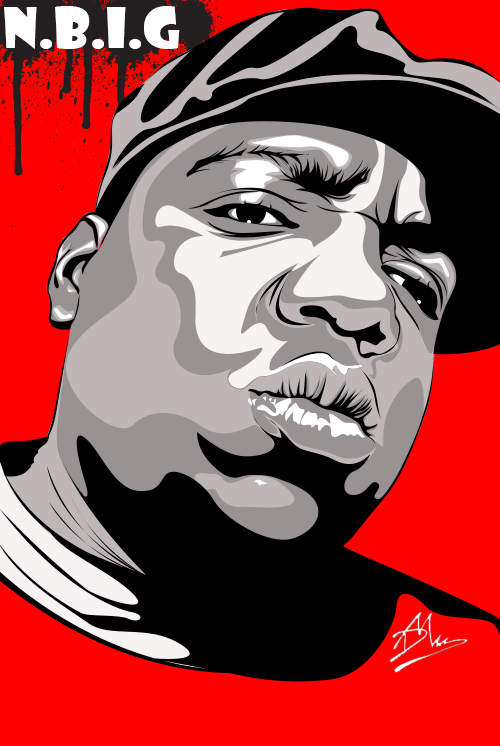
    I’ve been lucky to be introduced to awesome illustrators this month. This post today features another artistic talent based in Kenya, David Maloba. His art is fresh, and certainly, up and coming. I sent him a few questions for this interview, which he gladly answered. Read on to discover what he has to say about his work.

    Who is David Maloba?  Tell us a bit about yourself, and what you do

    I am a graphic designer who deals mostly with digital illustration portraits famously known as vector/vexel portrait artworks. They are cartoon-style artworks that have artistic elements in them. It’s my daily drive and my passion, something I really love doing.

    artwork by D. Maloba

    I started out when I was in my third year at the university. I bumped into a tutorial video on YouTube that had the whole process of making vector artwork using Adobe Photoshop. That tutorial helped me big time and due to my prior knowledge and skill in the software, it was easy for me to create this type of artwork. It took me a couple months of constant practice to be able to not only master the way to draw the artwork but also develop my own style. I am just simplistic for the simple reason, life.

    You’re an Illustrator, what is your challenge in this industry in Kenya?

    Well, being a digital illustrator in Kenya is kind of difficult because not many people know about it yet, and others haven’t accepted it as one of the forms of art. Let’s say for example, in my case, some people say I use filters while that isn’t the case. So cases like these tend to pull us behind and slow down the growth and recognition of this type of artwork. There is also the issue of low pay to no pay, where some clients might underpay you or even not pay you at all just because the artwork is drawn using a computer. They want it to be free. To do these artworks one needs certain tools, which are quite expensive to acquire, making it a challenge too. It’s also time-consuming to do.

    artwork by D. Maloba

    EllyinNairobi Thoughts– Time consuming, but beautiful work!


    ..Keep creating. Someone will soon take notice of you. Keep your focus on and take each and every advice/comment positively. Some people might give you good reviews and some bad reviews, so don’t let them kill your morale with a few negative statements.

    D. Maloba

    What is your most favorite work and why? (Artwork you’ve done)

    artwork by D. Maloba

    My favorite artwork, I can say, is one I did of our esteemed president H.E Uhuru Kenyatta. It’s a special piece to me because it’s the one that I first got to print on canvas and second it exposed me to a wider range in terms of ideology and market. It’s something I am proud of doing each and every time I look at it hanging on the wall.

    What type of skills or techniques do you need to develop for your work?

    One needs to be creative, know how to draw different elements, and have the knowhow of drawing using computer software like Adobe Illustrator/Photoshop/Inkscape/CorelDraw, just to mention a few.

    Who is your inspiration?

    My inspiration is Zac Dynes. His style of work is just simple and amazing. He is the one who motivates me to work hard to develop my artwork.

    What is your dream/Goal? Where do you see yourself as an illustrator in a year or two?

    artwork by D. Maloba

    My dream/goal is to see my work inspire more Kenyans like me to develop and grow this kind of digital illustration portrait. Though it hasn’t gotten recognition like other forms of traditional art, it’s steadily picking form by the day.

    In one/two years’ time I see myself being successful and having my own digital illustration company/business where young illustrators will have a chance to showcase their works and get the knowhow of how to develop their art and also make a career out of it.

    Who is your favorite artist/illustrator?

    My favourite digital illustrator is Zac Dynes. He is one of the few artists who have a unique style of drawing illustrations. He calls them “drip art” going by how he expresses them with the drip effect.

    What’s the last book/comic you read and why?

     Wow!!! It’s been long. Ok, the last comic I read is Unaffected by my best friend Humphrey Osoro. First of all, it’s obviously done by a Kenyan, and has a good storyline plus nice illustrations and a work many people have not yet gotten the chance to read because of a lack of belief in Kenyan comics due to other foreign comics being given a number one spot/platform. It’s work that inspires me to work harder to grow my art. So, I can say I enjoyed reading it because it has humor in it, plus the illustrations are just amazing. I urge people to go and check it out because they will not be disappointed.

    What are your thoughts on aspiring Illustrators in Kenya?

    First and foremost is to always put GOD first in all that you do.

    Second is to keep creating. Someone will soon take notice of you. Keep your focus on and take each and every piece of advice/comment positively. Some people might give you good reviews and some bad reviews so don’t let them kill your morale with a few negative statements.

    artwork by D. Maloba

    Third, do more research on illustration because it’s growing at a fast rate with different kinds of styles coming up. Also, interact with fellow illustrators not just in Kenya but other parts of the world and get to know how they do their artwork to have a better understanding of the art. I, myself, have interacted online with a few and have also seen the work they have done. For example, Paul Kawira, theartofvosty, and Joe impressions just to mention a few. They have amazing artwork, go check them out too.

    Connect with David Maloba

    Are you interested in creating a project with David’s help? Connect with him on Instagram – @maloba_david

    Elly’s Thoughts

    And, there you have it! Passion, Commitment, Research (get your knowledge pool going), and Consistent Dedication! All the goodies you need to cultivate to be creative! It’s always inspiring to discover the creative journey from a different perspective. Whatever it is you want to do, know that you can achieve it. Keep creating folks!


  • How to Invest in Real Estate in Kenya by Kariuki Waweru

    How to Invest in Real Estate in Kenya by Kariuki Waweru

    On this post, we celebrate and feature one of Kenya’s Registered Valuers, Kariuki Waweru. He has written an invaluable book on How To Invest in Real Estate in Kenya. This book has a wealth of information on how to invest, tips on home ownership in Kenya and how to navigate the confusing world of loans and mortgages in Kenya. Mr. Kariuki was kind to answer my questions on his book and his publishing journey. Let’s take a look!

    1. What is the most favorite question you’ve ever gotten from a reader?

    I have had people who are at the verge of making a decision on real estate investing and when they ask questions, I direct them to the book. (How To Invest in Real Estate In Kenya). It feels good to have all the answers to their questions in one book. Feels like the motto for Nakumatt, “ You need it, we’ve got it”.

    2.  Did you always want to be a published author?

    I didn’t always want to. My first article was on whether to buy a car or a plot? I was dating my then fiancée, now my wife, and I needed to convince her that land is a good investment but I also knew that a car can earn one some extra cash… so I thought I should write down my arguments and see. I did that and she was very impressed. She encouraged me to keep writing and I wrote so many articles which I could send to her. She then encouraged me to start a blog, which I did. It’s now called www.kariukiwaweru.com … I then extracted some articles from the blog to publish my first book and extracted some more to publish my second book.

    3.  What prompted you to write, ‘How to Invest in Real Estate in Kenya’?

    After publishing my first book in 2012 and revising it in 2014, I realized that there was a gap in the market for a more practical book. Between 2016 and 2018, I went through a practical hands on experience of taking a commercial bank loan, a mortgage, buying a plot, building my family a house and investing in a commercial property for rental purposes. I blogged about this journey, the lessons learned and these came to refine my consultancy journey  and made me a more practical consultant. I compiled all the experience and lessons learned and came up with this book. This book has everything you need to know about home ownership, commercial investments, loans, and mortgages set in a Kenyan context by a Kenyan Registered Valuer and consultant.

    4.  What is your most memorable experience as a Registered and Practicing Valuer in Kenya? 

    It took me 13 years from the time I joined the University of Nairobi as a first-year B.A. Land Economics student to becoming a Registered  Valuer. Getting that title was my highest professional achievement and a culmination of dreams… it was a dream come true.  Later on, seeing my name published in the Kenya Gazette alongside the less than 600 valuers in Kenya since Kenya got its independence was also one of my greatest achievements.

    5. You have published two books, that is, ‘The ABC of Real Estate Investments in Kenya’ and now ‘How to Invest in Real Estate in Kenya.’

    a. What has your publishing journey been like?

    I have learned a lot. There is a need to keep reviewing your work, get good editors and designers, and most importantly a good person to print the book. My first book was poorly printed in downtown Nairobi and I had to redo the printing and change the layout and design in 2014. In this current book, I have used very well-established printers and designers (which is quite costly) and I have not regretted the outcome. 

    b. Which book was easier to publish?  The first or the second?

    The second was easier as I knew exactly what I wanted and how to go about publishing, editing, and marketing.

    c. What challenges, if any, did you face the first time, and were they present the second time around?

    The challenges from the first time were using inexperienced designers and printers to do my work. This cost me a lot in terms of money and time.

    6.  What is your view on publishing books in Kenya?

    I think we should immortalize ourselves by publishing books.

    7.  What advice would you give to someone hoping to publish his or her first book?

    The longest journey starts with a single step. Start writing. Start a blog… your readers will critique your work and you will be a better writer. Once you are ready, talk to someone who has published before and learn from them how to proceed.

    8.  Lastly, will you write another book?  What do you think the title will be?

    God willing I will write many other books. Ng’ugi wa Thiong’o has more than 15 titles under his name…I have 3…I’m just getting started.

    The titles normally come after the content is done…so I don’t have any ready titles as yet.

    Elly in Nariobi’s Thoughts:

    It is always so inspiring to see an author’s journey in to publishing. If you’re wondering if the journey is possible, I hope Mr. Kariuki’s answers are enough to let you know that yes, it is. Whatever your idea, fiction or non-fiction, you can get it published in Kenya.

    How to Invest in Real Estate in Kenya is a great addition to your bookshelf.

    1. Because it simplifies the process of purchasing land, navigating mortgages, and helping plan for the future in terms of real estate investments.

    2. All the content is based on Kenyan experiences. I always feel we need more professionals sharing, and demystifying their industries for Kenyans, as Mr. Kariuki has done.

    To purchase this book:
    The book goes for Kshs. 500.

    Email – info@kariukiwaweru.com or visit the website: https://kariukiwaweru.com/ Call (+254) 0723 477 035